


News

Precision aluminum balls manufacturer for lightweight bearing and automation systems
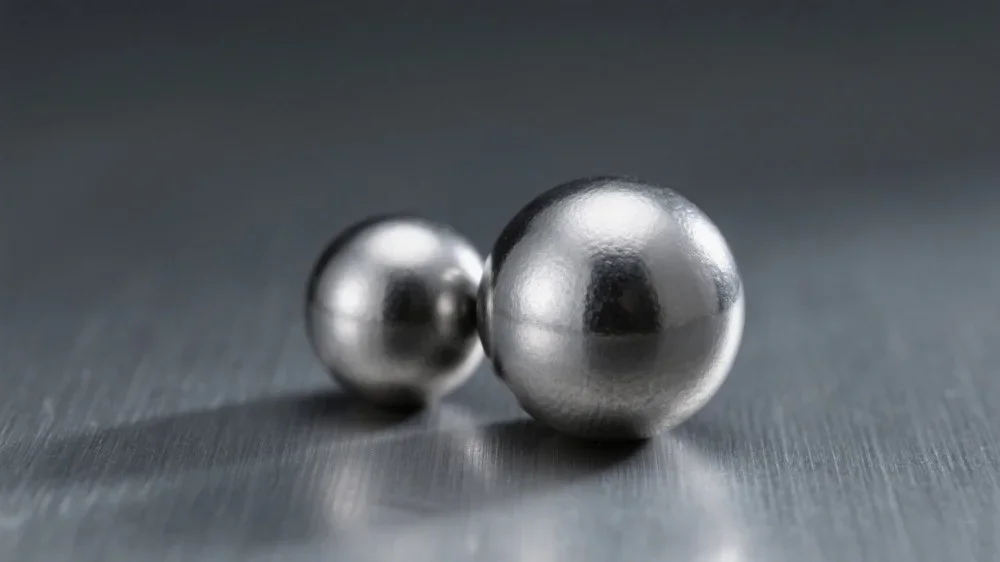
Aluminum-based precision spheres have become an essential component in industries where weight reduction, corrosion resistance, and controlled mechanical performance are required. Among these, precision aluminum balls play a unique role in applications that demand both dimensional accuracy and stable surface behavior under dynamic loading conditions. Compared with traditional steel alternatives, aluminum provides a significantly lower density while still maintaining sufficient structural integrity for a wide range of engineering environments.
Eurasian focuses on the development and production of high-consistency aluminum spherical components designed for industrial use. Through strict metallurgical control and precision forming techniques, the company ensures stable geometry, smooth surface quality, and repeatable batch-to-batch performance.
Material Characteristics of Aluminum Spherical Components
The performance of aluminum spheres is strongly influenced by alloy purity, microstructure uniformity, and surface finishing processes. Common materials such as 1060 and 1070 aluminum are selected due to their excellent ductility and corrosion resistance. These materials allow stable deformation control during forming, which is critical for achieving tight dimensional tolerances.
In precision engineering, aluminum does not rely on hardness alone but instead on its balanced combination of machinability, oxidation resistance, and weight efficiency. This makes it suitable for applications where steel may introduce excessive inertia or unwanted load stress.
A key advantage of aluminum spherical components is their natural oxide film, which forms a protective layer against environmental exposure. This reduces maintenance requirements and improves long-term stability in non-extreme operating environments.
Manufacturing Process of Aluminum Ball Production
The production of aluminum spherical components involves multiple controlled stages, each contributing to final accuracy and surface integrity. Eurasian applies a multi-step process combining cold forming, precision grinding, and controlled polishing.
The forming stage establishes the basic geometry, while subsequent finishing stages refine roundness and surface roughness. Heat treatment control is also applied where required to stabilize internal structure and reduce residual stress.
Quality inspection is integrated throughout the process, including:
| Inspection Stage | Control Focus | Method |
|---|---|---|
| Raw Material Check | Alloy composition | Spectral analysis |
| Forming Control | Dimensional deviation | Laser measurement |
| Surface Finishing | Roughness & gloss | Optical inspection |
| Final Sorting | Grade classification | Automatic sorting system |
This structured process ensures that each batch of precision aluminum balls meets consistent performance standards across industrial applications.
Dimensional Stability and Precision Grades
Dimensional classification is critical in determining performance suitability. Aluminum spheres are typically produced in a wide range of diameters from sub-millimeter sizes to larger industrial formats. Precision grades such as G500 to G1000 define tolerance levels, surface uniformity, and roundness deviation.
Higher precision grades are commonly used in mechanical assemblies where controlled movement and predictable contact behavior are required. Lower grades may be selected for structural or decorative engineering uses where tolerance demands are less strict.
Consistency in diameter distribution directly impacts performance in rotating or sealing systems, where even slight deviations can influence wear patterns and energy efficiency.
Engineering Applications of Lightweight Bearing Structures
One of the most important applications of aluminum spheres is in lightweight bearing systems. These systems require reduced rotational inertia and stable surface interaction under continuous motion. Aluminum’s low density makes it particularly suitable for reducing system load while maintaining structural alignment.
In addition to bearings, aluminum spheres are used in fluid control systems, precision valves, aerospace assemblies, and electronic hardware structures. Their ability to maintain consistent geometry under moderate stress conditions allows them to function effectively in multi-component assemblies.
Surface smoothness also plays a critical role in reducing frictional resistance, especially in systems where lubrication is limited or intermittent.
Aluminum Ball Forms and Structural Variations
Different structural forms of aluminum spheres are used depending on engineering requirements, load conditions, and design constraints. Each type offers distinct performance advantages.
Large-Diameter Aluminum Spheres in Structural Systems
Large spherical components such as 2 inch aluminum ball products are typically used in structural assemblies, calibration systems, and mechanical positioning devices. Their size allows them to distribute force more evenly across contact surfaces while maintaining lightweight characteristics. These larger forms are also frequently used in testing environments where dimensional stability is critical.
Hollow Structural Design for Weight Reduction
In applications where further weight reduction is required, hollow aluminum balls provide an effective solution. By reducing internal material volume while preserving outer geometry, these components achieve significant mass savings without compromising surface integrity. They are widely used in aerospace structures, buoyancy systems, and lightweight mechanical assemblies where inertia control is important.
Solid Structural Performance Components
For applications requiring higher mechanical stability and consistent load-bearing capacity, solid aluminum ball designs are preferred. These components maintain uniform density throughout the structure, ensuring predictable mechanical response under pressure or vibration. They are commonly used in precision mechanisms where stability is prioritized over extreme weight reduction.
Surface Engineering and Functional Performance
Surface treatment is a critical factor in determining long-term performance. Aluminum spheres undergo multiple polishing stages to achieve controlled roughness levels, which directly influence friction behavior and wear resistance.
A mirror-like surface finish not only improves mechanical interaction but also enhances corrosion resistance by minimizing surface irregularities where contaminants may accumulate. In industrial applications, this contributes to extended service life and reduced maintenance frequency.
Eurasian applies controlled polishing techniques to ensure that each batch achieves consistent surface reflectivity and functional uniformity.
Mechanical Behavior and Load Response
Although aluminum is lighter than steel, its mechanical performance depends heavily on structural design and application context. In dynamic systems, aluminum spheres respond differently under load due to their reduced inertia, which can improve responsiveness in high-speed motion assemblies.
However, load distribution must be carefully designed to prevent deformation under excessive stress. This is why application engineering plays a key role in selecting the correct grade, size, and structural form for each use case.
In controlled environments, aluminum spheres demonstrate stable behavior, especially when paired with compatible materials and precision-machined components.
Industrial Quality Assurance and Certification Standards
Eurasian maintains strict quality control procedures aligned with international industrial standards, including automotive-level inspection requirements. Every production batch undergoes chemical verification, dimensional inspection, and surface evaluation.
The integration of standardized process control ensures consistent output quality, particularly for global clients requiring stable supply chains and predictable performance metrics. Documentation and traceability systems are implemented to support export compliance and technical verification requirements.
Material Composition Overview
| Element | Content (%) | Function |
|---|---|---|
| Al | 99.60 | Base material |
| Fe | 0.35 | Strength stability |
| Mg | 0.03 | Formability |
| Cu | 0.05 | Mechanical balance |
| Zn | 0.05 | Corrosion control |
| Mn | 0.03 | Structural refinement |
| Ti | 0.03 | Grain stabilization |
| V | 0.05 | Performance enhancement |
This controlled composition ensures that aluminum spheres maintain predictable mechanical and chemical behavior across different production batches.
Customization and Engineering Flexibility
Different industries require different configurations, which is why customization is a core part of aluminum sphere manufacturing. Parameters such as diameter, grade, surface finish, and packaging can be adjusted based on application requirements.
This flexibility allows aluminum spherical components to be integrated into both standard industrial systems and highly specialized engineering designs. Whether used in lightweight assemblies or precision mechanisms, adaptability remains a key advantage.
FAQ
Q1: What makes aluminum spheres suitable for lightweight engineering systems?
Their low density significantly reduces system inertia while maintaining stable geometric accuracy, making them ideal for dynamic mechanical applications.
Q2: Can aluminum spherical components replace steel in all applications?
Not in all cases. They are best suited for low to medium load environments where weight reduction is a priority over maximum hardness.
Q3: How is surface quality controlled in production?
Through multi-stage polishing, optical inspection, and roughness measurement to ensure uniform surface performance.
Q4: What industries commonly use aluminum spheres?
Aerospace, automotive systems, precision valves, electrical assemblies, and mechanical calibration systems.
Q5: What determines the precision grade of aluminum balls?
Roundness, diameter tolerance, surface finish, and consistency across production batches.
Q6: Are customized sizes available?
Yes, diameter, grade, and structural type can all be customized based on application needs and engineering requirements.


