


News

Custom S2 Tool Steel Balls for High Torque Fastener and Tool Applications
Built for Demanding Mechanical Performance and Shock-Loaded Components
In industries where components are exposed to repeated impact, sudden force transmission, and heavy mechanical stress, material selection becomes a critical factor affecting product durability and operational reliability. Among various hardened steel ball materials available in the market, S2 Tool Steel Balls have earned a strong reputation for their excellent combination of toughness, wear resistance, and impact strength. Unlike conventional bearing-grade materials that primarily focus on hardness, S-2 tool steel is engineered to withstand shock loading while maintaining dimensional stability under demanding operating conditions.
Today, S2 Tool Steel Balls are widely used in high torque fastening mechanisms, indexing devices, drilling components, locking assemblies, and specialized tooling equipment where failure caused by impact fatigue is not acceptable. As industries continue to demand stronger and longer-lasting mechanical components, the importance of selecting the appropriate steel ball material has become increasingly evident.
Why Material Selection Matters in Torque-Driven Applications
High torque environments generate unique stresses that differ significantly from standard rotational or load-bearing conditions. Components may experience sudden impact loads, intermittent contact forces, vibration, and repeated engagement cycles. In these situations, material brittleness can lead to cracking, chipping, or premature failure.
S-2 tool steel was originally developed for applications requiring superior shock resistance. Its alloy composition and heat treatment characteristics provide an effective balance between hardness and toughness, making it highly suitable for steel balls used in fastening tools, positioning mechanisms, and industrial equipment subjected to dynamic loading.
For engineers and procurement professionals, understanding the relationship between material properties and operational requirements is essential when sourcing precision ball components.
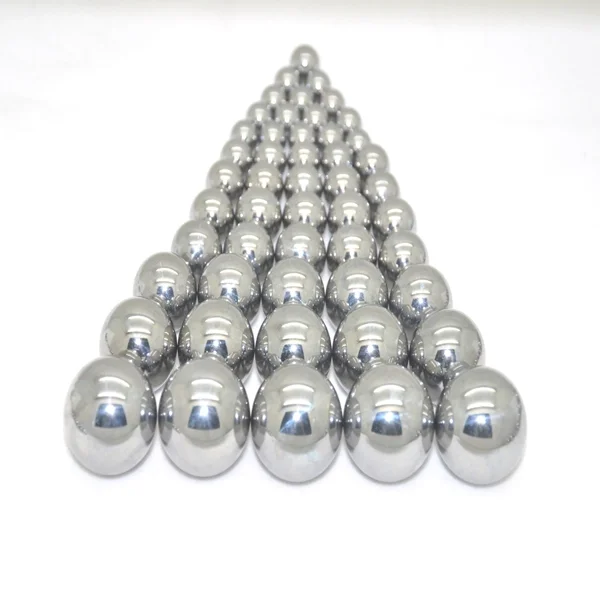
Understanding S-2 Tool Steel as a Specialized Engineering Material
S-2 tool steel, designated as AISI S-2 and UNS T41902, belongs to the shock-resisting tool steel family. This category of tool steel is specifically designed to absorb impact energy while maintaining structural integrity.
Compared with standard carbon steel grades, S-2 offers significantly improved toughness. Compared with some high-hardness bearing steels, it delivers better resistance to cracking under shock conditions. These characteristics explain why many industrial buyers specifically search for S-2 Rockbit Tool Steel Balls or Rock Bit Balls when sourcing components for drilling-related applications.
The material is commonly supplied in quenched and tempered condition, allowing manufacturers to achieve a balanced microstructure that supports both wear resistance and impact durability.
Typical Characteristics of AISI S-2 Tool Steel
| Property | Industrial Benefit |
|---|---|
| High impact toughness | Resists cracking under shock loads |
| Heat-treatable structure | Allows hardness customization |
| Good wear resistance | Extends service life |
| Stable dimensional performance | Supports precision assemblies |
| Strong fatigue resistance | Suitable for repetitive loading |
These characteristics make S2 Tool Steel Balls attractive for applications where standard hardened steel balls may not provide adequate durability.
The Growing Demand for S2 Tool Steel Balls in Industrial Manufacturing
Global manufacturing sectors continue to move toward equipment that operates under higher loads and greater production efficiency requirements. This trend has increased demand for specialized ball components capable of maintaining performance under more aggressive operating conditions.
Industries such as heavy equipment manufacturing, drilling equipment production, mining machinery, industrial fastening tools, and mechanical assembly systems increasingly specify S2 Tool Steel Balls due to their ability to withstand impact-related wear.
Many buyers also prefer working with an experienced steel ball manufacturer capable of providing custom dimensions, controlled heat treatment, and inspection documentation. Material quality alone is not sufficient; manufacturing consistency plays an equally important role in achieving reliable performance.
How Heat Treatment Influences Performance
The effectiveness of S2 Tool Steel Balls depends heavily on the quality of the heat treatment process. Proper quenching and tempering create a microstructure that balances hardness and toughness rather than maximizing either property alone.
Excessive hardness may improve wear resistance but can reduce impact durability. Conversely, insufficient hardness may limit service life in abrasive environments. Achieving the correct balance requires careful control of temperature, cooling rate, and tempering parameters.
For industrial buyers, selecting a supplier with extensive metallurgical expertise helps ensure consistent results across production batches. Variations in heat treatment can significantly influence ball performance even when the material grade remains identical.
Advantages in High Torque Fastener Applications
Torque-driven assemblies place considerable stress on internal mechanical components. During operation, fastening tools often generate repeated impact forces that are transferred through small contact areas.
In these conditions, S2 Tool Steel Balls provide several advantages:
Improved Shock Resistance
The material's shock-resisting characteristics help absorb impact energy without fracturing. This is particularly important in tools that experience rapid engagement and disengagement cycles.
Longer Component Life
Reduced susceptibility to cracking and surface damage contributes to longer service intervals and lower replacement frequency.
Reliable Mechanical Engagement
Precision-manufactured balls help maintain accurate positioning, locking, and indexing functions within fastening mechanisms.
Enhanced Safety
Components capable of resisting sudden failure improve overall equipment reliability and reduce operational risks.
These benefits explain the continued adoption of S-2 Tool Steel Balls across professional-grade fastening equipment and industrial tooling platforms.
Beyond Fasteners: Additional Industrial Uses
Although high torque tools represent an important market segment, the versatility of S2 Tool Steel Balls extends far beyond fastening applications.
Detent Mechanisms
Detent assemblies rely on steel balls to create controlled positioning and tactile feedback. The combination of toughness and wear resistance helps maintain consistent operation over extended service periods.
Indexing Equipment
Indexing mechanisms frequently experience repeated loading cycles. Durable ball materials contribute to accurate positioning and reduced maintenance requirements.
Drilling Equipment Components
The term Rock Bit Balls is commonly associated with drilling-related assemblies. In these applications, impact resistance is often a primary material selection criterion.
Locking Devices
Mechanical locking systems benefit from materials capable of maintaining dimensional integrity while resisting deformation under load.
Heavy Industrial Machinery
Equipment operating in demanding environments often incorporates S-2 Tool Steel Balls where durability and reliability are essential performance requirements.
Manufacturing Precision and Quality Control Requirements
Material selection alone cannot guarantee performance. The manufacturing process must also deliver precise dimensional accuracy, roundness, and surface quality.
Industrial buyers increasingly seek high precision steel balls that meet strict engineering tolerances while maintaining consistent material properties. Precision grinding, polishing, and inspection procedures help ensure reliable operation within mechanical assemblies.
Critical quality control considerations typically include:
Diameter consistency
Roundness verification
Surface finish inspection
Hardness testing
Material certification
Dimensional reporting
These measures support predictable performance across diverse industrial applications.
Custom Manufacturing Supports Specialized Requirements
Many applications require dimensions and tolerances that fall outside standard catalog specifications. As a result, custom manufacturing has become an important aspect of the S2 Tool Steel Balls market.
Customization may include:
| Custom Option | Purpose |
|---|---|
| Non-standard diameters | Specialized equipment designs |
| Inch and metric sizing | International compatibility |
| Surface finishing options | Performance optimization |
| Custom hardness range | Application-specific requirements |
| Export packaging | Global logistics support |
The ability to tailor products according to engineering drawings allows OEM manufacturers to optimize component performance while simplifying procurement processes.
Factors Buyers Should Evaluate Before Sourcing
Purchasing decisions should extend beyond pricing considerations. Several technical and operational factors influence long-term value.
Material Verification
Buyers should confirm compliance with AISI S-2 and UNS T41902 specifications.
Production Capability
Consistent quality requires controlled manufacturing processes and adequate production capacity.
Inspection Support
Comprehensive inspection reports help verify dimensional accuracy and material compliance.
Technical Expertise
Suppliers with extensive experience in steel ball production can often provide valuable guidance regarding material selection and application suitability.
Supply Stability
Reliable production scheduling supports uninterrupted manufacturing operations and reduces procurement risks.
Why Eurasian Supports Global Industrial Buyers
Eurasian supplies S2 Tool Steel Balls for customers requiring dependable quality, flexible manufacturing capabilities, and international sourcing support. With experience across multiple precision ball categories, Eurasian combines metallurgical expertise, advanced production technology, and strict quality management practices to support demanding industrial applications.
The company's manufacturing capabilities extend across numerous material grades, allowing customers to source multiple ball types through a single supplier relationship. This approach simplifies procurement while improving supply chain efficiency.
Eurasian also supports customized production requirements, including special diameters, tailored tolerances, inspection documentation, and export-oriented packaging solutions. These capabilities help OEM manufacturers and industrial distributors streamline purchasing activities while maintaining product quality standards.
The Future of Impact-Resistant Ball Components
As industrial equipment continues evolving toward higher performance levels, demand for specialized materials is expected to grow. Components operating under increased loads require materials capable of delivering durability without sacrificing reliability.
S2 Tool Steel Balls remain well-positioned to support these requirements because they offer a unique balance of toughness, hardness, and wear resistance. Their suitability for shock-loaded applications ensures continued relevance across a broad range of industrial sectors.
For engineers, sourcing specialists, and equipment manufacturers seeking dependable performance in demanding environments, S-2 tool steel continues to represent a practical and proven material choice.
FAQ
What are S2 Tool Steel Balls made from?
S2 Tool Steel Balls are manufactured from AISI S-2 shock-resisting tool steel, also designated as UNS T41902. The material is known for its toughness and resistance to impact loading.
Are S2 Tool Steel Balls the same as Rock Bit Balls?
In many industrial markets, S2 Tool Steel Balls are commonly sold and searched as S-2 Rockbit Tool Steel Balls or Rock Bit Balls, particularly in drilling-related supply chains.
Why are S2 Tool Steel Balls suitable for high torque applications?
Their combination of toughness, hardness, and impact resistance allows them to withstand repeated shock loading commonly found in torque-driven equipment.
Can S2 Tool Steel Balls be manufactured in custom sizes?
Yes. Custom metric and inch diameters, non-standard dimensions, and application-specific tolerances are widely available from qualified suppliers.
What quality documents are typically available?
Manufacturers can generally provide material certificates, hardness verification, dimensional inspection reports, and other documentation required for industrial purchasing and export projects.
How do S2 Tool Steel Balls differ from bearing steel balls?
While bearing steel balls primarily emphasize hardness and rolling contact performance, S2 Tool Steel Balls are engineered to provide greater impact resistance and toughness under shock-loaded conditions.
What industries commonly use S2 Tool Steel Balls?
Common applications include fastening tools, drilling equipment, detent mechanisms, indexing assemblies, positioning devices, locking systems, and heavy industrial machinery.


