


News

Benefits of Annealed Balls in Precision Engineering
This comprehensive guide examines the technical advantages, application scenarios, and cost-benefit analysis of annealed balls across multiple engineering disciplines.
What Are Annealed Steel Balls?
Annealed steel balls are precision spheres that have undergone annealing heat treatment—a process involving heating the steel to 650-700°C followed by slow furnace cooling. This metallurgical transformation achieves:
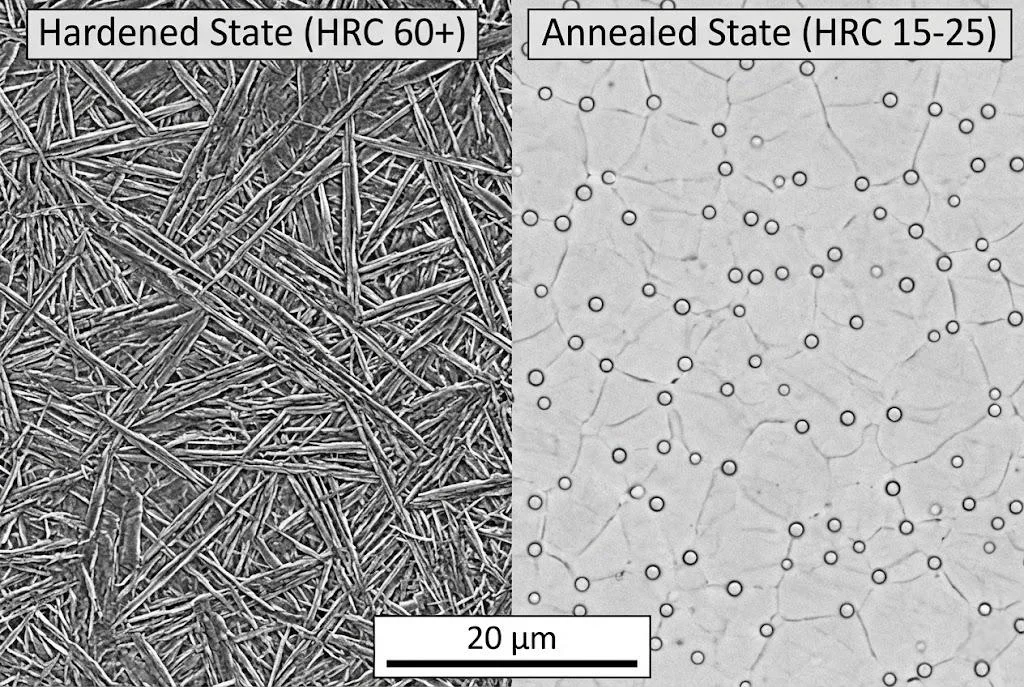
Reduced hardness: From HRC 60-65 (hardened state) to HRC 10-25
Improved ductility: Elongation increases by 40-60%
Stress relief: Eliminates residual stresses from cold forming
Enhanced machinability: Cutting forces reduced by 35-50%
Material Options
Annealed balls are available in multiple base materials:
Carbon Steel (AISI 1010/1015): Most economical for non-corrosive environments
Bearing Steel (GCr15/52100): When subsequent hardening is planned
Stainless Steel (304/316): Combines soft machinability with corrosion resistance
Chrome Steel (AISI 52100): Ideal for precision bearing pre-forms
Key Engineering Benefits
1. Superior Machinability for Secondary Operations
The primary advantage of soft steel balls for machining is their dramatic reduction in cutting resistance. Compared to hardened balls (HRC 60+), annealed variants offer:
50% lower cutting forces during drilling, milling, or turning operations
3-5x extended tool life for carbide and HSS tooling
Tighter tolerances achievable: Machining precision improved to ±0.005mm
Reduced vibration: Softer material dampens chatter during high-speed operations
Engineering Case Study: An automotive component manufacturer switched to annealed bearing steel balls for custom groove machining. Results showed tool replacement cycles extended from 200 to 1,000 pieces, reducing per-unit machining costs by 42%.
2. Simplified Thread Cutting and Custom Features
Many precision assemblies require threaded holes, flats, keyways, or custom geometries machined into spherical surfaces. Annealed balls excel in these scenarios:
Thread cutting: M3-M12 threads machined without work-hardening issues
Flat grinding: Parallel flats within ±0.01mm parallelism
Hole drilling: Through-holes or blind holes without cracking risk
Engraving: Laser or mechanical marking for traceability
3. Deformation Processing Capability
The enhanced ductility of annealed balls precision engineering applications enables cold forming operations impossible with hardened spheres:
Swaging: Diameter reduction by 10-15% without cracking
Coining: Impression of logos or identification marks
Flattening: Controlled deformation for specialized contacts
Clinching: Integration into sheet metal assemblies
4. Welding and Brazing Compatibility
Annealed balls serve as weldable components in assemblies where permanent attachment is required:
Spot welding: Low carbon content (0.10-0.15% C) prevents brittleness
Projection welding: Consistent contact geometry ensures uniform welds
Brazing: Suitable for stainless steel balls in high-temperature joints
No pre-heat required: Eliminates costly furnace operations
Application Example: Conveyor system manufacturers weld annealed carbon steel balls onto mounting brackets, creating pivot points that can later be case-hardened if needed.
5. Cost Efficiency in High-Volume Production
When surface hardness is not critical, annealed balls offer substantial economic advantages:
| Cost Factor | Annealed Balls | Hardened Balls | Savings |
|---|---|---|---|
| Raw Material | Baseline | +15-25% | Reference |
| Heat Treatment | Annealing Only | Quench + Temper | 40% lower |
| Machining Time | 1.0x | 2.5-3.0x | 60% faster |
| Tool Wear | Low | High | 70% reduction |
| Scrap Rate | 0.5-1.0% | 2-4% | 50-75% lower |
For applications requiring 100,000+ units annually, the cumulative savings can reach 30-45% of total component cost.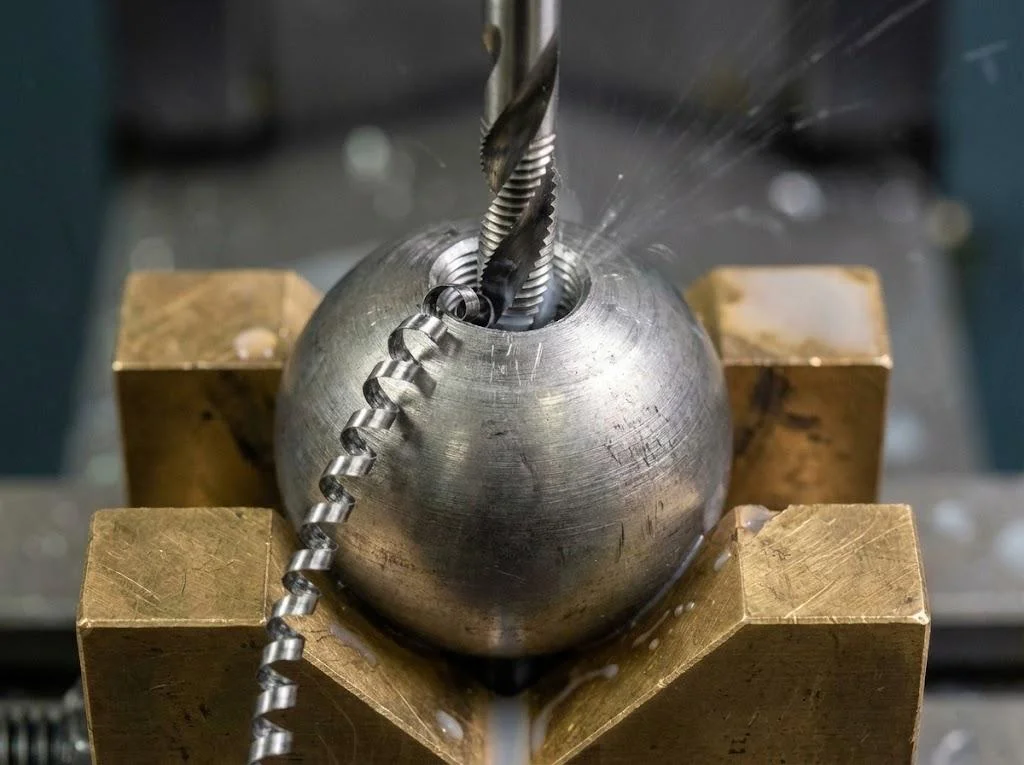
Engineering Application Scenarios
Bearing Pre-Forms and Custom Bearings
Precision annealed balls serve as intermediate products in custom bearing manufacturing:
Groove machining: Annealed balls allow precision groove cutting before final hardening
Cage-integrated designs: Balls welded or crimped into custom retainers
Prototype development: Soft balls enable rapid design iteration without expensive tooling
Non-rotating applications: Static load bearings where hardness is secondary to geometry
Automation and Robotic Systems
Annealed balls function as adjustable mechanical elements:
Threaded ball joints: M6-M10 threads machined directly into sphere
Actuator components: Custom flats for sensor mounting
Linear guide modifications: Drilled balls for lubrication distribution
Gripper contacts: Soft surface prevents workpiece marring
Check Valves and Flow Control
In pneumatic and hydraulic systems where sealing pressure is moderate (≤50 bar):
Soft sealing: Annealed stainless steel balls conform to seat irregularities
Low actuation force: Reduced hardness lowers cracking pressure
Machinable ports: Through-holes enable multi-directional flow
Corrosion resistance: 304/316 annealed balls outlast carbon steel in wet environments
Fixturing and Tooling
Manufacturing engineers specify annealed balls for jigs, fixtures, and gauges:
Locating pins: Balls with machined flats for precise positioning
Adjustable supports: Threaded balls in height-adjustable mechanisms
Soft-touch contacts: Prevents scratching of finished parts
Magnetic mounting: Drilled holes accommodate rare-earth magnets
Decorative and Architectural Hardware
Where aesthetics and formability matter more than load capacity:
Furniture accents: Polished annealed balls with welded studs
Handrail terminals: Threaded connections for easy installation
Kinetic sculptures: Balls requiring custom machining or assembly
Display fixtures: Lightweight soft balls reduce structural loads
Material Selection Guide
Carbon Steel Annealed Balls (AISI 1010/1015)
Best For: Cost-sensitive, non-corrosive indoor applications
Hardness: HRC 10-20
Machinability Rating: 85/100 (excellent)
Corrosion Resistance: Requires coating or plating
Cost: Most economical option
Typical Sizes: 3mm - 50mm
Bearing Steel Annealed Balls (GCr15/52100)
Best For: Components requiring post-machining hardening
Hardness (Annealed): HRC 15-25
Hardness (After Hardening): HRC 60-65
Machinability: Good (75/100)
Dimensional Stability: ±0.01mm after heat treatment
Typical Sizes: 1mm - 100mm
Stainless Steel Annealed Balls (304/316)
Best For: Corrosive environments with machining requirements
Hardness: HRC 20-25 (annealed)
Corrosion Resistance: Excellent (ASTM A380 passivation available)
Machinability: Moderate (65/100, use carbide tooling)
Cost: 2.5-3.5x carbon steel
Typical Sizes: 0.5mm - 50mm
Technical Specifications and Quality Standards
Precision Grade Options
Even in annealed state, these balls maintain tight tolerances:
| Grade | Diameter Tolerance | Sphericity | Surface Roughness |
|---|---|---|---|
| G100 | ±2.5 μm | 2.5 μm | Ra 0.05 μm |
| G200 | ±5.0 μm | 5.0 μm | Ra 0.10 μm |
| G500 | ±12.5 μm | 12.5 μm | Ra 0.20 μm |
| G1000 | ±25.0 μm | 25.0 μm | Ra 0.40 μm |
Note: Post-machining operations may affect final geometry. Specify "final dimensions after customer processing" on purchase orders.
Hardness Verification
Quality annealed balls undergo Rockwell C hardness testing per ASTM E18:
Acceptance Range: HRC 10-25 (±3 HRC tolerance)
Test Load: 150 kgf with diamond indenter
Sample Rate: 100% for critical applications, 10% statistical for high-volume
Chemical Composition Control
For annealed steel balls intended for welding or subsequent heat treatment:
Carbon Steel (AISI 1010):
Carbon: 0.08-0.13%
Manganese: 0.30-0.60%
Phosphorus: ≤0.040%
Sulfur: ≤0.050%
Bearing Steel (GCr15/52100):
Carbon: 0.95-1.05%
Chromium: 1.40-1.65%
Manganese: 0.25-0.45%
Machining Best Practices
Tooling Recommendations
To maximize the machinability advantage of annealed balls:
For Drilling Operations:
Carbide drills: 118° point angle, 12-15° helix
Speeds: 2,500-4,000 RPM for 3-10mm balls
Feeds: 0.05-0.10 mm/rev
Coolant: Water-soluble for carbon steel, neat oil for stainless
For Thread Cutting:
Tap type: Spiral point for through-holes, spiral flute for blind
Thread class: 2B recommended (allows tolerance stack-up)
Lubrication: Sulfur-based tapping fluid reduces torque by 40%
For Milling/Grinding:
Holding: Magnetic or vacuum chucks to prevent deformation
Cutter type: Carbide end mills, 2-4 flutes
Depth of cut: 0.2-0.5mm for finish passes
Work Holding Strategies
The soft nature of annealed balls requires careful fixturing:
V-blocks: Bronze or aluminum faces prevent surface marring
Collet chucks: Limit clamping force to 50-100N
Adhesive mounting: Cyanoacrylate for small balls (≤6mm)
Wax potting: Traditional method for ultra-precision operations
Comparison: Annealed vs. Hardened Balls
When to Choose Annealed Balls
? Secondary machining required (threads, holes, flats)
? Welding or brazing needed in assembly
? High-volume production with tight cost targets
? Deformation processing planned
? Tool life concerns with existing equipment
? Prototype/R&D where iteration speed matters
? Static loading applications (non-rolling contact)
When Hardened Balls Are Necessary
? Rolling contact fatigue resistance critical
? High Hertzian contact stress (>1,500 MPa)
? Abrasive environments requiring surface hardness
? High-speed rotation (>10,000 RPM)
? Extended service life under dynamic loads
? Dimensional stability under thermal cycling
Hybrid Approach: Many engineers specify annealed balls for initial machining, then case harden or through-harden after processing. This combines ease of manufacturing with final performance properties.
Post-Annealing Heat Treatment Options
Case Hardening (Carburizing)
For applications requiring hard surface + tough core:
Process: Carbon diffusion at 900-950°C for 4-8 hours
Case depth: 0.5-2.0mm controllable
Surface hardness: HRC 58-62
Core hardness: HRC 25-35
Distortion: Minimal (±0.02mm on ?20mm ball)
Ideal For: Custom ball joints, threaded actuator balls, mechanically attached components.
Through Hardening (Quench & Temper)
For bearing steel annealed balls requiring full hardness:
Process: Austenitize at 830-850°C → Oil quench → Temper at 150-200°C
Final hardness: HRC 60-65
Distortion risk: Moderate (±0.05mm typical)
Size limitation: Effective for ?3-50mm range
Critical: Specify "post-hardening grinding allowance" of 0.05-0.10mm on diameter.
Surface Treatments
Additional processes compatible with annealed balls:
Zinc plating: Corrosion protection for carbon steel (5-15 μm)
Nickel plating: Enhanced wear resistance (10-25 μm)
Black oxide: Aesthetic finish with mild corrosion resistance
Passivation: For stainless steel per ASTM A967
Quality Assurance and Inspection
Dimensional Verification
For precision annealed balls , verify:
Diameter measurement: Coordinate Measuring Machine (CMM) or micrometer
Sphericity: Roundness tester per ISO 3290-1
Surface finish: Optical profilometer (Ra, Rz values)
Batch consistency: Statistical Process Control (Cpk ≥1.33)
Metallurgical Testing
Critical for applications with subsequent heat treatment:
Microstructure analysis: Verify complete annealing (no martensite)
Grain size: ASTM E112 (typically 6-8 for carbon steel)
Decarburization check: Surface carbon loss <0.05mm
Inclusion rating: ASTM E45 Method A (≤1.5 severity)
Cost-Benefit Analysis Example
Case Study: Automotive Sensor Housing
Component Requirements:
8mm diameter ball with M4 threaded hole
Material: AISI 52100 bearing steel
Annual volume: 250,000 pieces
Final hardness: HRC 60-62 required
Process Comparison:
| Approach | Process Steps | Cost/Unit | Lead Time |
|---|---|---|---|
| Hardened Ball | Purchase HRC 60 balls → Anneal → Machine → Re-harden | $1.85 | 6 weeks |
| Annealed Ball | Purchase annealed → Machine → Case harden | $1.12 | 3 weeks |
Annual Savings: (250,000 × $0.73) = $182,500
Additional Benefits: 50% faster tool changes, 30% reduction in scrap
Sourcing Considerations
Supplier Quality Indicators
When procuring annealed steel balls , evaluate:
Manufacturing Capability:
Annealing furnace control: ±10°C temperature uniformity
Lot traceability: Heat number stamped on packaging
Inventory depth: Stock availability for common sizes (3-25mm)
Custom processing: In-house machining, plating, heat treatment
Certifications:
ISO 9001:2015: Baseline quality management
ISO 3290-1: Steel balls for bearings specification
IATF 16949: For automotive supply chain
Material test reports: Chemical analysis + mechanical properties
Technical Support:
Engineering assistance: Help optimizing annealing parameters
Machining guidance: Recommended tooling and speeds/feeds
Post-treatment coordination: Case hardening or plating services
Common Engineering Challenges and Solutions
Challenge 1: Deformation During Machining
Problem: Soft balls distort under clamping pressure, causing out-of-round conditions.
Solution:
Use soft-jaw chucks with curved surfaces matching ball radius
Limit clamping force to 20-30% of ball yield strength
Implement sequential machining (rough → stress-relief pause → finish)
Consider ice fixturing for ultra-precision (freeze ball in ice block)
Challenge 2: Surface Galling During Drilling
Problem: Drill bit grabs soft material, creating torn surface finish.
Solution:
Use carbide drills with polished flutes (Ra <0.2 μm)
Apply sulfur-chlorine cutting fluid for extreme pressure lubrication
Reduce feed rate to 0.03-0.05 mm/rev for entry/exit
Use peck drilling cycle with 2mm incremental depth
Challenge 3: Thread Stripping Risk
Problem: Soft threads strip during assembly torque application.
Solution:
Specify Class 3B thread tolerance (tighter fit reduces play)
Use thread locking compound (medium strength)
Consider helicoil inserts for high-cycle applications
Implement torque limiting tools (preset to 70% of strip torque)
Challenge 4: Inconsistent Hardness After Re-Hardening
Problem: Machined annealed balls show HRC variation after customer heat treatment.
Solution:
Request tight carbon content specification (±0.02% for 52100 steel)
Verify complete annealing via microstructure (no retained carbides)
Use neutral atmosphere furnace for re-hardening (prevents decarb)
Conduct pilot heat treatment on 50-piece sample lot
Environmental and Safety Considerations
Material Handling
Soft steel balls for machining require standard precautions:
Storage: Dry environment (<50% RH) to prevent rust on carbon steel
Handling: Avoid dropping; even soft balls can cause crush injuries
Machining waste: Collect chips for steel recycling (95% recovery rate)
Coating overspray: Zinc plating requires wastewater treatment (EPA compliance)
Sustainable Manufacturing
Annealed balls offer environmental advantages:
Energy savings: Annealing consumes 40% less energy than full hardening
Tool longevity: Extended tool life reduces tungsten carbide mining demand
Scrap reduction: Lower machining forces = fewer rejected parts
Recyclability: 100% steel content is infinitely recyclable
Future Trends in Annealed Ball Technology
Advanced Annealing Processes
Laser annealing: Localized softening for hybrid hardness zones
Induction tempering: Rapid cycle times for high-volume production
Controlled atmosphere: Bright annealing eliminates descaling operations
Material Innovations
Micro-alloyed steels: Vanadium/niobium additions improve machinability by 25%
Pre-coated annealed balls: Factory-applied dry film lubricants
Gradient hardness: Annealed surface + harder core for specialized applications
Digital Integration
Hardness mapping: Non-destructive eddy current testing for 100% inspection
AI-optimized machining: Machine learning predicts optimal speeds/feeds per lot
Blockchain traceability: Full supply chain transparency for aerospace/medical
FAQ: Annealed Steel Balls in Precision Engineering
What is the typical hardness range for annealed steel balls?
Annealed steel balls typically exhibit a hardness range of HRC 10-25 (Rockwell C scale), depending on the base material. Carbon steel (AISI 1010) measures HRC 10-20, while bearing steel (GCr15/52100) in annealed condition reaches HRC 15-25. This reduced hardness—compared to HRC 60-65 for hardened balls—enables superior machinability and deformation processing.
Can annealed balls be hardened after machining?
Yes, annealed bearing steel balls (GCr15/52100) can be through-hardened or case-hardened after custom machining operations. Through-hardening via quench and temper achieves HRC 60-65, while carburizing creates a hard case (HRC 58-62) with a tough core. Specify a grinding allowance of 0.05-0.10mm to accommodate dimensional changes during heat treatment.
What are the cost savings compared to machining hardened balls?
Machining annealed balls delivers 30-60% lower per-unit costs versus machining hardened spheres, primarily due to:
50% reduction in cutting forces (faster cycle times)
3-5x extended tool life (fewer carbide inserts consumed)
50-75% lower scrap rates (less cracking/chipping)
Elimination of expensive grinding operations
For high-volume production (100,000+ units), cumulative savings can reach $0.50-1.50 per ball.
Which materials are available as annealed balls?
Common annealed ball materials include:
Carbon Steel (AISI 1010/1015): Most economical for indoor use
Bearing Steel (GCr15/52100): For post-machining hardening
Stainless Steel (304/316/420): Corrosion resistance + machinability
Chrome Steel (AISI 52100): High-precision bearing applications
Each material offers different hardness, corrosion resistance, and cost profiles to match application requirements.
What precision grades are achievable with annealed balls?
Annealed balls are manufactured to standard bearing grades G100 through G1000:
G100: ±2.5 μm diameter tolerance (ultra-precision)
G200: ±5.0 μm (precision bearings)
G500: ±12.5 μm (general industrial)
G1000: ±25.0 μm (commercial applications)
Note that post-machining operations may affect final tolerances; specify "as-machined dimensions" separately from purchased ball accuracy.
How does annealing affect corrosion resistance?
The annealing process itself does not reduce inherent corrosion resistance of the base material. However, annealed carbon steel balls require protective coatings (zinc plating, black oxide) for corrosive environments. Annealed stainless steel (304/316) retains excellent corrosion resistance, especially when passivated per ASTM A967 after machining.
What are the best cutting tools for machining annealed balls?
Optimal tooling for annealed steel ball machining:
Drilling: Carbide drills with 118° point angle, polished flutes
Threading: Spiral point taps for through-holes, spiral flute for blind holes
Milling: 2-4 flute carbide end mills
Turning: CNMG/WNMG inserts with positive rake geometry
Use sulfur-based cutting fluids to reduce friction and extend tool life by 40-60%.
Can annealed balls be welded or brazed?
Yes, annealed balls—especially low-carbon grades (AISI 1010, <0.15% C)—are highly weldable via:
Spot welding: 3-5 kA current for 3-10mm balls
Projection welding: Consistent geometry ensures uniform welds
MIG/TIG welding: For stainless steel balls in structural assemblies
Brazing: Silver or copper-phosphorus alloys for high-temp joints
No pre-heating required, and post-weld stress relief is optional for non-critical applications.
What size range is available for annealed steel balls?
Standard annealed ball inventory typically covers:
Miniature sizes: 0.5mm - 3mm diameter
Precision sizes: 3mm - 25mm (most common stock range)
Large sizes: 25mm - 100mm (may require custom production)
Sizes beyond 100mm are feasible but require specialized annealing furnaces; consult suppliers for lead times and minimum order quantities.
How should annealed balls be stored to prevent rust?
For carbon steel annealed balls:
Environment: <50% relative humidity, temperature 15-25°C
Packaging: VCI (Vapor Corrosion Inhibitor) bags or oil-coated
Handling: Wear powder-free gloves to prevent fingerprint corrosion
Long-term storage: Desiccant packs or nitrogen-purged containers
Stainless steel annealed balls are far less sensitive but should still avoid chloride exposure (saltwater, certain cleaning agents).
Conclusion
Annealed steel balls represent a strategic material choice for precision engineering applications where machinability, formability, and cost efficiency outweigh the need for maximum surface hardness. By reducing hardness to HRC 10-25, these soft steel spheres enable:
50% faster machining cycles with dramatically extended tool life
Complex secondary operations (threading, drilling, welding) impossible with hardened balls
30-45% total cost reduction in high-volume manufacturing scenarios
Flexible processing paths including post-machining heat treatment for hybrid properties
Whether you're a mechanical design engineer seeking weldable ball joints, an automation specialist requiring custom-threaded spheres, or a manufacturing engineer optimizing tooling costs, annealed balls deliver measurable technical and economic advantages.
For applications requiring final hardness, the machine-then-harden approach combines the best of both worlds: ease of processing during manufacturing with superior performance in service.
Ready to Optimize Your Engineering Projects?
Our technical team specializes in annealed balls precision engineering solutions, offering:
? Material selection guidance for your specific application
? Custom machining services (threads, flats, holes, engravings)
? Post-treatment coordination (hardening, plating, coating)
? Free sample kits for machining trials (5-10 pieces)
? Technical data sheets with certified test reports
Contact our engineering support team for application-specific recommendations and quotations.


