


News


Selecting Precision Glass Balls by Diameter, Roundness, and Surface Finish
Why Selection Criteria Matter for Precision Glass Balls
Choosing precision glass balls is not simply a matter of selecting the correct diameter. In applications involving valves, flow meters, laboratory equipment, pumps, bearings, or precision instruments, the performance of a glass sphere depends on several interacting factors. Diameter, roundness, surface finish, material stability, and dimensional consistency can all influence how accurately the component moves, seals, meters, or contacts surrounding parts.
For engineers and purchasing teams, selecting the right glass sphere requires a clear understanding of the operating environment and the function of the component. A ball used as a sealing element may require a different surface condition from one used in an optical or measurement application. Similarly, a component exposed to thermal changes or aggressive fluids may benefit from borosilicate glass rather than soda lime glass. Evaluating these factors together can help avoid premature wear, leakage, dimensional instability, and inconsistent equipment performance.
Start With the Correct Diameter
Diameter is one of the first specifications to establish when sourcing precision glass balls, but it should be considered in relation to the mating component rather than as an isolated measurement. The available diameter range from Changzhou Eurasian extends from 1 mm to 100 mm, allowing glass spheres to be selected for small precision components as well as larger industrial assemblies.
A suitable diameter should provide the required clearance, movement, or contact area within the application. Excessive clearance may reduce sealing effectiveness or create unwanted movement, while an oversized ball can increase friction or interfere with component operation. For applications with narrow dimensional windows, maintaining a consistent diameter across the production batch is particularly important because even small variations can affect assembly and repeatability.
When purchasing custom glass balls, buyers should therefore specify not only the nominal diameter but also the acceptable tolerance. Changzhou Eurasian can manufacture precision glass spheres to a tolerance as tight as ±0.02 mm, depending on the required specification and application.
Roundness Controls Contact and Movement
Why Sphericity Is More Than a Cosmetic Feature
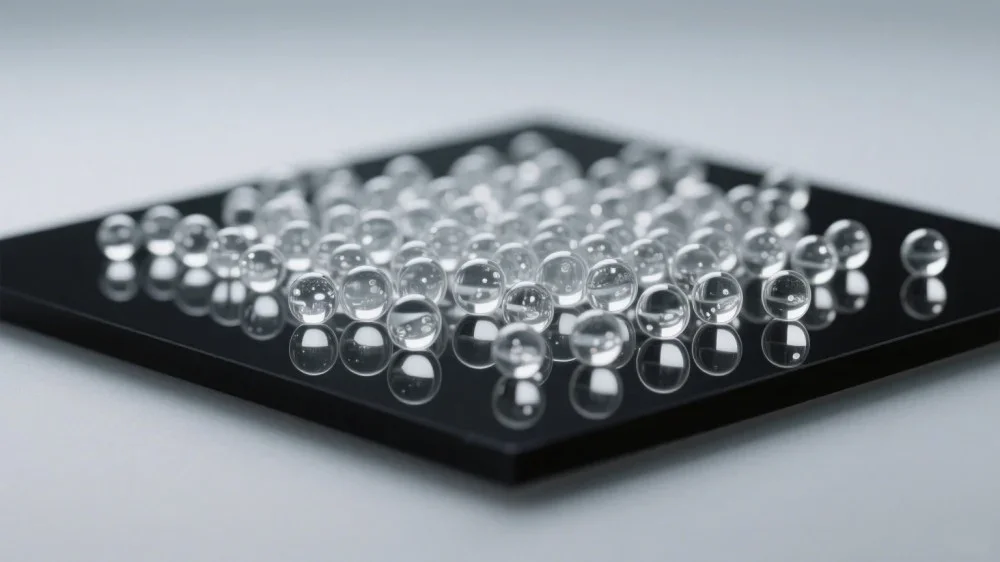
A glass ball can have the correct nominal diameter while still failing to deliver the expected performance if its shape deviates significantly from a true sphere. Roundness directly influences contact behavior, rolling movement, sealing consistency, and alignment. This makes it an important consideration for precision glass balls used in mechanical and fluid-control applications.
A highly spherical ball provides more predictable contact with its mating surface. In a valve, this can help maintain consistent sealing around the contact area. In a bearing or precision mechanism, improved roundness can support smoother movement and more uniform load distribution. For measurement equipment, dimensional and geometric consistency can contribute to more repeatable operation.
The importance of roundness becomes greater as the size of the mating surface decreases or the required operating tolerance becomes tighter. Engineers should therefore evaluate spherical accuracy alongside diameter rather than treating the two specifications as interchangeable.
Surface Finish Affects Sealing and Friction
Surface finish is another critical factor when selecting precision glass balls for industrial applications. A polished surface can provide a smoother contact interface, which is valuable where the ball repeatedly contacts a seat, valve body, bearing surface, or other precision component. Reduced surface irregularity can help minimize friction and support more consistent movement.
A matte or less reflective finish may be appropriate for applications where optical appearance, light diffusion, or a particular surface characteristic is required. The correct finish ultimately depends on the functional purpose of the sphere rather than a universal preference for either polished or matte surfaces.
For sealing applications, surface condition should be considered together with the hardness and geometry of the mating component. A smooth and dimensionally consistent sphere can provide a more predictable interface, particularly when the application requires repeated opening and closing cycles or stable fluid control.
| Selection Factor | Main Consideration | Typical Application Concern |
|---|---|---|
| Diameter | Dimensional fit and tolerance | Assembly and clearance |
| Roundness | Spherical accuracy | Sealing and movement |
| Surface finish | Contact smoothness | Friction and leakage |
| Glass material | Thermal and chemical conditions | Service stability |
| Color or appearance | Functional or visual requirement | Identification or optical use |
Choose Glass Material by Operating Conditions
Not all precision glass balls should be manufactured from the same glass composition. Changzhou Eurasian primarily supplies soda lime glass and borosilicate glass, with each material offering characteristics suited to different operating environments.
Soda lime glass is a practical choice for applications requiring good electrical and corrosion resistance under moderate temperature conditions. It is also available in different colors and surface finishes, making it suitable for industrial components, flow-control parts, and applications where visual differentiation is useful.
Borosilicate glass is better suited to environments involving thermal shock, elevated temperatures, or demanding chemical exposure. Its strong thermal resistance and chemical stability make it valuable for laboratory equipment, precision instruments, fluid-handling components, and applications where repeated temperature changes could place stress on the material.
Material selection should therefore begin with the actual working conditions. Temperature, chemical exposure, fluid composition, mechanical contact, and electrical requirements should all be reviewed before the final glass type is specified.
Consider Chemical Compatibility Before Ordering
For precision glass balls used in fluid control, chemical compatibility can be just as important as dimensional accuracy. Glass generally provides strong resistance to many chemical environments, but different formulations and operating conditions can place different demands on the material.
This consideration is especially relevant to pharmaceutical equipment, food-processing components, laboratory instruments, ink pumps, and cosmetic dispensing mechanisms. In these applications, the ball may remain in repeated contact with liquids for extended periods. Material stability helps maintain the physical characteristics of the sphere and reduces the risk that the component will negatively affect the fluid being handled.
Buyers should provide information about the fluid, temperature, concentration, and exposure conditions when requesting customized glass spheres. This allows the manufacturer to evaluate whether soda lime or borosilicate glass is more appropriate for the intended use.
Match the Ball to the Application
The best precision glass balls for valves, flow meters, and instruments are selected according to the mechanical role they perform. In check valves and metering equipment, dimensional accuracy and surface quality are closely connected with sealing and flow-control performance. For mechanical bearings and plastic components, low friction and consistent geometry may receive greater attention.
Optical and instrumentation applications can place additional requirements on material purity, surface appearance, and dimensional consistency. Meanwhile, ink and cosmetic pumps require a material that can maintain stable performance when repeatedly exposed to different formulations.
Grinding and polishing applications represent another selection category. In these processes, the emphasis may shift toward material durability, size consistency, and resistance to the surrounding working environment. The same nominal diameter does not necessarily provide the same practical result across different applications.
Custom Specifications Should Be Defined Early
What to Confirm With a Glass Ball Manufacturer
When purchasing custom precision glass balls, providing complete specifications at the beginning of the sourcing process can reduce unnecessary revisions and improve production consistency. Diameter and tolerance are essential, but they are not the only details that should be defined.
Purchasers should consider the glass type, surface finish, color when required, dimensional tolerance, intended application, operating temperature, chemical exposure, and packaging requirements. For high-volume procurement, batch consistency and inspection requirements should also be discussed before production begins.
Changzhou Eurasian supports customized sizes, finishes, and colors for different industrial and specialized applications. Its manufacturing process includes raw material selection, controlled forming, cooling, polishing, and dimensional inspection to maintain consistency between production batches.
Quality Inspection Supports Consistent Performance
For high-precision components, inspection is not simply a final production step. It is part of maintaining reliable dimensional performance throughout manufacturing. Diameter, roundness, surface condition, and batch consistency should be evaluated according to the requirements established for the application.
Controlled forming and cooling help reduce internal stress and maintain spherical geometry, while polishing can improve surface quality and dimensional accuracy. Metrology equipment is then used to verify that finished glass spheres meet the specified requirements.
For international buyers, inspection documentation can also simplify incoming quality control. Clearly defined tolerances and inspection standards create a common reference between the manufacturer and purchaser, particularly when glass balls are integrated into automated production or precision assemblies.
A Practical Sourcing Checklist
Before ordering industrial precision glass balls, purchasing teams can use the following checklist to avoid overlooking important specifications:
Confirm the required ball diameter and dimensional tolerance.
Define the required roundness or spherical accuracy.
Select polished or matte surface finish according to the contact requirements.
Choose soda lime or borosilicate glass based on temperature and chemical exposure.
Identify whether color or appearance has a functional purpose.
Confirm the intended application and mating component.
Establish inspection requirements and batch consistency expectations.
Discuss packaging requirements for transportation and storage.
Clarify MOQ and production requirements for trial or volume orders.
This approach moves the purchasing decision beyond simply asking for a particular ball size. It creates a specification based on actual performance requirements, which can make supplier communication more precise and reduce the risk of receiving components that fit dimensionally but perform poorly in operation.
FAQ
What sizes are available for precision glass balls?
Changzhou Eurasian supplies glass balls with diameters ranging from 1 mm to 100 mm. Precision grades can reach tolerances of approximately ±0.02 mm depending on the required specification.
What is the difference between soda lime and borosilicate glass balls?
Soda lime glass is suitable for many general industrial applications involving moderate temperatures, while borosilicate glass provides stronger thermal shock resistance and greater suitability for elevated-temperature and chemically demanding environments.
Does surface finish affect glass ball performance?
Yes. A polished surface can support smoother contact and more consistent movement or sealing, while a matte finish may be selected for specific functional or appearance requirements. The appropriate finish depends on the application.
Why is roundness important for glass spheres?
Roundness affects how evenly a sphere contacts another surface and how consistently it moves. High spherical accuracy is particularly valuable in valves, flow meters, bearings, and precision instruments where small geometric deviations can influence performance.
Can precision glass balls be customized?
Yes. Changzhou Eurasian provides customized glass spheres in different diameters, finishes, and colors. Buyers can also discuss material selection, tolerance, inspection, and packaging requirements according to their application.
Making a Better Glass Ball Selection
Selecting precision glass balls by diameter, roundness, and surface finish provides a more reliable starting point than choosing a sphere based on size alone. The correct combination of geometry, surface condition, glass composition, and dimensional consistency can directly influence sealing, movement, chemical stability, and service performance.
For manufacturers and distributors sourcing glass spheres for industrial, laboratory, mechanical, or precision applications, working with a supplier capable of controlling these variables is equally important. Changzhou Eurasian combines glass material options, precision forming, surface finishing, dimensional inspection, and customized production to support different application requirements. A well-defined specification at the sourcing stage ultimately helps ensure that the finished glass balls perform as intended within the complete assembly.


