


News


Custom Precision Ceramic Balls for Semiconductor Manufacturing
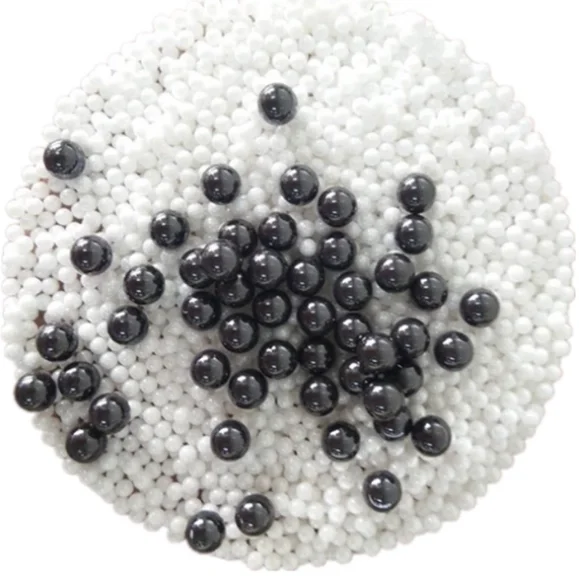
In semiconductor manufacturing, the choice of materials and components directly influences yield, tool uptime, and long?term operational stability. Among the critical elements in precision motion and metrology systems are precision ceramic balls. These components, though compact, play outsized roles in ensuring positional accuracy, minimizing wear, and supporting ultra?high?speed mechanisms used in wafer handling, lithography stages, and robotic arms. In this blog post, Changzhou Eurasian, as high quality Chinese ceramic balls manufacturer, will share the advantages of custom precision ceramic balls for semiconductor manufacturing.
Criticality of Precision Ceramic Balls in Semiconductor Equipment
Precision ceramic balls are not simply substitutes for traditional steel balls; they fulfill engineered roles that directly impact precision fabrication processes. In semiconductor tools such as wafer steppers, cluster tools, and metrology fixtures, even nanometer?scale deviations can propagate into costly defects.
Why Material Selection Matters
The semiconductor environment demands materials with extremely low thermal expansion, high hardness, and consistent mechanical performance under thermal cycling. Advanced ceramics used in these applications—such as alumina oxide, ruby (or sapphire), zirconium oxide, and silicon nitride—have been extensively validated in high?velocity and high?precision mechanisms. Zirconium oxide and silicon nitride in particular balance fracture toughness with thermal stability, making them ideal for precision bearings and spindle components that support sub?micron positional control.
Industry studies highlight that ceramic balls can maintain dimensional stability over billions of cycles, outperforming conventional steel, especially in corrosive or cleanroom environments where stainless steels may falter due to passivation variability. This level of durability aligns with semiconductor OEM expectations for service life and reliability.
Engineering Considerations for Custom Ceramic Balls in Cleanroom Systems
When semiconductor manufacturers specify custom precision ceramic balls, they are not merely ordering off?the?shelf components. They are asking for engineered solutions that reconcile stringent tolerances with compatibility across multiple subsystems.
Dimensional Precision and Surface Integrity
Ceramic balls in semiconductor tools frequently serve as bearing elements or reference surfaces where surface finish and roundness directly affect friction, vibration, and positional repeatability. Tight tolerances—often in the single microinch range—are essential. At Changzhou Eurasian, precision manufacturing processes incorporate multi?axis grinding, lapping, and high?resolution measurement technologies to achieve roundness and sphericity that meet semiconductor OEM quality plans.
Surface integrity encompasses not just geometric precision but also micro?roughness and subsurface stress. These characteristics influence wear behavior and dynamic response. By controlling these factors through optimized processing and in?line inspection, ceramic spheres can deliver predictable performance over extended duty cycles.
Thermal Management in High?Speed Mechanisms
Thermal gradients can induce expansion that disturbs high?speed motion systems. Ceramic balls’ inherently low coefficient of thermal expansion reduces positional drift in stages operating across temperature variations—a critical advantage in processes such as deep ultraviolet lithography where thermal load is significant. This attribute distinguishes ceramic balls for sale aimed at semiconductor applications from generic industrial grade ceramics.
Supply Chain Insights: Aligning Quality with Delivery in Semiconductor Programs
Delivering custom ceramic balls to semiconductor manufacturers is not only about material excellence; it is also about adherence to global supply chain expectations. Semiconductor firms impose rigorous standards for documentation, traceability, change control, packaging, and inspection protocols. Failure to align with these requirements can delay qualification and disrupt production ramp?ups.
Documentation and Quality Assurance Protocols
Global semiconductor OEMs often require:
Full material traceability
Certificates of conformity with ISO/TS or IATF quality standards
Third?party inspection reports on dimensional and material properties
Detailed non?conformance reporting
At Changzhou Eurasian, experience with export customers across Europe, Japan, and North America has driven the development of documentation practices that seamlessly integrate with customer quality systems. This experience shortens qualification cycles for customers searching for chinese ceramic balls or other advanced variants and reinforces confidence in consistent delivery performance.
Packaging and Cleanroom Compliance
The packaging of precision ceramic balls for semiconductor use is itself a technical consideration. Components must be protected from contamination, mechanical shock, and humidity throughout transit and handling. Specialized cleanroom?compatible packaging systems—ranging from nested trays to individual sealed units—are designed to preserve surface quality and reduce particle generation, which aligns with semiconductor fabs’ rigorous particulate controls.
Customization Strategies: Balancing Performance and Manufacturability
Customization is not a luxury; it is a necessity in high?tech manufacturing. However, customization introduces complexity. Semiconductor OEMs need partners who understand how to balance performance goals with manufacturability and cost considerations.
Material Mix Optimization
Choosing the right ceramic material depends on application specifics. For high?load, high?speed bearing applications in wafer handling robots, silicon nitride may offer an optimal balance of hardness, fracture toughness, and thermal stability. In contrast, sapphire or ruby ceramic spheres may be preferred where ultra?low friction and stiffness dominate selection criteria—such as in precision encoders or optical measurement fixtures.
While all these materials offer higher performance than steel alternatives, each has unique machining and supply considerations. For example:
Silicon nitride requires controlled sintering and precision grinding to achieve consistent properties.
Zirconium oxide offers excellent wear resistance but is heavier than silicon nitride.
Alumina remains cost?effective for lower load semiconductor components.
Changzhou Eurasian’s engineering teams partner with customers during early design phases to model life performance and manufacturability, minimizing redesign risks.
Tolerance Class and Functional Requirements
Beyond material choice, tolerance class selection defines operational behavior. In semiconductor tool bearings, geometric precision influences not just fit but dynamic balance, vibration, and resonance characteristics. Components specified to extremely tight grades necessitate advanced metrology and robust process controls.
Industry benchmarks indicate that premium ceramic balls can achieve deviation tolerances below 0.1 μm in sphericity, and surface finishes better than Ra 0.02 μm—metrics that are increasingly demanded in next?generation semiconductor equipment.
Performance Metrics and Reliability Data
Quantifying performance is key for design validation and procurement decisions. In laboratory testing and field evaluations, precision ceramic balls exhibit distinct advantages:
Wear resistance: Ceramic materials demonstrate lower wear rates compared with bearing steels under mixed lubrication scenarios common in vacuum or dry?air environments.
Fatigue life: Silicon nitride ceramic balls have shown fatigue life improvements of up to 3–5× over high?grade bearing steel in comparable load conditions.
Thermal stability: Ceramic balls maintain form and mechanical properties across temperature swings experienced in processing tools.
Published reliability studies in tribology journals underscore these behaviors, validating why high?throughput semiconductor systems increasingly rely on ceramic motion components. While individual results vary by application, broad consensus confirms ceramics’ performance edge under demanding operational profiles.
Aligning with Global Standards and Sustainability Goals
As semiconductor manufacturers push toward more sustainable operations, material sourcing and lifecycle impacts are gaining attention. Ceramic balls, due to their long service life and lower maintenance requirements, contribute to reduced downtime and fewer replacements—both aligning with productivity and sustainability goals.
Compliance with International Frameworks
Buyers often require compliance not only with quality standards but also with environmental and conflict minerals frameworks. Ceramic materials, sourced and processed with documented supply chains, can meet these expectations when suppliers maintain robust governance and reporting.
Changzhou Eurasian participates in supplier audits and environmental reporting programs to support customers’ compliance goals—for buyers needing ceramic spheres that satisfy rigorous corporate responsibility criteria.
Practical Guidance for Procuring Precision Ceramic Balls
For procurement professionals involved in semiconductor equipment manufacturing, sourcing precision ceramic balls effectively requires:
Defining functional priorities: Clarity on load profiles, thermal environment, and life expectations informs optimal specification.
Assessing supplier capabilities: Evaluate not just technical capacity but documentation practices, inspection rigor, and export experience.
Planning qualification timelines: Incorporate early engagement with suppliers like Changzhou Eurasian to align testing plans and expedite approvals.
A practical rule of thumb in high?precision components is to engage suppliers as collaborative partners rather than transactional vendors. This approach yields better outcomes in performance validation, risk mitigation, and long?term supply stability.
Future Trends: Ceramic Innovations in Semiconductor Systems
Looking ahead, material and manufacturing innovations will continue to expand the role of ceramic balls in semiconductor systems. Areas of development include:
Nano?structured ceramics: Tailored microstructures aimed at further enhancing toughness and wear resistance.
Advanced coatings: Ceramic balls integrated with specialized coatings to reduce friction or enhance tribological behavior in specific environments.
Additive manufacturing integration: Hybrid manufacturing approaches where 3D?printed ceramic substrates support embedded precision spheres.
These trends underscore why early, deep collaboration between buyers and manufacturers matters. Suppliers with R&D depth and application experience are better positioned to co?develop next?generation solutions.
Conclusion
Custom precision ceramic balls are indispensable in semiconductor manufacturing systems where mechanical precision, thermal stability, and long service life are paramount. Through material science expertise, controlled manufacturing, and a deep understanding of global OEM requirements, Changzhou Eurasian delivers ceramic motion solutions that align with the exacting demands of semiconductor tool builders. From optimized material selection to quality documentation, from supply chain resilience to performance validation, strategic sourcing of precision ceramic balls can accelerate development cycles and enhance operational outcomes.
Whether you are assessing ceramic balls for sale to support high?throughput fabrication or evaluating long?term supply partners for next?generation systems, grounding decisions in data, cross?disciplinary engineering insights, and robust quality practices will drive better performance and competitive differentiation.
Frequently Asked Questions
Q1: What makes precision ceramic balls suitable for semiconductor manufacturing?
Precision ceramic balls offer superior hardness, low density, low thermal expansion, and excellent wear resistance. These properties ensure stability in high-speed, high-precision semiconductor equipment, reducing positional deviations and extending component life.
Q2: How do Changzhou Eurasian’s ceramic spheres comply with global standards?
Changzhou Eurasian has extensive experience serving global OEMs and export customers. Their ceramic balls comply with ISO/TS quality standards, provide full traceability, and meet third-party inspection requirements, ensuring consistent quality and reliability for international buyers.
Q3: What types of ceramic materials are typically used in semiconductor tools?
Common materials include alumina oxide, ruby (or sapphire), zirconium oxide, and silicon nitride. Each material is selected based on application-specific needs, such as thermal stability, hardness, and fracture toughness.
Q4: Can I purchase custom-sized ceramic balls directly from China?
Yes, ceramic balls for sale and custom precision ceramic balls are available through trusted manufacturers like Changzhou Eurasian, who provide tailored solutions and maintain high-quality production standards.
Q5: How do ceramic balls compare with steel in semiconductor applications?
Ceramic balls have lower density, reduced thermal expansion, higher hardness, and longer fatigue life compared with steel. These advantages make them ideal for high-precision, high-speed mechanisms in semiconductor systems where dimensional stability is critical.


