


News


Ceramic Precision Balls in High-Velocity and Extreme Environments
Ceramic precision balls are increasingly specified in systems where rotational speed, thermal stability, and service life are more critical than conventional load ratings. Engineers who already understand the fundamentals tend to focus less on “what they are” and more on how material behavior, processing control, and supply consistency influence long-term performance. In this blog post, Changzhou eurasian, as high performance Chinese ceramic balls manufacturer, will share the role of ceramic precision balls in high-velocity and extreme environments.
How Ceramic Precision Balls Behave Under High Velocity Stress
In very high velocity applications, centrifugal force, surface fatigue, and thermal gradients become dominant failure drivers. Ceramic precision balls respond differently from steel because of their lower density and higher elastic modulus. Lower mass directly reduces centrifugal loading on raceways, which helps maintain contact geometry at elevated speeds.
From an engineering standpoint, the reduced coefficient of thermal expansion is just as important. When a bearing system transitions rapidly between temperature states, ceramic balls maintain dimensional stability, minimizing preload variation. According to ISO 26602 guidance on hybrid bearing design, ceramics can reduce speed-related heat generation by more than 20% compared with all-steel configurations under identical lubrication conditions. This behavior is one reason designers select ceramic spheres for spindles, vacuum equipment, and gas turbines where rotational consistency outweighs shock load tolerance.
Alumina, Zirconia, Silicon Nitride and Sapphire: Material Trade-Offs in Practice
The four commonly specified materials—alumina oxide, zirconium oxide, silicon nitride, and ruby or sapphire—are often discussed as interchangeable. In practice, each introduces distinct performance boundaries.
High-purity alumina ceramic balls are favored where chemical stability and electrical insulation are primary requirements. Zirconium oxide brings higher fracture toughness, making it more forgiving in mixed-load systems with intermittent vibration. Silicon nitride remains the reference material for ultra-high speed bearings because of its superior strength-to-weight ratio and resistance to thermal shock. Sapphire and ruby, both single-crystal forms of aluminum oxide, are selected for extreme hardness and wear predictability rather than cost efficiency.
ASTM F2094 and related material standards consistently show that silicon nitride maintains flexural strength above 800 MPa at temperatures exceeding 800 °C, while most steels degrade sharply above 300 °C. These data points explain why ceramic precision balls extend service intervals in environments where metal fatigue would otherwise dominate maintenance schedules.
Surface Integrity and the Role of Manufacturing Discipline
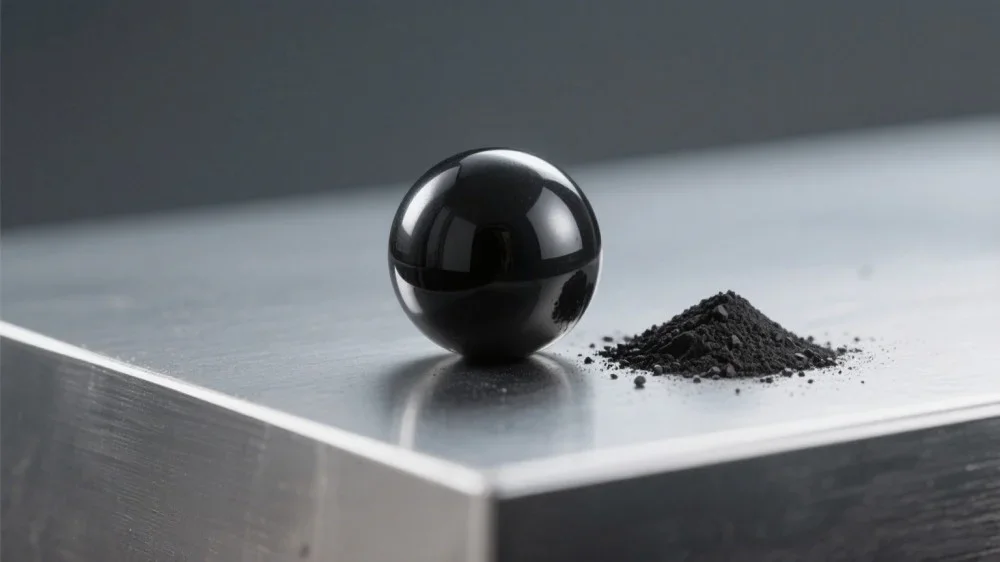
For ceramic precision balls, surface integrity is not a cosmetic concern but a functional one. Microscopic surface flaws act as stress concentrators, especially under rolling contact at high speed. Advanced grinding and lapping processes are therefore as critical as raw material selection.
Experienced buyers evaluate suppliers based on roundness deviation, surface roughness consistency, and batch-to-batch repeatability rather than nominal hardness values. ISO 3290 and ABMA grading systems provide a common language, but real-world performance depends on process discipline. This is particularly relevant when sourcing ceramic balls for sale at scale, where minor deviations can accumulate into measurable system losses.
Thermal Expansion Control in Multi-Material Assemblies
One often underestimated aspect of ceramic precision balls is their interaction with surrounding metallic components. Bearings, valves, and guide mechanisms rarely consist of ceramics alone. When aluminum, steel, and ceramic components expand at different rates, internal stresses can rise quickly.
Design teams who account for this behavior early tend to achieve longer operational stability. For example, pairing ceramic spheres with aluminum housings can reduce differential expansion stress compared with steel-on-steel systems, especially in cyclic thermal environments. Industry studies published by the American Ceramic Society indicate that mixed ceramic-metal assemblies can cut thermally induced preload fluctuation by up to 30%, provided tolerances are harmonized during design.
Longevity Expectations Beyond Standard L10 Calculations
Traditional bearing life calculations, such as ISO 281 L10 life, were developed primarily for steel rolling elements. Applying them directly to ceramic precision balls can underestimate actual service life in high-speed or corrosive conditions.
Field data from aerospace auxiliary systems and semiconductor vacuum equipment suggest that ceramic rolling elements often exceed calculated life by a factor of two or more when lubrication breakdown or corrosion would otherwise dominate failure modes. This does not imply ceramics are universally superior, but it highlights why experienced engineers view ceramic precision balls as a risk-mitigation strategy rather than a simple performance upgrade.
Global Supply Considerations and the Reality of Chinese Ceramic Balls
As demand grows, many buyers evaluate chinese ceramic balls as part of their sourcing strategy. The market spans a wide range—from basic industrial grades to tightly controlled precision products suitable for export-regulated industries.
The key differentiator is not geography but quality systems and materials know-how. Suppliers operating under automotive or aerospace-derived quality frameworks are better positioned to deliver consistent ceramic precision balls that meet international inspection standards. This distinction matters when ceramic spheres are integrated into safety-critical or high-speed assemblies where failure costs far exceed component price.
Packaging, Handling, and Hidden Performance Risks
Even perfectly manufactured ceramic precision balls can suffer performance degradation through improper packaging and handling. Ceramics are hard but not immune to surface damage from impact or contamination. Professional ceramic precision ball packaging minimizes micro-chipping and surface abrasion during transport and storage.
Experienced procurement teams specify packaging requirements as part of technical documentation, particularly when ordering ceramic balls for sale in bulk. This attention to detail reduces incoming inspection failures and stabilizes downstream assembly processes.
Why Choose Eurasia
Changzhou eurasian positions itself as a technically reliable partner for precision balls by combining automotive-grade quality systems with cross-material manufacturing experience. Certified to IATF 16949:2016 and supported by CQI-9-based process control, Eurasian applies consistent inspection discipline to both metallic and ceramic products, ensuring predictable roundness, surface integrity, and batch uniformity. With an integrated portfolio covering steel, aluminum, and advanced ceramic spheres, global OEM and export customers can consolidate sourcing, align quality standards, and reduce qualification risk—particularly when selecting stable suppliers of chinese ceramic balls for long-term, high-speed or thermally demanding applications.
Looking Ahead
For engineers and sourcing professionals, ceramic precision balls represent more than a material upgrade. They are a strategic component choice that influences thermal behavior, maintenance cycles, and system reliability over time. As standards evolve and high-speed applications become more widespread, the role of advanced ceramics will continue to expand—especially when paired with disciplined manufacturing and globally recognized quality systems.
When evaluated through this broader, experience-based lens, ceramic precision balls become a lever for performance predictability rather than a speculative design choice, reinforcing their position in the most demanding industrial environments.
Frequently Asked Questions About Ceramic Precision Balls
How do ceramic precision balls perform in continuous high-speed operation?
In continuous high-velocity environments, ceramic precision balls typically generate less centrifugal force and lower heat buildup than steel alternatives due to their reduced density and stable elastic modulus. This helps maintain consistent contact geometry over long operating cycles, especially in spindles and vacuum systems where speed stability is more critical than shock resistance.
Are ceramic spheres suitable for mixed-material assemblies?
Yes, but thermal expansion behavior must be considered during design. Ceramic spheres expand significantly less than steel or aluminum, which can reduce preload fluctuation in thermally dynamic systems. Proper tolerance matching is essential to avoid unintended stress concentration in housings or raceways.
What inspection parameters matter most when sourcing ceramic balls for sale?
Beyond diameter tolerance, experienced buyers focus on roundness deviation, surface roughness (Ra), and internal defect control. These parameters directly influence rolling fatigue life and noise performance, particularly in high-speed or precision-guided assemblies.
How consistent are chinese ceramic balls across different suppliers?
Consistency varies widely. Performance depends less on country of origin and more on material purity, grinding and lapping control, and the supplier’s quality management system. Manufacturers operating under automotive or precision-engineering standards generally deliver more stable ceramic precision balls suitable for export and long-term programs.
Can ceramic precision balls extend service life without changing lubrication systems?
In many cases, yes. Ceramics are chemically inert and resist micro-welding and corrosion, which allows them to maintain surface integrity even when lubrication conditions are less than ideal. However, lubrication strategy should still be validated at system level rather than assumed.
What packaging practices help preserve ceramic ball performance?
Professional ceramic precision ball packaging minimizes impact, vibration, and contamination during transport. Proper separation, clean handling, and controlled packing materials reduce the risk of surface micro-damage that could otherwise shorten fatigue life after installation.


