


News


Custom Germanium Ball Manufacturing for Semiconductor Applications
Precision Material Solutions for Modern Semiconductor and Infrared Engineering
In advanced manufacturing environments, material selection is often the deciding factor between standard performance and exceptional technical capability. As semiconductor fabrication, infrared sensing, and optical engineering continue to evolve toward tighter tolerances and higher functional requirements, manufacturers increasingly depend on specialized materials that can deliver stable physical properties, excellent processing compatibility, and long-term reliability. Among these advanced materials, custom germanium balls products have emerged as an essential precision component for engineers and procurement teams seeking high-performance solutions for semiconductor applications.
Unlike conventional industrial balls made from stainless steel, ceramics, or tungsten, germanium-based spherical components are engineered for specialized technical environments where optical performance, material purity, and dimensional precision are critical. Their unique semiconductor properties, combined with superior infrared transmission and a high refractive index, make them valuable across a broad range of industrial and scientific applications.
At Eurasian, we combine precision ball manufacturing expertise with advanced material engineering to produce high-quality custom germanium components for demanding global industries.
Why Germanium Is a Strategic Material for Precision Engineering
Germanium (Ge) is a rare metalloid with a unique combination of electrical, thermal, and optical characteristics that distinguish it from standard industrial materials. Originally used in early transistor technology, germanium has evolved into a critical material for infrared optics, semiconductor devices, and specialized scientific instrumentation.
Its value comes from several fundamental material advantages:
High refractive index enables excellent optical focusing performance in infrared systems.
Broad infrared transmission capability, typically between 1.8 and 23 μm, makes it ideal for thermal and IR applications.
High density, approximately 5.33 g/cc, supports compact mechanical designs requiring increased mass.
Excellent machinability allows for precision grinding, polishing, and customized dimensional production.
Stable thermal properties support reliable use in demanding industrial environments.
Because of these characteristics, a precision germanium ball is not simply a metal sphere—it is a highly engineered technical component designed for advanced systems.
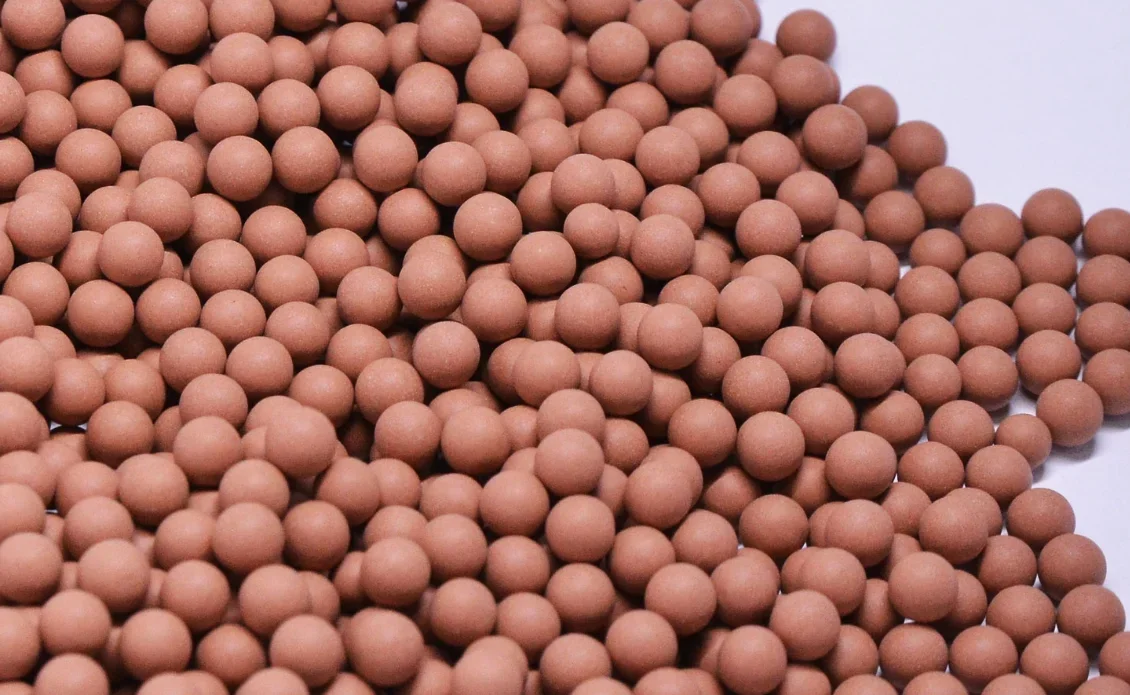
Understanding the Manufacturing Requirements of a Germanium Ball
Producing a germanium sphere requires a dramatically different process compared with traditional metallic ball production. Germanium is more brittle than steel and demands highly controlled machining conditions.
The manufacturing workflow generally includes:
Raw Material Qualification
The process begins with verified high-purity germanium material. Chemical composition consistency is critical, especially for semiconductor and optical-grade applications where trace contamination can affect system performance.
At Eurasian, all incoming material undergoes strict validation to ensure batch consistency.
Precision Forming
Germanium blanks are processed into near-spherical forms using specialized cutting and shaping equipment designed for brittle materials.
This stage requires:
controlled feed rates
minimal vibration
precision dimensional monitoring
optimized tooling geometry
Improper handling at this stage can create internal fractures or surface microcracks.
Grinding and Diameter Control
After forming, the component moves into precision grinding where roundness and diameter are refined.
Typical customer requirements may include:
custom diameters
micron-level tolerances
batch consistency
repeatable geometric control
This is particularly important for ge balls used in semiconductor tooling or optical alignment systems.
Surface Finishing
Surface condition directly affects performance.
Depending on application, customers may require:
polished finish for optical environments
ground finish for mechanical integration
as-machined surfaces for internal assemblies
Advanced polishing removes subsurface damage while improving dimensional accuracy.
Final Inspection
Every precision component is evaluated for:
roundness
surface quality
diameter tolerance
visual defects
material certification compliance
This ensures every delivered specialty metal balls order meets strict industrial standards.
Key Technical Properties of Germanium Spheres
When engineers specify germanium components, several technical parameters typically guide purchasing decisions.
| Property | Typical Value |
|---|---|
| Material | Germanium (Ge) |
| Density | ~5.33 g/cc |
| Melting Point | ~936°C |
| Refractive Index | ~4.0026 at 11 μm |
| IR Transmission | 1.8–23 μm |
| Shape | Precision Sphere |
| Surface | Polished / Ground |
| Size | Custom |
These properties explain why germanium spheres remain highly valued in advanced engineering sectors.
Semiconductor Industry Demand for Custom Germanium Components
The semiconductor sector increasingly relies on custom materials to support process innovation.
A germanium ball may be used in:
Wafer Handling Systems
Precision contact points and specialized support components may require chemically stable materials with high dimensional consistency.
Germanium offers strong suitability in highly controlled environments.
Research and Development Platforms
Materials laboratories often require spherical germanium forms for:
experimental device development
material testing
deposition studies
advanced sensor research
Because of their purity and predictable behavior, ge balls are frequently selected.
Advanced Packaging Technologies
As semiconductor packaging becomes smaller and more complex, component designers often seek custom specialty materials for thermal or optical integration.
Germanium can support these next-generation packaging requirements.
Importance in Infrared and Optical Systems
While semiconductor applications are growing, infrared engineering remains one of the strongest markets for germanium.
Its optical behavior makes it ideal for:
thermal cameras
IR lenses
infrared windows
optical filters
military thermal systems
industrial temperature monitoring devices
Because germanium transmits long-wave infrared energy effectively, it is often considered a premium material for precision optical assemblies.
This makes custom germanium spheres valuable for experimental optical architectures and specialty instrument design.
Why Customization Matters
Standard catalog parts rarely satisfy advanced engineering requirements.
Customers often request customization in:
Diameter Range
Projects may require very small or unusually large ball sizes depending on integration needs.
Surface Specification
Different industries demand different finishes.
Optical projects may need mirror polishing.
Mechanical applications may require controlled roughness.
Tolerance Grades
Tighter tolerance reduces system variation and improves assembly performance.
Micron-level control is often required.
Packaging Standards
Cleanroom-compatible packaging may be necessary for semiconductor customers.
Export-ready anti-damage packaging protects fragile germanium during shipment.
Eurasian supports both.
Quality Standards That Matter
In precision manufacturing, consistency matters more than claims.
Eurasian applies strict process control based on internationally recognized systems.
Our manufacturing capability includes:
IATF 16949 process methodology
advanced dimensional inspection systems
controlled production environments
batch traceability
material certification support
These systems help ensure every germanium ball performs as expected.
Challenges in Germanium Ball Production
Germanium manufacturing is not simple.
Common production risks include:
Brittleness
Unlike steel, germanium can crack under improper machining pressure.
Surface Damage
Microscopic defects may reduce optical effectiveness.
Contamination
Material purity must be maintained throughout the process.
Dimensional Drift
Without proper process controls, tolerance consistency becomes difficult.
This is why supplier experience matters.
A manufacturer without precision material expertise may struggle to deliver reliable results.
Eurasian’s Manufacturing Advantage
Eurasian is known globally for precision ball engineering.
Although traditionally recognized for steel and industrial ball production, our technical capabilities extend into advanced custom materials.
Customers choose Eurasian because of:
Deep Precision Ball Expertise
Decades of manufacturing knowledge support stable dimensional control.
Material Engineering Capability
Our team understands how to process challenging materials, including brittle technical substrates.
Flexible OEM Production
We support:
prototype runs
low-volume engineering orders
mass production programs
International Supply Experience
Our export systems support global customers with:
inspection reports
customized labeling
secure packaging
responsive communication
Selecting the Right Germanium Ball Supplier
When evaluating suppliers, buyers should consider:
Material verification
Can they provide certified germanium?
Tolerance capability
Can they hold your dimensional requirements?
Surface quality control
Do they support optical-grade finishing?
Customization flexibility
Can they manufacture non-standard sizes?
Export experience
Can they deliver globally without quality loss?
Eurasian is structured to meet these expectations.
Future Growth of Germanium Precision Components
The demand for germanium is expected to grow alongside several industries:
autonomous vehicle sensors
thermal imaging expansion
aerospace optics
semiconductor miniaturization
smart industrial automation
scientific instrumentation
As these markets expand, the need for reliable specialty metal balls made from advanced materials will continue rising.
Manufacturers able to supply custom precision germanium products will play a larger role in next-generation technology development.
Final Thoughts
A germanium ball is far more than a niche industrial product. It is a precision-engineered component built for applications where material science directly affects performance.
From semiconductor development to infrared optical systems, demand continues to grow for highly customized germanium solutions that offer dimensional accuracy, material purity, and dependable technical performance.
For companies seeking a trusted manufacturing partner, Eurasian combines precision ball expertise, advanced process control, and global supply capability to deliver custom germanium spheres, high-quality ge balls, and engineered specialty metal balls for the world’s most demanding applications.
Frequently Asked Questions
1. What is a germanium ball used for?
A germanium ball is primarily used in high-precision applications such as infrared optical systems, semiconductor research, thermal imaging equipment, and specialized scientific instruments. Its high refractive index and excellent infrared transmission make it especially suitable for optical and IR-related environments where traditional metal or ceramic balls cannot meet performance requirements.
2. Can Eurasian manufacture custom germanium spheres in non-standard sizes?
Yes. Eurasian provides fully customized manufacturing for germanium spheres, including non-standard diameters, precision tolerances, and customer-specific surface finishes. Whether the requirement is for prototype development or volume production, custom sizing and technical specifications can be supported.
3. What surface finishes are available for Ge balls?
Depending on the application, ge balls can be supplied with polished, ground, or as-machined finishes. Optical and infrared applications typically require high-quality polished surfaces, while industrial or technical assemblies may require alternative engineered finishes based on functional needs.
4. How does germanium compare with ceramic or steel precision balls?
Unlike ceramic or steel balls, germanium offers unique optical and semiconductor-related properties, including broad infrared transmission, high density, and a high refractive index. This makes it a preferred material for specialized applications where standard specialty metal balls or ceramic components cannot provide the required performance.
5. What quality documents can Eurasian provide for germanium ball orders?
Eurasian can provide material certificates, dimensional inspection reports, and other quality documentation based on customer requirements. For projects in semiconductor, optical, or export markets, additional documentation and customized packaging can also be arranged.


