


News


How to Source Quality Tungsten Carbide Balls: A Comprehensive Supplier Evaluation Guide
Understanding Tungsten Carbide Ball Specifications
Before initiating supplier outreach, establish your technical baseline requirements.
Critical Material Properties
Hardness Performance:
Standard tungsten carbide achieves HRA 88-92 (Rockwell A scale)
Cobalt binder content typically ranges 6-12%
Superior wear resistance: 30-50x longer lifespan than chrome steel in abrasive slurry applications (based on comparative wear testing in ball mill operations at 75% critical speed, 40% slurry concentration)
Composition Standards:
Primary carbide phase: WC (Tungsten Carbide) 88-94%
Binder material: Cobalt (Co) or Nickel (Ni) alloys
Grain size: 0.5-1.5 μm for precision applications
η-phase control: Critical defect phase (Co3W3C) must be <2% by volume to prevent brittle failure
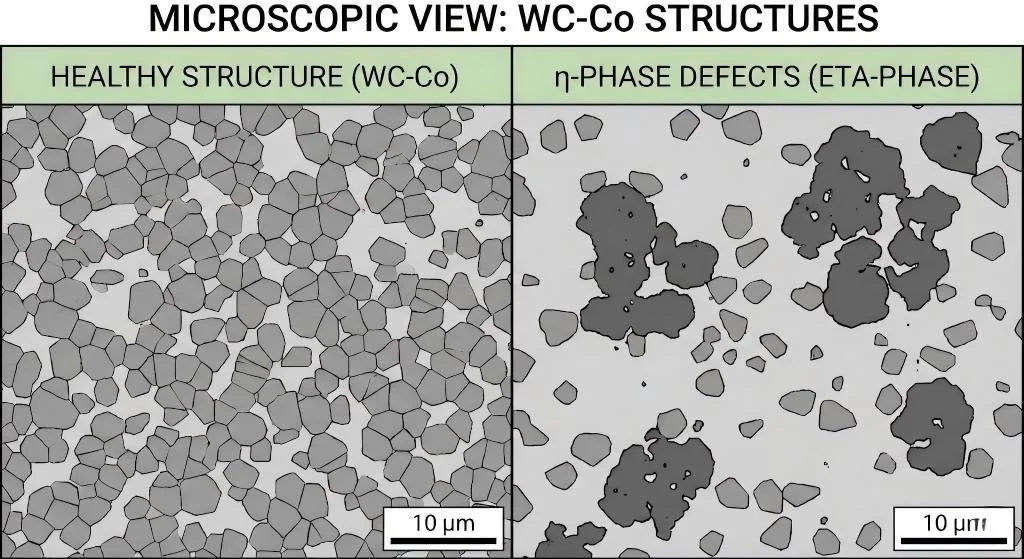
Density & Porosity Verification:
Target density: 14.5-15.0 g/cm3
Deviation tolerance: ±0.2 g/cm3 maximum
Porosity classification: Type A (≤0.02 mm pores), Type B (≤0.1 mm), per ISO 4505 inspection standards
Low-density or high-porosity units indicate improper sintering or contamination
Mechanical Integrity:
TRS (Transverse Rupture Strength): Minimum 2,400 MPa for bearing applications
Fracture toughness (KIC): Target 10-14 MPa·m^1/2 (higher cobalt content improves toughness but reduces hardness)
Magnetic saturation: Typically 15-30 emu/g depending on cobalt content (critical for non-magnetic application screening)
Precision Grade Classification
Tungsten carbide balls commonly adopt steel ball precision grading conventions (derived from ISO 3290-1 for steel balls, adapted as industry practice for carbide spheres). Note that no universal ISO standard specifically governs tungsten carbide ball tolerances; manufacturers typically reference:
Customer technical drawings
ANSI/AFBMA standards (for bearing applications)
Internal enterprise specifications validated through customer acceptance
| Grade | Spherical Deviation | Surface Roughness | Application Example |
|---|---|---|---|
| G5 | ≤0.13 μm | Ra 0.010 μm | Ultra-precision bearings, metrology |
| G10 | ≤0.25 μm | Ra 0.014 μm | High-speed spindle bearings |
| G25 | ≤0.65 μm | Ra 0.025 μm | Check valves, ball screws |
| G100 | ≤2.5 μm | Ra 0.100 μm | Grinding media, impact tools |
Always request supplier's inspection methodology and acceptance criteria documentation when specifying precision grades.
Real-World Application: Case Study
How We Reduced Valve Failure Rates by 43% Through Precision Upgrading
Client Challenge:
A European hydraulic valve manufacturer experienced 12% field failure rates within 18 months due to ball seat wear in high-pressure (350 bar) pneumatic control valves. Their existing G100-grade carbide balls from a low-cost supplier exhibited:
Inconsistent sphericity (actual deviation 3.2-4.1 μm vs. specified 2.5 μm)
Surface microcracking visible under 500x magnification
Density variation 14.2-14.7 g/cm3 (indicating incomplete sintering)
Our Solution:
After sample evaluation in our laboratory, we identified η-phase contamination (4.2% by volume) and Type C porosity (0.15 mm pore clusters) as root causes. We proposed:
Upgrade to G25 precision grade with guaranteed ±0.3 μm sphericity tolerance
Extended sintering cycle: 1450°C for 90 minutes (vs. competitor's 60 minutes) to achieve 99.8% theoretical density
Post-sinter HIP treatment (Hot Isostatic Pressing) to eliminate residual porosity
100% automated optical inspection to screen surface defects >5 μm
Measurable Results (12-month field tracking):
Failure rate reduced to 6.8% (43% improvement)
Average operational lifespan extended from 14 months to 28 months
Customer's warranty claim costs decreased by €127,000 annually
Unit cost increase of 18% offset by 2.6x total cost of ownership savings
This case demonstrates why precision grade selection must align with application severity—not just initial purchase price.
5-Point Supplier Qualification Framework
1. Manufacturing Capability Assessment
Essential Production Technologies:
Cold isostatic pressing (CIP): Ensures uniform density distribution (target pressure: 200-300 MPa)
Vacuum sintering furnaces: Prevents oxidation during 1350-1500°C sintering cycles (atmosphere control: <5 ppm O2)
Centerless grinding equipment: Achieves sub-micron sphericity tolerances
HIP facilities (optional): For eliminating residual porosity in ultra-critical applications
Red Flags to Avoid:
Suppliers unwilling to disclose sintering temperature profiles or furnace atmosphere control data
Absence of in-house grinding capabilities (outsourced finishing reduces quality control)
Limited size range (indicates tooling constraints)
No mention of grain size control or powder supplier certification
Our Manufacturing Standards:At Changzhou Eurasian Steel Ball Co., Ltd., our IATF 16949:2016 certified facility operates dedicated CQI-9 standard heat treatment lines. Our precision grinding workshops utilize German-engineered centerless grinders capable of holding ±0.5 μm tolerances across production batches. All sintering cycles are logged with real-time temperature/atmosphere monitoring per automotive industry requirements.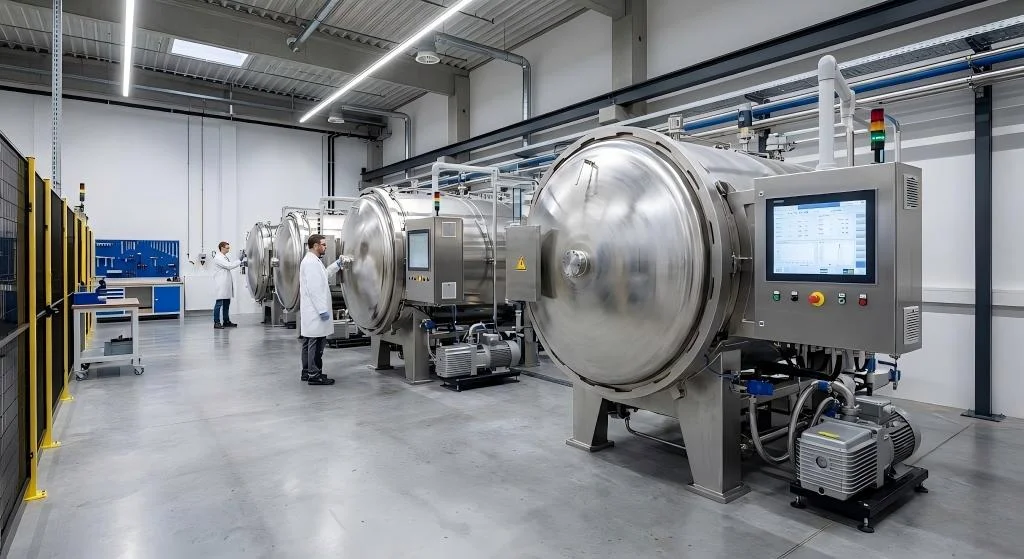
2. Quality Control Infrastructure
Mandatory Testing Equipment:
Roundness measuring instruments: Must verify sphericity to 0.08 μm resolution (e.g., Talyrond systems)
Rockwell hardness testers (HRA scale): For carbide material hardness verification (ASTM E18 calibration required)
Optical or ICP spectrometers: Confirm tungsten and cobalt composition percentages (accuracy: ±0.1% for major elements)
Surface profilometers: Measure Ra (surface roughness) to 0.005 μm accuracy
Metallographic microscope: For η-phase detection and porosity classification (minimum 500x magnification)
Magnetic saturation tester: Verify cobalt content consistency (especially for applications requiring <50 emu/g limits)
Request These QC Records:
Statistical Process Control (SPC) charts showing Cpk values ≥1.33 for sphericity and diameter
Material certificates tracing tungsten powder origin (WC powder grade: typically WC-1 to WC-3 per supplier specifications)
Dimensional inspection reports with minimum 50-piece sample sizes per production lot
Porosity inspection reports with pore type classification per ISO 4505
TRS test data from 3-point bend testing (minimum 5 samples per batch for critical applications)
Our Quality Lab:Our ISO-accredited laboratory houses advanced metrology equipment including:
Talyrond roundness tester (0.01 μm resolution)
Rockwell hardness tester calibrated to ASTM E18 standards
Optical emission spectrometer for WC/Co ratio verification
Vibration measurement system for dynamic performance testing
Metallographic preparation station with image analysis software for microstructure evaluation
3. Certification & Compliance Validation
Material & Process Standards:
ISO 4499-2: Hardmetals (cemented carbides) - Metallographic determination of microstructure (porosity & η-phase)
ISO 3878: Hardmetals - Vickers hardness test
ISO 4505: Classification of porosity types in cemented carbides
RoHS/REACH: Environmental compliance for European markets
Application-Specific Certifications:
IATF 16949: Automotive industry quality management (critical for powertrain applications)
AS9100: Aerospace quality standards
FDA compliance: For food processing or pharmaceutical equipment (requires additional surface cleanliness validation)
Third-Party Verification:Always request Bureau Veritas (BV) or equivalent audit reports. Factory audits should cover:
Raw material traceability systems (tungsten powder sourcing records)
Calibration records for measurement equipment (annual external calibration mandatory)
Non-conforming product control procedures
Sintering furnace temperature uniformity surveys (±10°C across work zone maximum deviation)
Changzhou Eurasian Steel Ball holds IATF 16949:2016 and Bureau Veritas factory certifications, ensuring automotive-grade quality systems with full powder-to-finished-ball traceability.
4. Tungsten Carbide Ball Price Analysis
Cost Structure Breakdown:
Tungsten carbide ball price varies significantly based on:
Raw material costs (as of Q4 2025 data):
APT (Ammonium Paratungstate): $415-480/MTU (Asian markets), $825-900/MTU (European spot markets) - Source: Metal Bulletin, London Metal Exchange reports
Cobalt metal powder: $32,000-46,000/metric ton (fluctuates with DRC mining supply) - Source: Fastmarkets cobalt index
WC powder conversion: Add $15-25/kg processing cost from APT to carbide-grade powder
Size premium: Balls >25mm diameter incur 15-30% surcharges due to extended sintering cycles (cycle time increases exponentially with mass)
Precision grade multiplier:
G100 baseline
G25: +40-60% (additional grinding time)
G10: +120-180% (ultra-precision grinding + 100% optical inspection)
Cobalt content impact: Each 1% increase in Co content adds approximately $0.80-1.20/kg to material cost
Pricing Red Flags:
Quotes 30-40% below market average often indicate:
Recycled or secondary-grade tungsten powder (detectable via trace element analysis)
Inadequate sintering time (compromises density and η-phase control)
Outsourced production with inconsistent quality
Hidden costs (inspection, packaging, freight not included in base price)
Value-Based Comparison:Request pricing based on:
$/mm3 of material for diameter-normalized comparison
Cost per 10,000 operational hours in your specific application (requires supplier to provide wear rate data)
Total cost of ownership (TCO) calculator: Factor replacement frequency, downtime costs, inspection labor
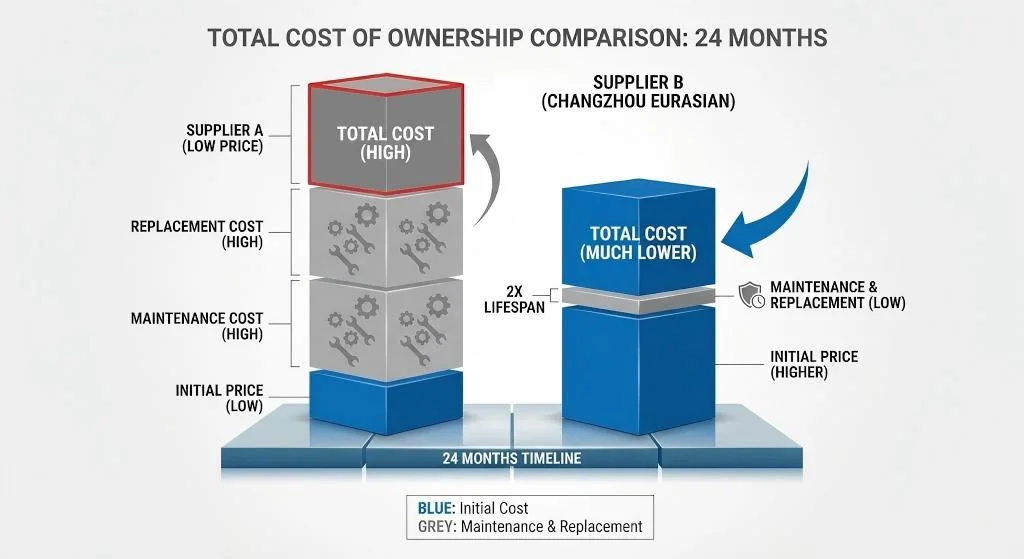
Example TCO Analysis:
Supplier A: $12/ball, 14-month lifespan → $10.29/year
Supplier B: $18/ball (+50% unit cost), 28-month lifespan → $7.71/year (-25% TCO)
Pricing Transparency Checklist:Always clarify what's included in quotes:
[ ] Material grade (WC powder classification, Co %)
[ ] Precision grade with actual tolerance values
[ ] Inspection scope (100% dimension check? Sample-based hardness?)
[ ] Packaging type (anti-rust treatment, VCI bags?)
[ ] Incoterms (FOB, CIF, DDP?)
[ ] Payment terms and currency
[ ] Minimum order quantity (MOQ) per specification
5. Supply Chain Reliability Metrics
Lead Time Benchmarks:
Standard sizes (1-20mm, G25-G100): 3-4 weeks after order confirmation
Custom specifications: 6-8 weeks including first article inspection (FAI)
Emergency orders: Reliable suppliers maintain safety stock for common sizes (typically 500-2000 pcs per SKU)
Re-orders for approved specifications: 2-3 weeks (eliminates FAI cycle)
Capacity Indicators:
Monthly production capacity: Reputable manufacturers produce 50+ tons/month (calculated as finished carbide ball output, excluding grinding scrap)
Multi-shift operations ensure consistent quality (avoid single-shift facilities with fluctuating QC)
Raw material inventory: 60-90 days buffer indicates financial stability
Sintering furnace quantity: Minimum 3-5 vacuum furnaces to handle batch segregation and prevent cross-contamination
Geographic Considerations:
Chinese manufacturers: Cost advantage of 25-35% vs. Western suppliers; dominant global market share (production ~83% of global supply as of 2024, though reserves represent ~52% of known deposits - Source: USGS Mineral Commodity Summaries)
European/US suppliers: Premium pricing but shorter lead times for domestic buyers (5-10 days typical)
Freight costs for tungsten carbide spheres:
Sea freight: $0.08-0.15/ball (bulk orders >1000 kg, 25-35 days)
Air freight: $0.35-0.60/ball (urgent orders, 5-7 days)
Packaging weight factor: 1.8-2.2x ball weight due to anti-corrosion materials and cushioning
Supply Chain Risk Mitigation:Given tungsten's supply concentration (China accounts for ~83% of production despite holding ~52% of global reserves - 2024 USGS data), consider:
Dual-sourcing strategy: Primary Asian supplier + secondary Western backup
Long-term pricing agreements: 12-24 month contracts with quarterly escalation clauses tied to APT index
Inventory buffering: Maintain 90-120 days on-site stock for mission-critical applications
Material substitution planning: Identify alternative grades (e.g., steel, ceramic) for lower-severity applications to reduce tungsten dependency
Application-Specific Selection Criteria
High-Pressure Valve Applications
Minimum hardness: HRA 90
Surface finish: Ra 0.012 μm or better
Cobalt content: 8-10% (optimizes corrosion resistance in oil/gas environments)
TRS requirement: Minimum 2,600 MPa (seat impact resistance)
Porosity: Type A only (prevents seat leakage initiation points)
Precision Bearing Applications
Grade requirement: G10 or finer
Dimensional stability: Verify thermal expansion coefficient data (4.5-5.5 × 10^-6 /°C typical for WC-Co)
Magnetic properties: Specify <50 emu/g saturation if used near magnetic encoders
Fracture toughness: Minimum 12 MPa·m^1/2 for shock-loaded bearings
Grinding & Milling Operations
Size range: Typically 10-60mm
Hardness: HRA 88 minimum sufficient
Cost optimization: G100 grade acceptable for most applications
Breakage rate specification: Document acceptable loss (<0.5% per 1000 operating hours for quality media)
Density uniformity: Critical for consistent grinding action (tolerance: ±0.1 g/cm3)
Supplier Audit Checklist
Before Finalizing Contract:
? Documentation Review
[ ] Request 3 years of customer audit reports
[ ] Verify insurance coverage (minimum $2M product liability)
[ ] Confirm export licensing for tungsten products (ITAR/EAR compliance if applicable; tungsten carbide generally exempt but verify for dual-use applications)
[ ] Review quality manual (ISO 4499 compliance section)
? Technical Validation
[ ] Order sample batches (100-500 pieces) for internal testing
[ ] Conduct independent hardness testing (verify HRA values)
[ ] Perform density measurement via Archimedes method
[ ] Cross-section metallographic analysis (η-phase check, porosity classification)
[ ] Measure batch-to-batch consistency across 3+ orders (sphericity variation <10% between lots)
? Factory Visit (If Feasible)
[ ] Observe sintering furnace temperature control systems (request furnace qualification logs)
[ ] Inspect raw material storage (WC powder segregation by grain size prevents contamination)
[ ] Review calibration certificates for metrology equipment (NIST-traceable standards)
[ ] Witness production process from powder mixing → pressing → sintering → grinding
[ ] Evaluate scrap/rework handling procedures
? Communication Assessment
[ ] Response time to technical inquiries (<24 hours expected for established suppliers)
[ ] English proficiency of technical support team (or availability of technical translators)
[ ] Willingness to provide Material Test Reports (MTR) with each shipment (including WC%, Co%, density, hardness minimum)
[ ] Engineering support capability (can assist with material selection for new applications?)
Common Procurement Pitfalls to Avoid
Mistake #1: Prioritizing Price Over PrecisionA 20% cost saving evaporates quickly when defect rates increase from 0.5% to 3% due to inferior sphericity. In one documented case, a bearing manufacturer's rejection rate increased from 1.2% to 4.7% after switching to a low-cost supplier, resulting in $83,000 in additional sorting labor over 6 months.
Mistake #2: Ignoring TraceabilityTungsten carbide balls require full batch traceability. Reject suppliers who cannot provide:
WC powder lot numbers with grain size distribution data
Sintering furnace run logs (temperature profiles, atmosphere composition)
Post-sinter inspection reports (dimensional, hardness, density)
Grinding batch records with tooling wear compensation data
Mistake #3: Inadequate Sample TestingSingle-sample validation is insufficient. Statistical confidence requires:
Minimum 30-piece sampling per ISO 2859 (AQL standards)
Destructive testing on 5-10 samples per lot (cross-section for porosity, TRS testing)
Multi-batch validation before production ramp (3 consecutive batches with <5% variation in key properties)
Mistake #4: Overlooking After-Sales SupportTechnical issues arise post-delivery. Verify supplier's:
Complaint resolution process (target: preliminary response within 48 hours)
Field failure analysis capability (can perform SEM/EDS on returned parts?)
Corrective action turnaround time (typical: 2-4 weeks for process adjustments)
Warranty terms (industry standard: replacement for manufacturing defects within 12 months)
Mistake #5: Neglecting Microstructure ValidationFocusing solely on hardness and dimensional specs misses critical defects:
η-phase formation (brittle carbide phase) causes catastrophic failure in impact applications
Abnormal grain growth (AGG) reduces fracture toughness
Porosity clustering creates stress concentration pointsSolution: Require metallographic inspection reports per ISO 4499-2 for critical applications.
Industry Trends Impacting Sourcing (2025-2027)
Raw Material Volatility:Tungsten supply concentration creates geopolitical risk:
China controls ~83% of global production (2024 data) though reserves represent ~52% of known deposits (Source: USGS Mineral Commodity Summaries 2024)
APT prices increased 18% in 2024 due to Chinese export restrictions
Secondary tungsten recycling gaining traction (~30% of supply from scrap by 2027 projections)
Mitigation Strategies:
Long-term pricing agreements (12-24 months) with quarterly adjustment clauses tied to Metal Bulletin APT index
Dual-sourcing from geographically diverse suppliers
Evaluate tungsten-reduced grades (e.g., WC-Ni binders) for non-critical applications
Environmental Regulations:
EU's Carbon Border Adjustment Mechanism (CBAM): May add €8-18/ton CO2 equivalent to Chinese imports starting 2026
Conflict minerals compliance: Cobalt sourcing traceability requirements increasing (document non-DRC sources or responsible sourcing certification)
PFAS restrictions: Affects grinding coolants used in ball finishing (suppliers must adapt to alternative lubricants)
Digitalization & Quality 4.0:Leading manufacturers now offer:
Real-time order tracking via ERP/MES integration (API-based shipment visibility)
Digital material certificates: Blockchain-verified test reports with QR code authentication
Predictive quality modeling: AI-based analysis of sintering parameters vs. final properties
Automated optical inspection: 100% dimensional screening at 50+ balls/minute throughput
Conclusion: Building Strategic Supplier Partnerships
Sourcing tungsten carbide balls suppliers transcends transactional purchasing. The ideal partner combines:
Deep technical expertise to optimize material specifications for your application constraints (wear, impact, corrosion)
Robust quality systems with metallographic validation capabilities (η-phase control, porosity classification)
Supply chain resilience to buffer tungsten market volatility
Responsive engineering support for failure analysis and continuous improvement
At Changzhou Eurasian Steel Ball Co., Ltd., our 15+ years specializing in precision balls ensures you receive:
IATF 16949:2016 automotive-grade quality management with full powder-to-product traceability
Bureau Veritas certified manufacturing processes (annual surveillance audits)
In-house metallurgical laboratory with advanced characterization equipment (SEM, optical microscopy, mechanical testing)
Technical advisory service for material selection, application troubleshooting, and cost optimization
Ready to evaluate your current tungsten carbide ball supplier? Contact our engineering team for:
Complimentary supplier comparison audit (review competitor test reports)
Free sample evaluation with comprehensive test report (hardness, density, sphericity, microstructure)
Application engineering consultation (material grade recommendations based on your operating conditions)
Frequently Asked Questions (FAQ)
Q1: What is the typical lifespan difference between tungsten carbide balls and steel balls?Tungsten carbide balls outlast chrome steel balls by 30-50 times in abrasive slurry applications (verified through accelerated wear testing in laboratory ball mills operating at 75% critical speed with 40% solids concentration quartz slurry). In precision bearing applications with proper lubrication and minimal abrasive contamination, WC-Co balls achieve service life of 5-10 years compared to 1-2 years for 52100 chrome steel under equivalent load conditions (2,000 MPa contact stress, 10,000 RPM).
Q2: How do I verify tungsten carbide ball hardness specifications?Request hardness testing using the Rockwell A (HRA) scale (ASTM E18 standard), which is appropriate for cemented carbides. Acceptable range is HRA 88-92 for standard WC-6%Co to WC-12%Co grades. Avoid suppliers who only provide Vickers (HV) hardness without documented conversion methodology. Third-party testing through accredited labs (e.g., SGS, Intertek) costs approximately $80-150 per batch and provides independent verification. For in-house verification, ensure tester is calibrated with cemented carbide reference blocks (not steel standards).
Q3: What causes price variations between tungsten carbide balls suppliers?Primary factors include: (1) Cobalt binder content - each 1% increase adds $0.80-1.20/kg due to cobalt's high cost ($32,000-46,000/ton as of Q4 2025), (2) Precision grade - G10 requires 60-90% more grinding time than G100 plus 100% automated inspection, (3) Production scale - manufacturers producing >50 tons/month achieve 15-20% better economies through optimized sintering cycles and raw material bulk purchasing, (4) Certification overhead - IATF/AS9100 certified facilities invest 15-20% more in quality systems (dedicated QC staff, equipment calibration, audit compliance), (5) Tungsten powder source - primary powder from APT conversion vs. recycled tungsten (5-8% cost differential).
Q4: Are tungsten carbide balls magnetic?Pure tungsten carbide (WC) phase is non-magnetic, but cobalt binder content (typically 6-12%) exhibits ferromagnetic properties. Resulting magnetic saturation typically measures 15-30 emu/g depending on cobalt percentage. For applications requiring strict non-magnetic performance (e.g., MRI equipment proximity, magnetic encoder systems), specify:
Nickel-bonded tungsten carbide (WC-Ni): magnetic saturation <5 emu/g
Target maximum saturation value in purchase specification (e.g., <10 emu/g)
Request magnetic permeability testing per ASTM A342 or supplier's equivalent methodNote: Reducing cobalt content below 6% significantly degrades fracture toughness; nickel binders offer better non-magnetic properties but slightly lower hardness.
Q5: What minimum order quantity (MOQ) should I expect?
Standard sizes (3-25mm, G25-G100 grades): MOQ typically 5-10 kg (approximately 500-5,000 pieces depending on diameter; calculated as 10mm balls: ~7.5 g each × 700 pcs ≈ 5.25 kg)
Custom specifications (non-standard diameters, ultra-precision G5-G10): MOQ increases to 25-50 kg due to dedicated grinding tool setup and extended quality validation
Sample orders: Most suppliers accommodate 100-500 piece trial quantities at premium pricing (+30-50% unit cost)
Volume discounts: Typically structured as 100+ kg (-8-12%), 500+ kg (-15-20%), 1000+ kg (-22-28% negotiable)
Q6: How do I prevent counterfeit or low-grade tungsten carbide balls?Implement three verification protocols:
Density testing - True cemented carbide measures 14.5-15.0 g/cm3. Simple Archimedes method (weigh in air, weigh in water, calculate): Density = (Weight in air) / (Weight in air - Weight in water). Values <14.3 g/cm3 indicate tungsten deficiency or excessive porosity.
Hardness verification - WC-Co balls should measure HRA 88-92. Standard Rockwell C (HRC) testers will not penetrate properly; you need an HRA tester with diamond cone indenter. Suspect balls testing below HRA 85 may be tungsten heavy alloys (W-Ni-Fe) instead of true carbide.
Destructive microstructure analysis (sample-based) - Cross-section polishing + etching reveals:
WC grain structure: Should be uniform, angular carbide grains in cobalt matrix
η-phase: Blocky, light-gray phase indicating improper carbon control (reject if >2% by area)
Porosity: Classify per ISO 4505 (Type A acceptable, Types B-C indicate quality issues)
Magnetic testing - Measure magnetic saturation (requires VSM or magnetic balance). Genuine WC-6%Co shows ~18 emu/g; WC-12%Co shows ~28 emu/g. Values >35 emu/g suggest excessive free cobalt or incorrect composition.
Always request Material Test Reports (MTR) with each shipment showing: WC%, Co%, density, hardness, and spectrographic analysis. Cross-reference certificate numbers with supplier's batch records.
Q7: What lead time should I plan for custom tungsten carbide ball orders?Detailed timeline breakdown:
Powder preparation & pressing: 1-2 days (cold isostatic pressing of pre-alloyed WC-Co powder)
Sintering cycle: 3-5 days including:
Heat-up phase: 8-12 hours to 1450°C (slow ramp prevents cracking)
Soak time: 60-90 minutes at peak temperature
Controlled cooling: 12-18 hours (rapid cooling causes thermal shock cracks)
Precision grinding: 5-7 days for G25 grade (10-14 days for G10) - iterative centerless grinding passes with intermediate measurement
Quality inspection: 2-3 days including:
100% dimensional inspection (automated or manual depending on batch size)
Sample hardness testing (5-10 pieces per lot)
Metallographic cross-section (critical applications only)
Surface treatment & packaging: 1 day (anti-rust treatment, VCI film wrapping)
Total standard lead time: 3-4 weeks for commercial grades
First article inspection (FAI) projects: Add 2 weeks for customer approval cycle
International shipping: 1-2 weeks air freight, 4-6 weeks sea freight
Expedite options: Some suppliers offer 2-week emergency service for standard sizes at +50-80% surcharge (requires interrupting scheduled production batches).
Q8: Can tungsten carbide balls be used in high-temperature applications?Tungsten carbide maintains hardness up to 500°C (932°F), significantly outperforming steel which softens above 200°C. However, thermal limitations include:
600°C: Cobalt binder begins oxidizing in air (forms blue/green cobalt oxide scale)
800°C: Accelerated WC grain growth (coarsening) degrades properties
1000°C: Decarburization risk in oxygen-containing atmospheres (forms brittle η-phase on surface)
High-temperature application guidelines:
300-500°C: WC-Co balls perform well with oxidation-resistant coatings (e.g., TiN, CrN) or inert atmosphere
500-800°C: Consider increasing cobalt content to 12-15% for improved oxidation resistance, or use protective atmosphere (nitrogen, argon)
>800°C: Switch to ceramic balls - silicon nitride (Si3N4) maintains properties to 1200°C, alumina (Al2O3) to 1400°C
Thermal shock resistance: WC-Co has moderate thermal shock resistance (thermal expansion coefficient 4.5-5.5 × 10^-6/°C). Avoid rapid temperature cycling (>100°C/minute) which can initiate microcracks. For high thermal shock applications, silicon nitride ceramic offers 3-5x better performance.
Last Updated: January 2026
Technical review conducted by IATF 16949:2016 certified quality engineers with 15+ years cemented carbide manufacturing experience. Material cost data referenced from Metal Bulletin and Fastmarkets indices (Q4 2025). Tungsten reserve and production statistics sourced from USGS Mineral Commodity Summaries 2024.


