


News

Steel Balls for CV Joints: Why Automotive Constant Velocity Joint Balls Require Dual Heat Treatment
This comprehensive guide examines the metallurgical requirements, heat treatment processes, and quality control standards that separate automotive-grade CV joint balls from conventional bearing steel balls .
Understanding CV Joint Ball Operating Conditions
Stress Profile Analysis
CV joint balls operate in one of the harshest environments in automotive powertrains:
Contact Stress: Hertzian contact pressures in CV joints create demanding load conditions during torque transmission
Cyclic Loading: Each ball experiences tens of millions of stress cycles over a typical vehicle's lifespan
Angular Misalignment: Operating angles create non-uniform load distribution across ball surfaces
Contamination Exposure: Despite boot protection, microscopic abrasive particles cause three-body wear
Thermal Cycling: Rapid temperature changes during braking test material stability
Standard through-hardened chrome steel balls with uniform HRC 60-65 hardness often fail prematurely in CV joints due to insufficient core toughness—the hard but brittle microstructure cannot adequately absorb impact energy during sudden load spikes, leading to subsurface crack initiation and eventual spalling.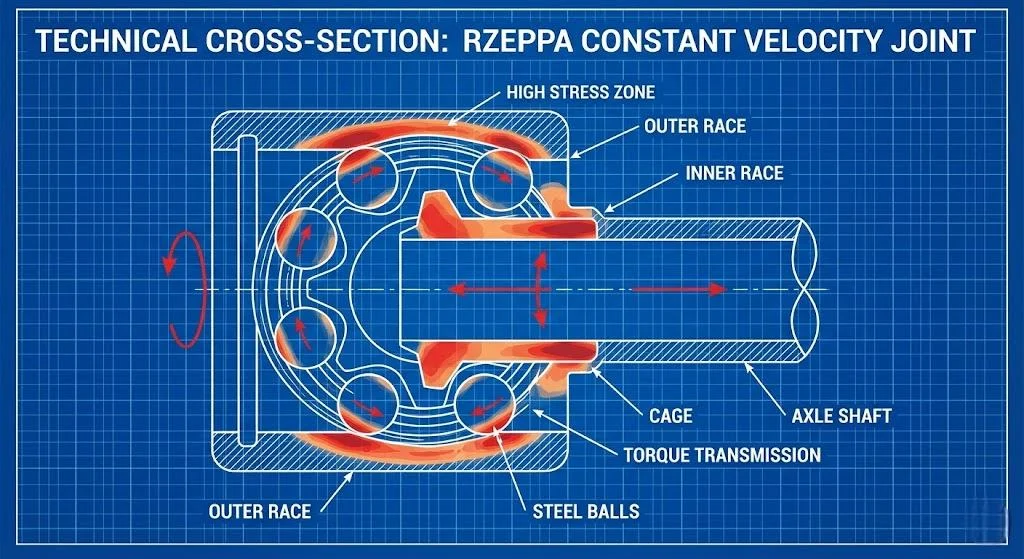
Why Surface Engineering Matters
The ideal CV joint ball exhibits gradient mechanical properties:
Surface Zone (0-1.2mm depth):
Hardness: HRC 62-65
Microstructure: Fine tempered martensite with retained austenite
Residual stress: Compressive (beneficial for fatigue resistance)
Core (>1.2mm depth):
Hardness: HRC 35-45
Microstructure: Tempered martensite with fine carbides
Impact toughness: Sufficient to resist shock loading at low temperatures
This gradient structure is achieved through carburizing (case hardening) followed by precision tempering—a dual heat treatment process that manufacturers with IATF 16949:2016 certification can consistently control.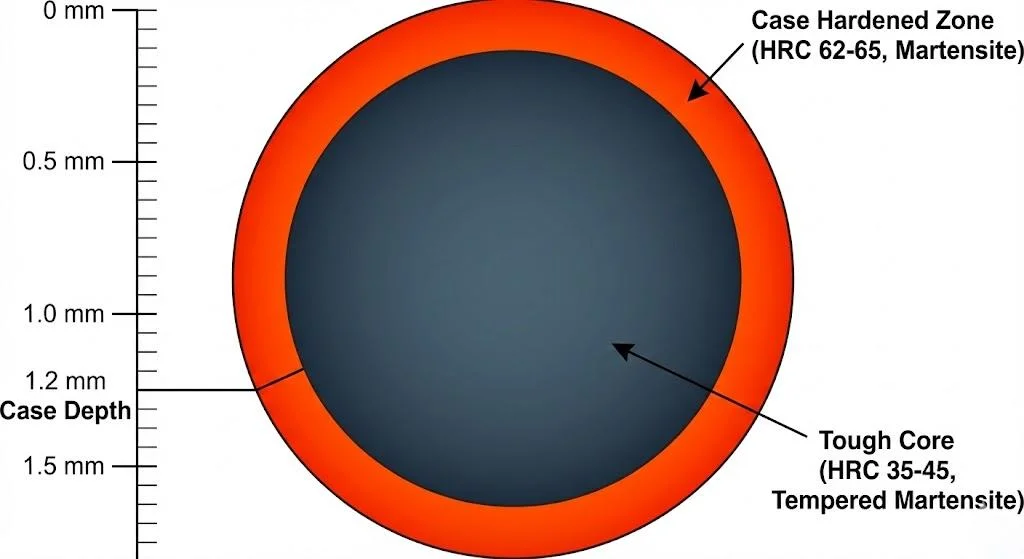
Material Specifications for CV Joint Steel Balls
Base Steel Requirements
CV joint balls are typically manufactured from low-carbon alloy steels rather than high-carbon bearing steels:
Primary Material: SAE 8620 (AISI 8620 / DIN 21NiCrMo2)
Carbon: 0.18-0.23% (enabling carburization)
Chromium: 0.40-0.60% (hardenability depth)
Nickel: 0.40-0.70% (core toughness)
Molybdenum: 0.15-0.25% (temper resistance)
Alternative Material: SAE 4320 (AISI 4320 / DIN 17NiCrMo6-4)
Used for heavy-duty applications (SUVs, commercial vehicles)
Higher nickel content (1.65-2.00%) provides enhanced low-temperature impact resistance
Why Not GCr15/52100 Bearing Steel?
Traditional bearing steel balls contain 0.95-1.05% carbon—too high for effective carburizing. Through-hardening these steels creates a uniformly hard structure lacking the ductile core necessary for CV joint shock absorption. Carburized low-alloy steels demonstrate superior performance in CV joint-specific loading conditions compared to through-hardened high-carbon bearing steels.
Dual Heat Treatment Process: Carburizing + Tempering
Stage 1: Gas Carburizing (Case Hardening)
Process Parameters:
Carburizing Temperature: 900-930°C
Carbon Potential: 0.85-1.05% (controlled via endothermic gas atmosphere)
Duration: 4-8 hours (depending on required case depth)
Target Case Depth: 0.8-1.5mm (measured at HRC 50 hardness level per ASTM E384)
Critical Control Points:
Our heat treatment line, assessed per the AIAG CQI-9 Heat Treat System Assessment standard, maintains:
Carbon potential variation control within specification
Temperature uniformity across furnace chamber
Atmosphere dew point control for process consistency
Quenching:
Immediate oil quenching (80-120°C quench oil) transforms the high-carbon surface layer to martensite while the low-carbon core forms lower bainite/martensite mix.
Stage 2: Precision Tempering
Process Parameters:
Tempering Temperature: 160-180°C
Duration: 2-3 hours
Cooling: Air cooling to room temperature
Metallurgical Objectives:
Reduce residual stresses from quenching
Stabilize retained austenite in surface layer
Achieve final surface hardness: HRC 62-64
Maintain core hardness: HRC 38-42
Quality Verification:
Using our in-house Rockwell hardness tester , we perform:
Surface hardness: Multiple measurements per batch (acceptance: HRC 62 minimum per customer specification)
Core hardness: Destructive sectioning of sample balls (statistical sampling per IATF 16949)
Case depth verification: Microhardness traverse testing per ASTM E384
Dimensional Precision & Geometric Tolerances
Grade Requirements for Automotive Applications
CV joint OEMs typically specify precision grades per ISO 3290-1 standard. Common automotive specifications include Grade G20 or better:
ISO 3290-1 Grade G20 Specifications:
Spherical deviation (sphericity): 0.5 μm maximum
Variation of ball diameter: 0.5 μm maximum
Variation of ball lot diameter: 1.0 μm maximum
Surface roughness: Ra 0.032 μm maximum
Our precision grinding and lapping process targets tighter tolerances, providing margin for:
Thermal expansion during heat treatment
Minimal geometric distortion post-carburizing
Roundness Verification
Using our Talyrond roundness measuring instrument , we conduct:
Statistical inline inspection for automotive batches
Polar plot analysis identifying geometric deviations
Batch certification with measurement reports per IATF 16949 PPAP requirements
Why Roundness Matters in CV Joints:
Out-of-roundness conditions create load concentration points, accelerating contact fatigue. Properly manufactured balls within specification exhibit extended service life in durability testing versus balls with larger geometric deviations.
Microstructure & Metallography Analysis
Optimal Microstructure Characteristics
Surface Layer (0-0.8mm):
Matrix: Fine tempered martensite
Carbides: Spheroidized cementite particles, fine distribution
Retained Austenite: Controlled level (typically 5-10% measured via X-ray diffraction)
Grain Size: Fine grain structure per ASTM E112 (prevents brittle fracture initiation)
Transition Zone (0.8-1.5mm):
Gradual hardness gradient from surface to core
Mixed martensite and bainite structure
Smooth transition minimizing stress concentration
Core (>1.5mm):
Matrix: Tempered martensite with fine pearlite
Carbide Distribution: Uniformly dispersed for crack arrest
Prior Austenite Grain Size: Controlled per ASTM E112
Defect Detection & Prevention
Our optical emission spectrometer screens incoming steel for:
Phosphorus: <0.015% (prevents grain boundary embrittlement per SAE specifications)
Sulfur: <0.015% (minimizes MnS inclusions that can initiate cracks)
Non-metallic inclusions: Evaluated per ASTM E45 methodology
Hydrogen Embrittlement Prevention:
Post-carburizing, all CV joint balls undergo controlled tempering cycles that reduce hydrogen content—critical for preventing delayed cracking in high-stress applications.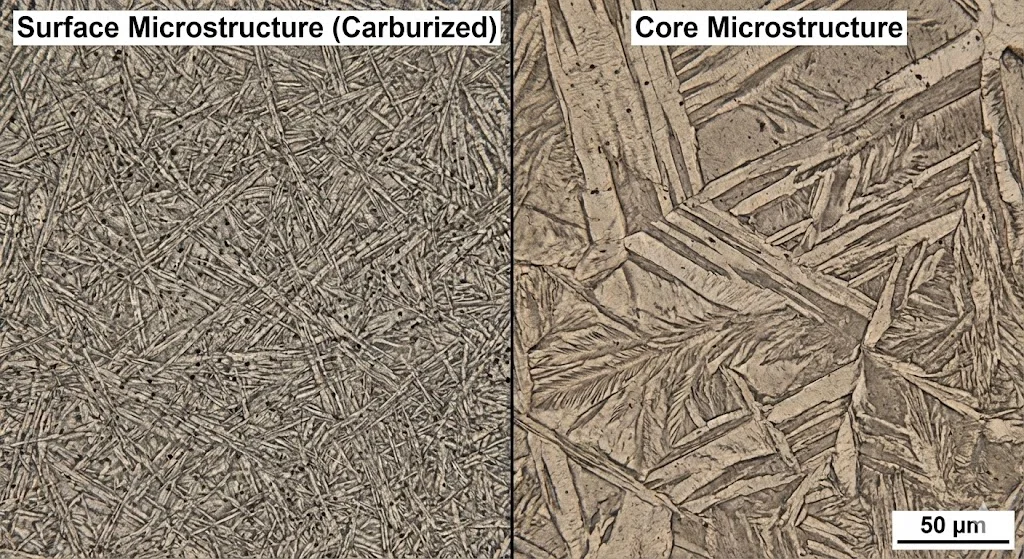
Performance Testing & Quality Validation
Fatigue Life Testing
Rolling Contact Fatigue (RCF) Test:
CV joint ball suppliers perform endurance testing to validate performance:
Test Fixture: Multi-ball configuration under controlled radial load
Speed: Specified RPM matching application conditions
Duration: Extended cycle testing per customer requirements
Pass Criteria: No spalling or pitting beyond acceptance limits
Our vibration measurement system detects subsurface damage through:
Acoustic emission monitoring: Crack initiation detection
Surface vibration analysis: Early warning of impending failure modes
Low-Temperature Impact Testing
Charpy V-Notch Testing (Per ASTM E23):
For applications requiring cold climate performance:
Test Temperature: -40°C (simulating extreme cold climates)
Sample Preparation: Notch machined in core region (post-sectioning)
Evaluation: Impact energy measurement to verify core toughness
Through-hardened balls demonstrate brittle behavior at low temperatures, while properly carburized CV joint balls maintain better ductile fracture resistance.
Dimensional Stability Testing
Thermal Cycling Test:
Profile: Temperature cycling between operational extremes over multiple cycles
Measurement: Diameter change measurement via precision instrumentation
Evaluation: Dimensional stability verification
This validates tempering adequacy—inadequately tempered balls can exhibit dimensional changes due to retained austenite transformation during service conditions.
OEM Qualification Standards & Certifications
IATF 16949:2016 Requirements
Automotive CV joint ball suppliers must demonstrate:
Process Capability:
Statistical process control for critical dimensions (diameter, hardness, case depth)
Quality targets meeting customer-specific requirements
Traceability:
Heat lot tracking: Every batch linked to heat treatment process parameters
Material certification: Mill test reports traceable to steel source
Our IATF 16949 certified facility maintains:
SPC monitoring of heat treatment parameters
Full metallurgical traceability from raw material to finished ball
Customer-specific PPAP documentation including dimensional reports, material certifications, and performance test data
OEM-Specific Testing Protocols
Major automotive manufacturers maintain proprietary testing requirements:
General Motors GMW Standards:
Surface distress resistance verification
Grease compatibility testing
Dimensional stability requirements
Volkswagen VW Standards:
Microstructure documentation requirements
Non-metallic inclusion evaluation per ASTM E45
Material chemistry verification
Ford WSS Standards:
Residual stress profile measurement capabilities
Surface integrity verification
Common Failure Modes & Root Cause Analysis
Premature Spalling
Root Causes:
Insufficient Case Depth:
Symptom: Spalling initiates at case-core interface
Detection: Microhardness traverse per ASTM E384 shows transition depth
Prevention: Controlled carburizing time and carbon potential management
Excessive Retained Austenite:
Symptom: Subsurface transformation during service
Detection: X-ray diffraction reveals austenite content
Prevention: Optimized tempering cycle parameters
Grinding Burns:
Symptom: White layer (untempered martensite) forms during aggressive grinding
Detection: Metallographic examination reveals white-etching areas, hardness anomalies
Prevention: Controlled grinding parameters with adequate coolant
Brittle Fracture in Cold Climates
Root Cause: Inadequate core toughness due to:
Base steel with insufficient alloy content
Excessively high core hardness from improper quenching
Hydrogen embrittlement risk
Verification Testing:
Section balls and perform Charpy impact testing at specified temperatures
Conduct hydrogen analysis if required by specification
Verify material chemistry meets specification requirements
Dimensional Instability
Root Cause: Retained austenite transformation:
Under-tempering leaves unstable austenite
Service temperature cycling can trigger transformation
Volume expansion causes dimensional changes
Prevention:
Implement appropriate tempering cycles
Consider cold treatment if specified by customer
Verify dimensional stability via thermal cycling test
Supplier Selection Criteria for CV Joint Balls
Critical Questions for Procurement Teams
Heat Treatment Capabilities:
Do you have in-house carburizing furnaces or outsource heat treatment?
Is your heat treatment process assessed per AIAG CQI-9 methodology?
What is your carbon potential control method?
Can you provide furnace temperature uniformity survey reports?
Quality Control Infrastructure:
Do you have Rockwell hardness testers for surface hardness verification?
How do you verify case depth? (Microhardness traverse per ASTM E384)
What dimensional inspection capabilities do you offer?
Can you provide metallographic cross-sections showing microstructure?
Certification & Compliance:
Do you hold IATF 16949:2016 certification?
Can you supply PPAP documentation per customer requirements?
What is your process capability (Cpk) for critical dimensions?
Cost vs. Quality Considerations
Total Cost of Ownership Analysis:
When evaluating suppliers, consider:
Initial unit price
Quality consistency and process capability
Warranty claim rates and associated costs
Long-term reliability in field applications
Premium suppliers with integrated heat treatment capabilities and robust quality systems often deliver lower total cost through reduced warranty claims and improved customer satisfaction, despite higher initial unit pricing.
Custom Solutions for Specialized CV Joint Designs
Non-Standard Size Requirements
While standard CV joint balls range from ?9.525mm (3/8") to ?15.875mm (5/8"), our custom manufacturing capabilities support:
Miniature sizes: Down to ?6.0mm for compact applications
Oversized balls: Up to ?20.0mm for heavy-duty applications
Metric sizes: Custom diameters per customer specification
Lead Time: Custom sizing requires tooling preparation and first article approval
Modified Surface Treatments
PVD Coating Options:
TiN (Titanium Nitride): Enhanced surface properties for specific applications
CrN (Chromium Nitride): Improved corrosion resistance for harsh environments
DLC (Diamond-Like Carbon): Low friction coefficient for efficiency applications
Superfinishing:
Enhanced surface finish capabilities beyond standard grinding
Process: Post-heat treatment lapping with precision compound
Material Upgrades for Extreme Duty
SAE 9310 Steel (Ni-Cr-Mo Alloy):
Application: Heavy-duty vehicles, off-road equipment
Benefits: Enhanced fatigue strength versus SAE 8620
Core toughness: Superior low-temperature impact resistance
Vacuum Carburizing Option:
Advantages: Reduced internal oxidation, improved surface quality
Carbon uniformity: Enhanced consistency across batches
Availability: Available for specific applications requiring premium processing
Environmental & Sustainability Considerations
Energy-Efficient Heat Treatment
Our manufacturing facility incorporates energy-efficient practices:
Regenerative burner systems for reduced energy consumption
Improved insulation design minimizing heat loss
Batch optimization for maximum furnace utilization efficiency
Continuous Improvement:We track energy consumption metrics and implement efficiency improvements as part of our ISO 14001 environmental management commitment.
Waste Minimization
Grinding Swarf Recycling:
Steel grinding waste returned to steel suppliers for remelting
Closed-loop material flow minimizing landfill waste
Quench Oil Management:
Filtration systems extending quench oil service life
Proper disposal protocols for end-of-life fluids
Industry Trends & Future Developments
Electric Vehicle Impact
New Requirements for EV CV Joints:
Higher torque density: Instant electric motor torque creates higher peak loads
Noise constraints: EVs benefit from ultra-smooth ball surfaces for NVH performance
Thermal considerations: Regenerative braking increases temperature cycling frequency
Development Direction:
Hybrid ceramic-steel designs : Advanced materials for weight reduction
Surface optimization: Enhanced surface finishes for improved performance
Smart manufacturing: Process monitoring and data analytics for quality improvement
Advanced Manufacturing Technologies
Industry 4.0 Integration:
Sensor-based monitoring of critical process parameters
Data analytics for predictive quality control
Automated inspection systems for dimensional verification
Materials Research:
Advanced alloy development for specific applications
Surface treatment innovations for enhanced performance
Lifecycle testing methodologies for validation
FAQ: Steel Balls for CV Joints
What is the difference between CV joint balls and regular bearing balls?
CV joint balls require dual-layer properties—a carburized surface (HRC 62-65) for wear resistance combined with a tough core (HRC 38-42) to withstand shock loading. Regular bearing steel balls are through-hardened to uniform HRC 60-65, making them less suitable for CV joint impact stresses. The carburizing process adds hardened case depth while maintaining core ductility, providing performance advantages in automotive CV joint applications.
Why can't I use cheaper through-hardened balls in CV joints?
Through-hardened balls lack the core toughness necessary for automotive shock absorption requirements. When tested at low temperatures, through-hardened GCr15 balls demonstrate brittle fracture behavior, while properly carburized SAE 8620 balls maintain better impact resistance. The higher initial cost of carburized balls is often offset by improved field performance and reduced warranty claims.
How do I verify if a supplier can actually control the carburizing process?
Request documentation demonstrating heat treatment process control. Key indicators include: (1) AIAG CQI-9 assessment status (the automotive industry's heat treatment system assessment methodology), (2) Furnace temperature uniformity data showing consistent thermal profiles, (3) Case depth verification procedures via microhardness traverse per ASTM E384, and (4) Metallographic capability for microstructure validation. Suppliers with in-house carburizing and IATF 16949 certification typically demonstrate stronger process control versus operations outsourcing heat treatment.
What causes CV joint balls to fail prematurely?
Common failure modes include: (1) Insufficient case depth—when case depth is below specification, spalling can initiate at the case-core interface, (2) Excessive retained austenite—unstable austenite transforms during service causing dimensional instability and subsurface damage, and (3) Grinding burns—aggressive grinding creates white-etching layers (untempered martensite) that are prone to cracking under load. Proper supplier selection focusing on heat treatment process control and validated grinding parameters helps prevent these issues.
Can CV joint balls be made from stainless steel for corrosion resistance?
440C stainless steel balls can be carburized, but present challenges: (1) Limited case depth potential due to chromium's diffusion barrier effect, (2) Retained austenite management—440C typically retains higher austenite levels post-quench, requiring additional processing, and (3) Higher material cost. For corrosive environments, consider standard carburized SAE 8620 balls with protective coatings (such as CrN PVD), providing corrosion resistance at lower total cost.
What testing should I require from CV joint ball suppliers?
Minimum acceptance testing includes: (1) Surface hardness verification—HRC measurement per customer specification on production batches, (2) Case depth measurement—microhardness traverse on sample balls per ASTM E384, (3) Dimensional inspection—precision grade verification per ISO 3290-1, and (4) Low-temperature impact testing (if specified)—Charpy V-notch testing validating core toughness. For critical applications, consider additional testing such as (5) Rolling contact fatigue testing under simulated service conditions, and (6) Metallographic analysis confirming proper microstructure gradient.
How long should carburized CV joint balls last in typical automotive use?
Properly manufactured carburized balls in passenger vehicles typically achieve extended service life when properly maintained. Service life is significantly impacted by: (1) Lubricant quality—contaminated grease accelerates wear, (2) Boot integrity—torn boots introduce abrasive contaminants, and (3) Operating conditions—sustained operation at extreme angles increases contact stress. Fleet data shows CV joints with precision-grade carburized balls from IATF 16949 suppliers demonstrate low failure rates when properly maintained.
What is the typical lead time for custom CV joint ball orders?
Standard sizes (?9.525-15.875mm, SAE 8620, ISO 3290 grades): 4-6 weeks for production quantities. Custom specifications requiring: (1) Non-standard diameters—additional time for grinding wheel preparation, (2) Material upgrades (SAE 9310, 440C stainless)—additional time for material procurement, (3) Special surface treatments (PVD coating, superfinishing)—additional time for post-heat treatment processing. For prototype quantities, expedited service may be available. PPAP documentation (dimensional reports, material certifications, performance testing) adds time to initial order fulfillment.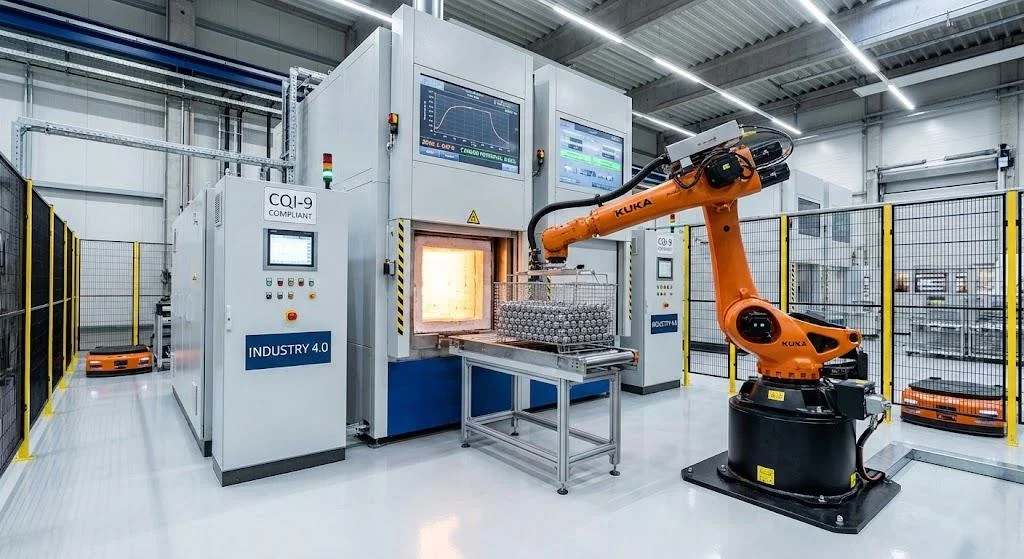
Partner with an IATF 16949 Certified CV Joint Ball Manufacturer
Changzhou Eurasian Steel Ball Co., Ltd. combines extensive automotive supply experience with manufacturing capabilities specifically designed for critical CV joint applications. Our competitive advantages include:
Advanced Heat Treatment Infrastructure:
Heat treatment lines assessed per AIAG CQI-9 methodology
In-house tempering furnaces ensuring complete process control
Controlled atmosphere processing for consistent results
Comprehensive Quality Control:
Talyrond roundness measurement capability for dimensional verification
Rockwell hardness testing on production batches
Optical emission spectrometry for incoming material chemistry validation
Metallographic laboratory with microhardness traverse capability per ASTM E384
Automotive-Grade Certifications:
IATF 16949:2016 (automotive quality management system)
Bureau Veritas (BV) factory audit certification
Full PPAP capability supporting Tier 1/2 supplier requirements
Custom Engineering Support:
Non-standard sizes from ?6.0-20.0mm
Material upgrades (SAE 9310, 440C stainless)
Surface treatment options (PVD coating, superfinishing)
Application-specific testing protocols
For technical specifications, material certificates, or custom CV joint ball development inquiries, contact our automotive engineering team. We deliver the precision, consistency, and traceability that automotive OEMs demand—backed by heat treatment expertise and quality control systems that meet the stringent requirements of modern CV joint applications.


