


News


Stainless Steel Precision Balls with High Roundness and Tight Tolerance
Precision components are fundamental to the efficiency, durability, and reliability of countless industrial products. Among them, stainless steel precision balls have become indispensable because they combine excellent dimensional accuracy with outstanding corrosion resistance and mechanical strength. Whether used in bearings, valves, pumps, linear guides, medical equipment, or food processing machinery, precision balls must maintain consistent geometry and stable performance under demanding operating conditions.
As industries continue to pursue higher manufacturing standards, the importance of ball roundness, surface finish, and dimensional tolerance has grown significantly. Even slight deviations can increase friction, accelerate wear, reduce operating efficiency, and shorten equipment life. For this reason, manufacturers increasingly seek suppliers capable of delivering precision-engineered stainless steel balls that meet strict international quality requirements while providing long-term reliability.
Why High Roundness and Tight Tolerance Matter
The quality of stainless steel precision balls is determined by much more than their diameter. High roundness ensures uniform contact between moving components, reducing vibration and minimizing localized stress during operation. Tight dimensional tolerance allows every ball to perform consistently within assemblies where even microscopic variations can affect overall performance.
A highly polished surface further contributes to smoother movement and lower friction. These characteristics help reduce wear on surrounding components, improve rotational accuracy, and extend maintenance intervals. In industries where reliability directly influences productivity, investing in precision manufacturing delivers measurable operational advantages throughout the service life of the equipment.
Material Selection for Different Operating Environments
Choosing the appropriate stainless steel grade is one of the most important decisions when selecting precision balls. Different materials provide unique combinations of corrosion resistance, hardness, and mechanical strength, making them suitable for different industries and working environments.
304 stainless steel balls are widely selected for applications exposed to moisture, mild chemicals, and food-contact environments. Their balanced corrosion resistance and cost efficiency make them suitable for general industrial equipment, conveyors, dispensing devices, and various precision assemblies.
For environments involving saltwater, aggressive chemicals, or higher humidity, the 316 stainless steel ball offers enhanced resistance to corrosion because of its molybdenum content. This material is frequently specified for marine equipment, pharmaceutical production, laboratory instruments, and food processing machinery where cleanliness and durability are equally important.
When moderate corrosion resistance is sufficient but economic efficiency becomes a priority, 430 stainless steel balls provide a practical alternative. They are commonly used in household equipment, decorative hardware, and selected mechanical applications where magnetic properties may also be desirable.
Higher hardness requirements are typically addressed with martensitic stainless steels such as 420 and 440C, which offer superior wear resistance after heat treatment for demanding mechanical applications.
Precision Manufacturing Makes the Difference
The performance of stainless steel precision balls depends heavily on every stage of manufacturing. Raw material quality establishes the foundation, while cold heading, flashing, heat treatment, grinding, polishing, and final inspection determine the finished product's consistency.
Carefully controlled grinding and lapping processes produce exceptional roundness while minimizing surface imperfections. Dimensional verification ensures each production batch complies with the specified precision grade, reducing variation between individual balls. Strict quality inspection also verifies hardness, surface finish, and diameter accuracy before shipment, allowing manufacturers to maintain dependable product consistency across large production volumes.
Rather than simply achieving a target size, precision manufacturing focuses on maintaining repeatable quality that supports stable operation in demanding industrial environments.
Understanding Precision Grades
Different applications require different precision levels depending on operating speed, load conditions, and equipment design.
| Precision Grade | Typical Application | Primary Requirement |
|---|---|---|
| G10–G25 | High-speed bearings | Excellent roundness and surface finish |
| G50–G100 | Valves and pumps | Balanced precision and durability |
| G200–G500 | Industrial machinery | Reliable dimensional consistency |
| G1000 | General mechanical equipment | Cost-effective performance |
Selecting an appropriate precision grade helps balance manufacturing cost with application requirements while ensuring reliable long-term performance.
Industries That Depend on Stainless Steel Precision Balls
The versatility of stainless steel precision balls allows them to serve a remarkably wide range of industries.
In bearing manufacturing, precision balls reduce friction while supporting smooth, accurate rotation. Valve manufacturers rely on highly polished stainless steel balls to achieve dependable sealing performance and minimize leakage. Chemical processing equipment benefits from corrosion-resistant materials capable of maintaining stability during continuous exposure to aggressive media.
Medical instruments require exceptional cleanliness together with reliable dimensional accuracy. Food processing equipment places equal importance on corrosion resistance and hygienic performance, making stainless steel an ideal material for moving components. Linear motion assemblies, measuring instruments, pumps, bicycles, drawer slides, castors, and conveyor equipment also depend on precision balls for consistent operation and extended service life.
Because every industry presents unique operating conditions, selecting the appropriate material and precision grade is essential for achieving optimal performance.
Choosing a Reliable Stainless Steel Precision Balls Manufacturer
Selecting the right stainless steel precision balls manufacturer involves much more than comparing prices. Buyers should evaluate production capability, quality management, inspection procedures, available material grades, customization options, and supply stability.
An experienced manufacturer understands the relationship between material properties, hardness, tolerance, and application performance. Consistent production processes help maintain reliable quality across every order, while comprehensive inspection reduces the possibility of dimensional variation that could affect customer equipment.
Changzhou Eurasian has accumulated extensive manufacturing experience by supplying precision balls for diverse industrial applications. The company offers multiple stainless steel materials, flexible production capabilities, and strict quality control, helping customers obtain dependable products that satisfy demanding engineering requirements.
Finding the Right Stainless Steel Balls for Sale
Searching for stainless steel balls for sale should focus on technical suitability rather than price alone. Material selection, precision grade, surface quality, hardness, corrosion resistance, and production consistency all contribute to overall value.
A supplier capable of offering multiple material options allows engineers to select products that closely match operating conditions without compromising reliability. Flexible manufacturing also supports customized diameters, precision grades, and surface finishes, enabling customers to optimize component performance for specialized equipment.
Long-term reliability often results in lower maintenance costs, fewer replacements, and improved production efficiency, making quality an important investment rather than an additional expense.
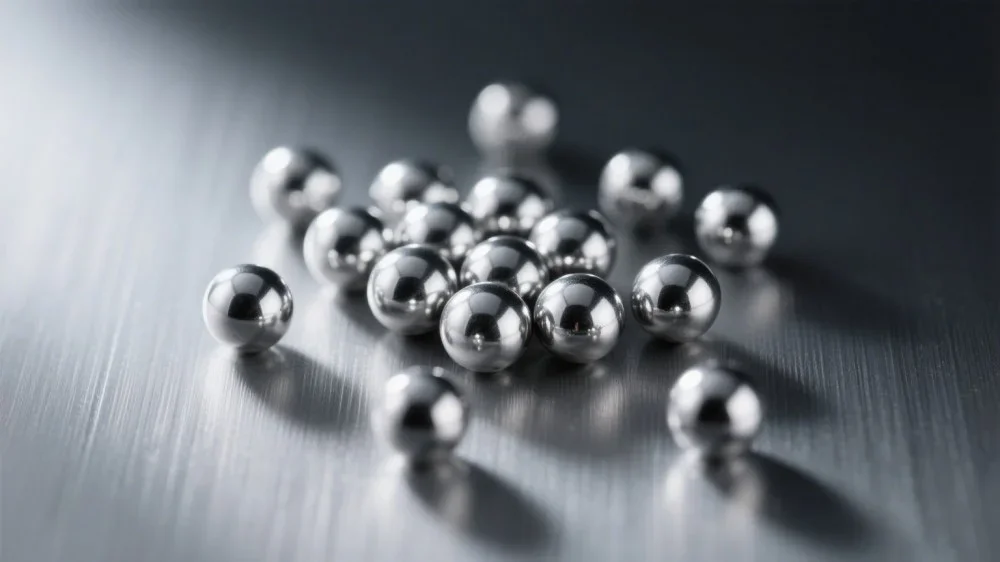
Quality Inspection Supports Consistent Performance
Reliable precision balls require comprehensive inspection throughout manufacturing. Dimensional measurements verify diameter accuracy, while roundness evaluation confirms geometric consistency. Surface finish inspection identifies microscopic imperfections that could influence friction or wear during operation.
Additional testing may include hardness verification, corrosion resistance evaluation, and material composition analysis. Together, these inspection procedures ensure every production batch delivers dependable performance across a broad range of industrial applications.
Consistent quality control also provides customers with greater confidence when integrating precision balls into critical equipment where operational stability remains essential.
Conclusion
High-quality stainless steel precision balls combine precise geometry, excellent corrosion resistance, controlled hardness, and dependable durability to support countless industrial applications. Selecting the proper material, precision grade, and manufacturing partner contributes directly to equipment efficiency, service life, and maintenance performance.
As a trusted supplier, Changzhou Eurasian continues to provide precision-engineered stainless steel balls manufactured to demanding quality standards. Through careful material selection, rigorous inspection, and flexible production capabilities, the company helps global customers obtain reliable solutions for industrial, mechanical, chemical, medical, and food-related applications.
FAQ
What factors determine the quality of stainless steel precision balls?
The most important factors include material quality, roundness, diameter tolerance, surface finish, hardness, and manufacturing consistency. Together, these characteristics influence operating accuracy, wear resistance, and service life.
Which material provides the best corrosion resistance?
For most industrial applications, 316 stainless steel ball products provide superior corrosion resistance, especially in marine environments, chemical processing, and food-related equipment.
Are 304 stainless steel balls suitable for food applications?
Yes. 304 stainless steel balls are commonly used in food processing, beverage equipment, and general industrial environments because they offer excellent corrosion resistance and reliable mechanical performance.
When should 430 stainless steel balls be selected?
430 stainless steel balls are suitable for applications requiring moderate corrosion resistance, magnetic properties, and cost-effective performance where extreme environmental resistance is not necessary.
Can stainless steel precision balls be customized?
Yes. Changzhou Eurasian can provide customized diameters, precision grades, material selections, and surface finishes to meet the specific requirements of different industrial applications.


