


News

Growing Popularity of Ceramic Balls in High-Performance Applications
The aerospace engineer's nightmare: bearing failure at 40,000 feet. The semiconductor manufacturer's crisis: contamination from metal particles in a cleanroom environment. The medical device recall: corrosion in implanted components. These scenarios share a common solution that's rapidly transforming high-performance industries—ceramic balls.
While traditional steel balls have dominated bearing applications for over a century, ceramic balls are experiencing unprecedented adoption in environments where conventional materials fail. This technical analysis examines why industries from aerospace to medical devices are switching to ceramic technology, and what procurement professionals need to know about specifying, sourcing, and implementing these advanced components.
Material Science: Why Ceramic Balls Outperform Steel in Extreme Conditions
The fundamental advantage of ceramic balls lies in their molecular structure. Unlike metallic crystals that deform under stress, ceramic materials maintain rigidity through ionic and covalent bonds that resist both mechanical and thermal degradation.
Silicon Nitride (Si3N4) represents the premium standard for high-performance ceramic bearing balls:
Density: 3.2 g/cm3 (60% lighter than steel)
Hardness: HV 1600-1800 (compared to HRC 60-65 for steel)
Operating temperature: -273°C to +800°C continuous
Thermal expansion coefficient: 3.2 × 10??/°C (4x lower than steel)
Electrical resistivity: 101? Ω·cm (perfect insulator)
This unique property combination enables applications impossible with steel ball bearings:
Aerospace and Defense: Silicon nitride ceramic balls operate reliably in the extreme temperature fluctuations of space, from the -270°C vacuum of orbit to the +500°C reentry heating. Their low density reduces rotating mass, improving fuel efficiency in aircraft turbines.
Medical Implants: The biocompatibility and corrosion resistance of ceramic balls make them ideal for hip and knee replacements. Unlike metal-on-metal bearings that can release ions into body tissue, ceramic components remain chemically inert for decades.
Semiconductor Manufacturing: In cleanroom environments, steel balls shed microscopic metal particles that contaminate wafer production. Ceramic balls eliminate this risk entirely, as they're non-magnetic and produce ceramic wear debris that doesn't interfere with electronic processes.
High-Speed Machining: At spindle speeds exceeding 30,000 RPM, centrifugal forces generate heat that softens steel bearings. Ceramic bearing balls maintain dimensional stability at these speeds, enabling precision machining of hardened materials.
Zirconia (ZrO2) offers an alternative for different requirements:
Fracture toughness: Superior to silicon nitride
Cost: 30-40% less than Si3N4
Applications: Lower-speed, high-impact environments
Trade-off: Lower hardness (HV 1200) and temperature limit (+350°C)
Material selection between silicon nitride and zirconia ceramic balls depends on the specific application stresses. For guidance on material optimization for your application, consult our ceramic materials engineering team.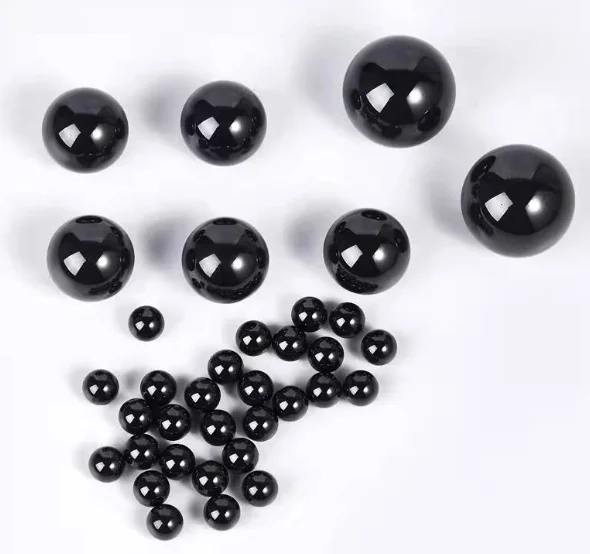
Hybrid Ceramic Bearings: The Best of Both Worlds
The fastest-growing segment in bearing technology isn't purely ceramic, but hybrid ceramic bearings—ceramic balls combined with steel races. This configuration delivers 80% of full-ceramic performance at 40% of the cost.
Performance Advantages of Hybrid Configurations:
Speed Capability: Hybrid ceramic bearings operate 20-30% faster than all-steel bearings with the same geometry. The reduced centrifugal force from lighter ceramic balls generates less heat, allowing higher DN values (bearing bore in mm × RPM).
All-steel bearing limit: DN = 2,000,000
Hybrid ceramic bearing capability: DN = 3,000,000+
Application example: A 25mm bore bearing can operate at 80,000 RPM with ceramics vs. 60,000 RPM with steel
Lubrication Efficiency: The lower friction coefficient of ceramic-on-steel contact (μ = 0.002-0.004 vs. 0.008-0.012 for steel-on-steel) reduces lubricant requirements. Some hybrid ceramic bearings operate with 50% less grease, extending relubrication intervals from 6 months to 2 years in typical applications.
Electrical Isolation: Ceramic balls prevent electrical current passage through bearings, eliminating the shaft voltage erosion that plagues motor bearings in variable frequency drive (VFD) applications. This single benefit can extend bearing life from 2 years to 10+ years in electric motors.
Corrosion Resistance: In environments with moisture or chemical exposure, ceramic balls don't corrode while steel races can be protected with coatings. This asymmetric approach provides corrosion resistance where needed most—at the rolling contact interface.
Cost-Performance Analysis:
| Bearing Type | Relative Cost | Speed Capability | Corrosion Resistance | Typical Lifespan |
|---|---|---|---|---|
| All-steel | 1.0x | Baseline | Moderate | 100% |
| Hybrid ceramic | 2.5-3.0x | +25% | Excellent | 300-500% |
| Full ceramic | 8-12x | +40% | Superior | 800-1000% |
The performance-to-cost ratio makes hybrid ceramic bearings the optimal choice for industrial applications where extreme conditions justify premium components but full ceramic isn't economically feasible.
Industries that have widely adopted hybrid technology include:
Electric vehicle motors and transmissions
Machine tool spindles (CNC mills, lathes, grinders)
Dental and surgical handpieces
Precision pumps for chemical processing
High-speed compressors and turbines
At Changzhou Eurasian Steel Ball Co., Ltd., we manufacture both full ceramic and hybrid bearing components to meet diverse application requirements. Our product catalog details specifications across the complete range of ceramic and steel ball combinations.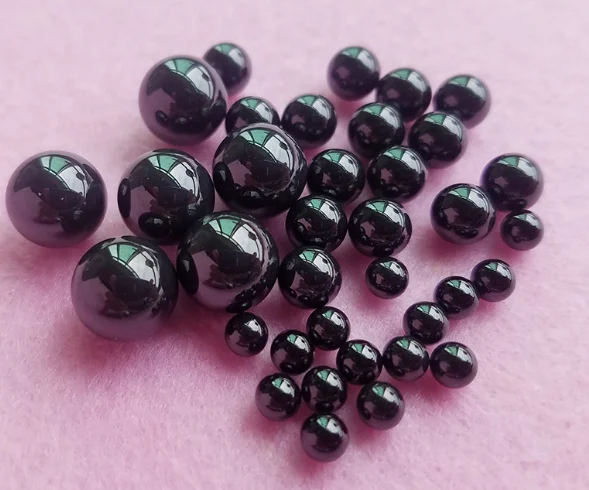
Manufacturing Precision: Ceramic Ball Production Standards
Producing ceramic balls requires fundamentally different processes than steel manufacturing, with quality control challenges that separate capable suppliers from those delivering inconsistent products.
Raw Material Processing
Silicon nitride ceramic balls begin as powder with particle sizes of 0.5-1.0 micrometers. The powder composition directly impacts final properties:
Si3N4 primary powder: 90-95%
Sintering aids (Y2O3, Al2O3): 5-10%
Particle size distribution: Critical for density uniformity
Premium manufacturers source powder from certified suppliers with lot-to-lot composition verification. Inconsistent powder chemistry produces ceramic balls with variable hardness and fracture toughness—defects that only manifest under operational stress.
Forming and Sintering
Unlike steel's cold-heading process, ceramic balls are formed through:
Isostatic pressing: Uniform pressure from all directions creates spherical blanks
Pre-sintering: Low-temperature firing to 1200°C develops initial strength
Hot isostatic pressing (HIP): Final densification at 1700°C under argon atmosphere eliminates porosity
Precision grinding: Progressive diamond abrasive operations achieve final dimensions
The HIP process distinguishes quality manufacturers. This capital-intensive step (equipment costs $2-5 million) produces fully dense ceramic with theoretical density >99%. Suppliers skipping HIP produce ceramic balls with internal voids that become crack initiation sites under load.
Dimensional Tolerance Achievement
Ceramic ball precision grades follow the same ABEC/ISO standards as steel, but achieving these tolerances requires specialized grinding:
Grade 3 (ISO P6): Standard industrial ceramic balls, ±2.5 μm
Grade 5 (ISO P5): Precision applications, ±1.3 μm
Grade 10 (ISO P4): High-precision ceramic bearing balls, ±0.5 μm
Grade 16 (ISO P2): Ultra-precision aerospace/medical, ±0.25 μm
Diamond grinding wheels remove ceramic material at 0.1-0.5 μm per pass. Achieving Grade 10 precision requires 15-20 grinding operations with progressive grit sizes from 80 mesh to 8000 mesh, with dimensional verification at controlled temperatures.
Surface Finish Requirements
Ceramic balls for high-speed applications demand mirror-polish surfaces:
Surface roughness: Ra 0.01 μm or better
Sphericity deviation: Within tolerance grade specification
Surface defect inspection: Automated optical systems detect pits >5 μm
Surface imperfections act as stress concentrators in ceramic materials. A 10 μm surface pit can reduce ceramic ball fatigue life by 50% compared to properly polished components.
Quality Verification Standards
When evaluating a ceramic ball manufacturer, require documentation of:
ISO 3290 compliance for geometric specifications
Fracture toughness testing (KIC values for lot verification)
Weibull modulus >10 for strength consistency
Material traceability through production lot codes
Non-destructive testing protocols
Changzhou Eurasian Steel Ball Co., Ltd. maintains ISO 9001:2015 certification with additional ceramic-specific quality controls including 100% automated optical inspection and statistical process monitoring. Visit our quality assurance page to review our testing protocols and certifications.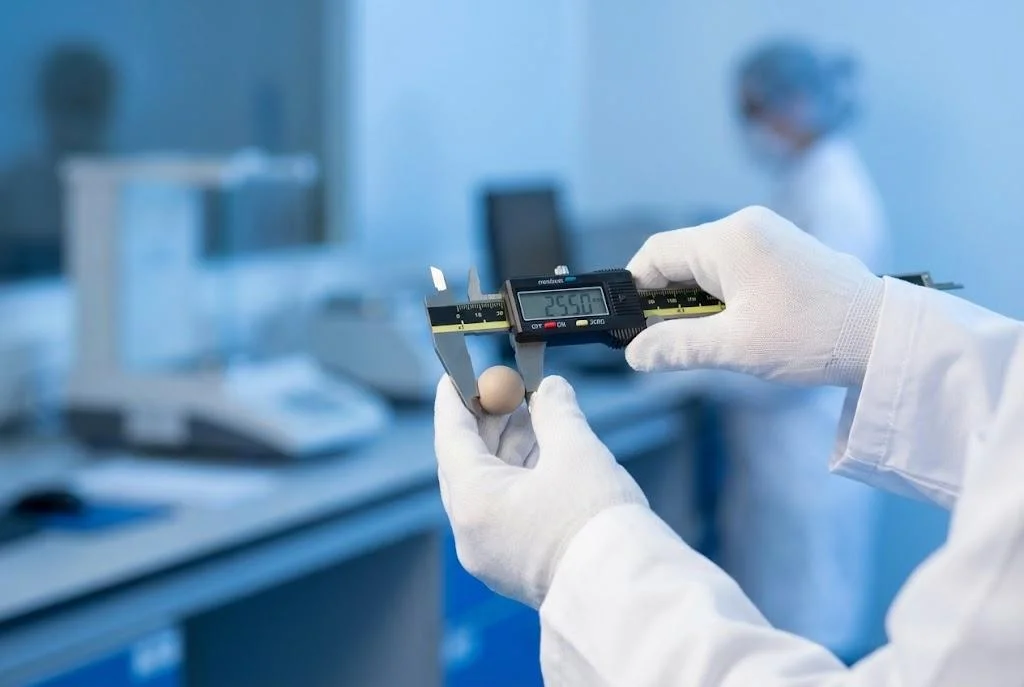
Application Case Studies: Where Ceramic Balls Deliver ROI
Understanding theoretical advantages is one thing; quantifying real-world performance improvements determines whether ceramic balls justify their premium pricing. These case studies demonstrate measurable ROI across industries.
Case Study 1: CNC Machine Tool Spindle
Challenge: A precision machining shop experienced steel bearing failures every 8-12 months in their high-speed spindle operating at 24,000 RPM. Each failure required $8,000 in repairs plus $15,000 in lost production during 3-day downtime.
Solution: Retrofit with hybrid ceramic bearings using silicon nitride balls.
Results:
Bearing life extended to 5+ years (still operating)
Spindle temperature reduced by 12°C
Vibration amplitude decreased 35%
Surface finish quality improved (Ra improved from 0.8 μm to 0.5 μm)
Total cost of ownership reduced 60% over 5-year period
ROI Analysis: Initial bearing cost increased from $2,500 to $6,000 (+$3,500), but elimination of 4 rebuilds saved $92,000 in parts and downtime. Payback period: 5 months.
Case Study 2: Electric Motor in VFD Application
Challenge: An industrial pump motor with variable frequency drive experienced bearing failures every 18 months due to electrical erosion. Motor rewinding cost $12,000 per incident.
Solution: Install hybrid ceramic bearings on drive end (ceramic balls block electrical current).
Results:
Bearing electrical erosion eliminated completely
Motor has operated 6 years without bearing replacement
Reduced vibration extended seal life by 40%
Energy consumption decreased 2% due to lower friction
ROI Analysis: Bearing upgrade cost $800 vs. standard steel bearings at $200. Savings from avoided failures: $48,000 over 6 years. Payback period: 2 months.
Case Study 3: Semiconductor Wafer Handling Equipment
Challenge: Particle contamination from metal bearings caused wafer defect rates of 0.3%, resulting in $500,000 annual scrap costs in a high-volume fab.
Solution: Replace all steel bearings with full ceramic balls in handling robots.
Results:
Metal particle contamination reduced 95%
Wafer defect rate decreased to 0.08%
Annual scrap costs reduced by $350,000
Bearing replacement interval extended from 2 years to 7+ years
ROI Analysis: Ceramic bearing conversion cost $180,000 for 200 bearing positions. Annual savings: $350,000 in scrap plus $50,000 in reduced maintenance. Payback period: 5 months.
Case Study 4: Medical Device - Hip Implant
Challenge: Metal-on-metal hip replacements showed elevated ion levels in patient bloodwork after 5-10 years, requiring revision surgery.
Solution: Ceramic-on-ceramic articulation using alumina ceramic balls.
Results:
Zero detectable metal ion release
Wear rate reduced 10x vs. metal bearings
Expected implant lifespan increased from 15 years to 30+ years
Revision surgery rate decreased 80%
Clinical Value: For patients under 60, ceramic implants reduce lifetime risk of revision from 30% to <5%, significantly improving quality of life outcomes.
These case studies share common themes: ceramic balls deliver value in applications where conventional materials fail prematurely or create secondary problems (contamination, electrical erosion, corrosion). The premium price is justified when total cost of ownership—including downtime, scrap, rework, and performance limitations—is calculated over the component lifecycle.
Sourcing Strategy: Selecting Ceramic Ball Suppliers
The ceramic ball supply chain differs fundamentally from steel ball procurement. Material complexity, manufacturing capital intensity, and quality variability create supplier selection challenges that impact product reliability.
Technical Capability Assessment
Manufacturing Process Verification:
Does the supplier perform in-house HIP processing, or outsource this critical step?
What is their diamond grinding capability for precision grades?
Do they manufacture powder in-house or source from multiple suppliers?
Can they provide material test reports with fracture toughness and Weibull data?
Suppliers who control the complete process—from powder to finished ceramic balls—deliver superior consistency compared to assemblers who outsource critical operations.
Material Grade Offerings:
Silicon nitride: Highest performance, broadest temperature range
Zirconia: Cost-effective for moderate conditions
Alumina: Lowest cost, limited to low-speed applications
Silicon carbide: Specialized chemical resistance applications
Broad material capability indicates manufacturing expertise. Single-material suppliers may lack the process knowledge to optimize recommendations for your application.
Size Range and Precision Grades:
Miniature ceramic balls: 1mm-6mm for medical and precision instruments
Standard industrial sizes: 6mm-25mm for general bearing applications
Large diameter: 25mm-50mm+ for heavy industrial equipment
Precision capability: Can they consistently produce Grade 10 or better?
At Changzhou Eurasian Steel Ball Co., Ltd., we manufacture ceramic balls from 2mm to 50mm diameter in silicon nitride, zirconia, and alumina materials, with precision grades from G5 to G16 depending on material and size. Our integrated manufacturing facility maintains complete process control from raw material verification through final inspection.
Quality System Evaluation
Essential Certifications for Ceramic Ball Manufacturers:
ISO 9001:2015 quality management (minimum baseline)
ISO 13485 for medical device applications
AS9100 for aerospace supply chain qualification
IATF 16949 for automotive industry suppliers
In-Process Quality Controls:
Powder composition verification: X-ray fluorescence (XRF) analysis
Density measurement: Archimedes method or helium pycnometry
Dimensional inspection: Laser micrometry with climate-controlled measurement
Surface defect detection: Automated optical inspection systems
Fracture toughness testing: Chevron notch or indentation methods
Request facility audits or third-party inspection reports. Reputable ceramic ball manufacturers welcome technical due diligence; those resistant to transparency likely lack robust controls.
Commercial Considerations
Pricing Structure Reality:
Unlike steel balls where commodity pricing applies, ceramic ball costs reflect:
Raw material costs: Silicon nitride powder $50-150/kg depending on grade
HIP processing: $200-500 per production batch capital cost allocation
Diamond tooling consumption: $0.10-0.50 per ball depending on size
Yield rates: 70-85% typical for precision grades
Expect ceramic balls to cost:
8-12x steel ball prices for silicon nitride
5-8x steel ball prices for zirconia
3-5x steel ball prices for alumina
Suppliers quoting significantly below these multiples likely compromise on material quality, process steps, or dimensional accuracy.
Minimum Order Quantities:
Silicon nitride: 500-1000 pieces typical MOQ
Zirconia: 200-500 pieces typical MOQ
Standard steel balls: 100 pieces for comparison
Higher MOQs reflect batch processing economics. For prototype quantities, expect premium pricing or extended lead times.
Lead Time Management:
Standard sizes in silicon nitride: 4-6 weeks
Custom sizes requiring tooling: 8-12 weeks
First-time orders with material testing: 10-14 weeks
Expedited orders: Possible with 30-50% premium
Strategic buyers maintain safety stock for critical ceramic ball applications given longer replenishment cycles compared to steel alternatives.
Global Sourcing vs. Regional Supply
Asian Manufacturers (China, Japan):
Advantages: Lower cost base, high production capacity, established ceramic expertise
Considerations: Lead times 6-10 weeks, communication/time zones, quality verification protocols
Best for: High-volume production, cost-sensitive applications, standard specifications
European Manufacturers (Germany, Switzerland):
Advantages: Precision engineering culture, aerospace/medical heritage, responsive service
Considerations: Premium pricing (+30-50% vs. Asian sources), smaller production volumes
Best for: Ultra-precision grades, medical device applications, stringent regulatory requirements
North American Suppliers:
Advantages: Domestic supply chain, faster prototyping, easier quality recourse
Considerations: Limited production capacity, highest cost structure
Best for: Defense/aerospace applications with domestic sourcing requirements, urgent projects
Changzhou Eurasian Steel Ball Co., Ltd. serves as an Asian manufacturing partner offering European-quality standards at competitive pricing. Our Changzhou facility operates German grinding equipment with fully documented quality systems, providing the optimal balance of cost-efficiency and reliability. Contact our technical sales team for application-specific recommendations and sampling programs.
Logistics and Import Considerations
Packaging for Ceramic Materials:
Unlike steel balls shipped in bulk bags, ceramic balls require protective packaging:
Individual separation prevents impact damage
Foam or cellular cushioning absorbs shock
Desiccant protection prevents moisture adsorption (affects sintered properties)
ESD-safe containers for electronic applications
Budget suppliers using inadequate packaging create hidden costs through damaged goods and returns.
Import Classifications and Duties:
HS Code 6909.19: Ceramic balls for bearings
Typical import duties: 3-8% depending on country of origin and destination
Some free trade agreements provide duty exemptions
Verify classifications with customs brokers to avoid unexpected landed cost increases.
Future Trends: Emerging Applications for Ceramic Ball Technology
The ceramic ball market is projected to grow 12-15% annually through 2030, driven by technology trends that demand materials beyond steel's capabilities.
Electric Vehicle Revolution:
EV drivetrains operate at speeds and temperatures that challenge conventional bearings. Hybrid ceramic bearings are becoming standard in:
High-RPM traction motors (15,000-20,000 RPM continuous)
Reduction gearboxes with compact, high-load designs
Wheel bearings exposed to electrical currents from regenerative braking
Leading EV manufacturers specify ceramic bearing balls not as a premium option but as a reliability requirement. As EV production scales from 10 million to 50+ million vehicles annually by 2030, ceramic ball demand will increase proportionally.
Renewable Energy Systems:
Wind turbine gearboxes and generators present extreme bearing challenges—high loads, variable speeds, limited maintenance access. Hybrid ceramic bearings offer:
Extended relubrication intervals (critical for offshore installations)
Electrical isolation preventing current damage in generators
Corrosion resistance in marine environments
A single 5MW wind turbine contains 40-60 bearings; converting critical positions to ceramics adds $50,000-80,000 per turbine but can extend maintenance intervals from 2 years to 5+ years, saving $200,000+ in offshore service costs.
Hydrogen Fuel Cell Systems:
Hydrogen compressors and fuel cell air blowers operate in challenging conditions:
High speeds (40,000+ RPM for compressors)
Hydrogen embrittlement risk for steel components
Ultra-clean requirements (no metallic contamination)
Ceramic balls eliminate hydrogen embrittlement concerns while providing the speed capability and cleanliness required. As hydrogen economy infrastructure develops, this application segment will drive ceramic ball innovation.
Medical Robotics:
Surgical robots demand miniature ceramic balls (2-6mm) for:
MRI compatibility (non-magnetic materials)
Sterilization resistance (repeated autoclave cycles)
Precision motion control (sub-micrometer accuracy)
The medical device market represents the highest-value segment with stringent regulatory requirements but also premium pricing acceptance.
Space Exploration:
Mars rovers and satellite mechanisms operate in conditions impossible for steel bearings:
Temperature cycling: -180°C to +120°C
Vacuum environment (no conventional lubrication)
Radiation exposure
Multi-decade operational requirements
Ceramic balls with solid lubricant coatings enable the extreme reliability required for missions where repair is impossible. As space commercialization accelerates, this niche market will expand.
Conclusion: Strategic Implementation of Ceramic Ball Technology
The growing popularity of ceramic balls in high-performance applications reflects not a trend but a permanent materials evolution. Industries are discovering that conventional steel ball bearings, despite a century of refinement, impose fundamental limitations in speed, temperature, corrosion resistance, and electrical properties.
Key strategic insights for technical decision-makers:
Application Analysis: Ceramic balls deliver ROI in environments where steel fails prematurely or creates secondary problems (contamination, electrical damage, corrosion). Calculate total cost of ownership including downtime and performance limitations, not just component price.
Material Selection: Silicon nitride offers maximum performance for extreme conditions; zirconia provides cost-effective solutions for moderate environments; hybrid ceramic bearings deliver 80% of ceramic benefits at 40% of full-ceramic costs.
Supplier Qualification: Manufacturing process control—especially HIP sintering and precision grinding—separates capable ceramic ball manufacturers from those delivering inconsistent quality. Verify certifications, process capabilities, and quality documentation.
Implementation Strategy: Start with highest-value applications (critical equipment with frequent steel bearing failures) to build experience before broader deployment. Monitor performance metrics to quantify improvements and refine specifications.
The transition from steel to ceramic balls parallels earlier materials revolutions—from bronze to steel in the Industrial Revolution, from natural rubber to synthetics in the automotive age. Organizations that understand ceramic technology's capabilities and limitations will gain competitive advantages through improved equipment reliability, reduced maintenance costs, and access to performance regimes impossible with conventional materials.
Ready to explore ceramic ball solutions for your application? Changzhou Eurasian Steel Ball Co., Ltd. provides complimentary application engineering support including material selection analysis, failure mode assessment, and prototype sampling programs. Our technical specialists help you determine if ceramic technology delivers measurable ROI for your specific operating conditions. Contact us today to discuss your requirements and receive customized recommendations based on three decades of advanced bearing materials expertise.


