


News

Custom Drilled Steel Ball Solutions for Mechanical Applications
In modern engineering and industrial design, component adaptability often determines the efficiency and longevity of mechanical systems. Among these components, the drilled steel ball has evolved from a simple spherical element into a highly functional solution for complex assemblies. By integrating precise hole configurations into high-quality steel spheres, manufacturers can meet demanding requirements across fluid control, structural integration, and motion systems.
In this blog post, Eurasian, as high quality precision steel ball manufacturer, will share the the role of custom drilled steel ball solutions for mechanical applications.
The Functional Evolution of Drilled Steel Ball Components
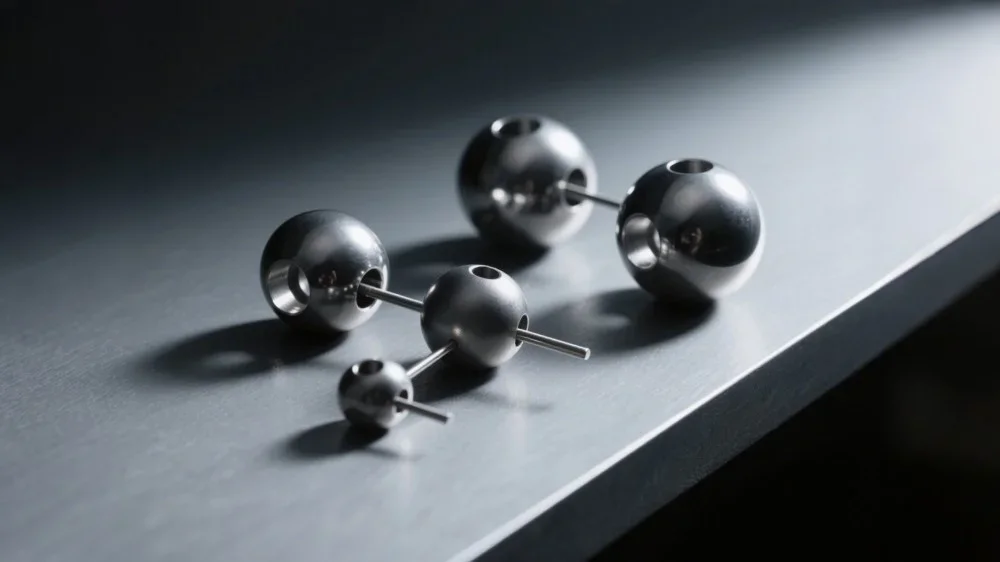
A drilled steel ball is not merely a modified version of a standard sphere—it represents a transformation in how spherical components are used in engineering systems. The introduction of drilled passages allows these balls to serve multiple roles simultaneously, such as structural connectors, fluid channels, or alignment elements.
Unlike solid balls, these components are designed with intentional geometry modifications. Through-holes enable linear passage, while blind or threaded holes introduce controlled interaction points for fastening and integration. This flexibility significantly expands their usability in high-performance mechanical environments.
From an engineering standpoint, the addition of holes must not compromise the ball’s symmetry or mechanical integrity. Maintaining balance, roundness, and surface quality while introducing internal features is what defines high-quality manufacturing in this field.
Material Selection and Performance Considerations
The effectiveness of any drilled ball depends heavily on the material from which it is produced. Steel alloys—particularly stainless steel and carbon steel—are widely used due to their balance of hardness, machinability, and resistance to wear.
Stainless variants are especially valuable in environments exposed to moisture, chemicals, or temperature fluctuations. Their corrosion resistance ensures long-term durability without compromising structural strength. Carbon steel, on the other hand, is often selected for applications requiring higher load-bearing capacity and cost efficiency.
Material uniformity is critical. Any inconsistency can lead to stress concentration around drilled areas, potentially affecting performance. Therefore, high-grade raw materials combined with controlled heat treatment processes ensure that each drilled steel ball maintains consistent mechanical properties throughout its structure.
Precision Engineering in Drilled Ball Manufacturing
Creating a drilled sphere requires more than standard machining—it involves a sequence of tightly controlled processes designed to preserve the original geometry while introducing new functionality.
The process typically begins with the production of high-precision steel balls through forming, grinding, and polishing. Once the base sphere meets strict dimensional tolerances, it undergoes drilling using CNC systems and specialized fixtures that ensure positional accuracy.
Key technical challenges include:
Maintaining concentricity between the hole and the sphere
Preventing surface deformation during drilling
Ensuring clean internal finishes within drilled passages
Avoiding micro-cracks or thermal stress
Advanced tooling and process control allow manufacturers to achieve these goals while maintaining production efficiency. The result is a component that performs reliably under mechanical, thermal, and dynamic loads.
Hole Configurations and Their Mechanical Impact
Different applications require different hole designs, and the versatility of drilled steel ball components lies in their ability to accommodate various configurations.
Through-Hole Designs
These are the most common configurations, allowing complete passage through the sphere. They are widely used in fluid systems, shaft alignment, and assembly linkages where continuity is required.
Blind Hole Structures
Blind holes provide partial-depth cavities, offering controlled interaction without full penetration. These are useful in applications where sealing or structural integrity on one side must be preserved.
Threaded Internal Features
Threaded holes enable direct fastening, eliminating the need for additional connectors. This simplifies assembly and enhances structural stability in compact systems.
Multi-Axis Custom Patterns
In more complex assemblies, multiple holes may be drilled at specific angles or orientations. These configurations are often tailored to precise engineering drawings and require advanced machining capabilities.
Each configuration directly influences how the ball interacts within a system, making customization a key factor in achieving optimal performance.
Mechanical Applications Across Industries
The adaptability of drilled components makes them indispensable across a wide range of industrial sectors. Their ability to combine structural and functional roles reduces the need for multiple parts, streamlining design and assembly.
Fluid Control Systems
In hydraulic and pneumatic systems, drilled balls are used to regulate flow, guide pressure distribution, or act as sealing interfaces. The precision of the drilled passages directly impacts system efficiency.
Automation and Robotics
Modern automation relies on compact and multifunctional components. Drilled balls allow internal routing of wires or fasteners, enabling cleaner and more efficient designs in robotic joints and motion systems.
Mechanical Assemblies
Threaded or blind-hole configurations support secure connections in precision mechanisms. These components often serve as pivot points, connectors, or alignment aids.
Industrial Equipment Integration
From conveyors to rotary devices, drilled balls are integrated into systems where traditional spherical components fall short. Their ability to combine motion with connectivity enhances overall system functionality.
Stainless Steel Variants in Demanding Environments
In applications where environmental exposure is a concern, stainless drilled steel ball solutions offer a clear advantage. Their resistance to corrosion and chemical degradation ensures consistent performance over time.
Industries such as food processing, marine engineering, and chemical handling rely heavily on stainless variants. These environments require components that not only perform mechanically but also maintain hygiene and resist contamination.
Additionally, stainless materials retain their polished surface finish, reducing friction and wear even in challenging conditions. This makes them ideal for precision instruments and sensitive mechanical systems.
Quality Control and Inspection Standards
Producing high-quality drilled spheres requires rigorous inspection at every stage of manufacturing. Quality assurance is not limited to final checks—it is integrated throughout the production process.
Critical inspection parameters include:
Diameter accuracy and roundness
Hole alignment and dimensional tolerance
Surface finish and absence of defects
Material hardness and structural consistency
Advanced metrology tools, including coordinate measuring machines and optical inspection systems, are used to verify these parameters. This ensures that each component meets the stringent requirements of modern engineering applications.
Consistency is especially important for large-scale production, where even minor deviations can affect system performance. A reliable precision drilled steel ball supplier must therefore maintain strict quality protocols to ensure uniformity across all products.
Customization as a Competitive Advantage
Customization is no longer an optional feature—it is a necessity in today’s industrial landscape. Engineers require components that align precisely with their design specifications, and drilled steel balls are no exception.
Customization options typically include:
Hole diameter and depth
Number and orientation of holes
Thread specifications
Surface finish requirements
Material selection
By offering flexible manufacturing capabilities, companies can support a wide range of applications without compromising on quality or performance. This adaptability is particularly valuable in OEM production and specialized engineering projects.
Design Considerations for Optimal Performance
When integrating drilled spheres into a system, several design factors must be considered to ensure optimal functionality.
First, the relationship between hole size and ball diameter must be carefully balanced. Oversized holes can weaken the structure, while undersized passages may limit functionality.
Second, the positioning of the holes affects load distribution and rotational balance. Misalignment can lead to uneven wear or reduced efficiency.
Third, surface finish plays a critical role in minimizing friction and ensuring smooth operation. Polished surfaces reduce resistance and extend component lifespan.
Finally, compatibility with surrounding components must be evaluated to ensure seamless integration. This includes considerations for materials, tolerances, and environmental conditions.
Manufacturing Expertise and Industry Trust
The ability to produce high-quality drilled components consistently requires both technical expertise and advanced infrastructure. Manufacturers must invest in precision machinery, skilled personnel, and robust quality systems.
A trusted precision drilled steel ball supplier combines these elements to deliver products that meet international standards. Reliability, consistency, and customization capabilities are key factors that define industry leaders in this field.
Companies that prioritize innovation and process optimization are better positioned to meet evolving market demands and support complex engineering projects.
Future Trends in Drilled Steel Ball Applications
As technology advances, the role of drilled steel ball components is expected to expand further. Emerging trends include:
Increased use in miniaturized mechanical systems
Integration into smart devices and sensor assemblies
Development of hybrid materials for enhanced performance
Greater emphasis on sustainability and material efficiency
These trends highlight the growing importance of precision components in modern engineering. As applications become more sophisticated, the demand for highly customized and reliable solutions will continue to rise.
Conclusion
The drilled steel ball has become a critical component in modern mechanical and industrial systems. Its ability to combine structural strength with functional versatility makes it indispensable across a wide range of applications.
From material selection and precision manufacturing to customization and quality assurance, every aspect of production contributes to the performance of these components. By leveraging advanced technologies and engineering expertise, manufacturers can deliver solutions that meet the highest standards of accuracy and reliability.
For businesses seeking dependable and high-performance components, working with an experienced precision drilled steel ball supplier ensures access to products that align with both technical requirements and industry expectations.


