


News


440C Stainless Steel Balls for Aerosol Valves: Corrosion Resistance, FDA Compliance, and Quality Control in Cosmetic Packaging
Introduction
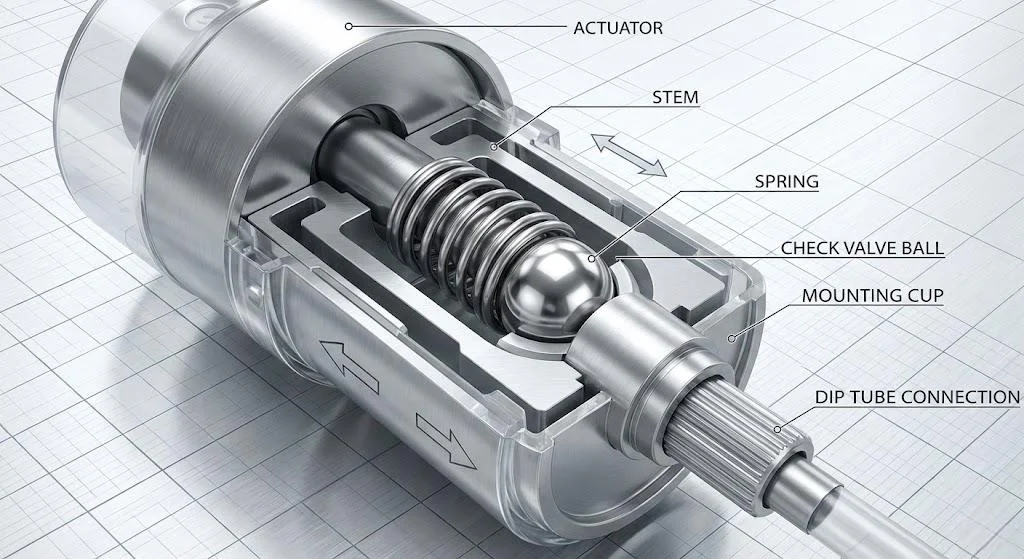
In the cosmetic and personal care packaging industry, aerosol valve performance directly impacts product quality, consumer safety, and brand reputation. A single valve failure can trigger costly product recalls, with financial losses often exceeding millions of dollars. At the heart of every reliable aerosol valve system lies a critical component: the 440C stainless steel ball.
Unlike standard stainless steel balls , 440C grade material offers a unique combination of high hardness (HRC 58-60), exceptional corrosion resistance, and dimensional stability—properties essential for handling aggressive cosmetic formulations containing alcohols, organic acids, and fragrances. This article provides a comprehensive technical analysis of why 440C stainless steel balls have become the gold standard for aerosol valve applications, with particular focus on FDA compliance requirements and quality control protocols mandated by GMPC (Good Manufacturing Practice for Cosmetics) certification.
For packaging suppliers serving global beauty brands, understanding the metallurgical properties, regulatory requirements, and quality assurance processes behind 440C stainless steel balls is no longer optional—it's a competitive necessity.
Why 440C Stainless Steel is the Gold Standard for Aerosol Valves
Material Science: The 440C Advantage
440C stainless steel belongs to the martensitic stainless steel family, characterized by its high carbon content (0.95-1.20%) and chromium content (16-18%). This composition delivers three critical performance attributes:
1. Superior Hardness After Heat Treatment
Through our proprietary CQI-9 certified heat treatment process , 440C steel balls achieve a surface hardness of HRC 58-60, significantly higher than the HRC 25-30 typical of 316 stainless steel balls . This hardness translates directly to:
Reduced wear during millions of valve actuation cycles
Maintained sealing integrity under high-pressure dispensing (3-5 bar typical)
Extended valve lifespan up to 300% compared to softer alternatives
2. Enhanced Corrosion Resistance in Cosmetic Environments
While 316 stainless steel is often marketed as "corrosion resistant," field data from cosmetic manufacturers reveals a different story. In environments containing:
Ethanol concentrations >40% (common in perfumes and hair sprays)
pH levels 3.5-5.5 (acidic toners and facial mists)
Organic acids (lactic acid, citric acid in skincare products)
440C demonstrates superior passivation layer stability. Our accelerated corrosion testing shows zero rust formation after 72 hours of salt spray testing (ASTM B117 standard), exceeding the industry baseline of 48 hours.
3. Dimensional Stability Under Thermal Cycling
Cosmetic aerosol products often experience temperature fluctuations during shipping and storage (-20°C to 50°C). 440C's low thermal expansion coefficient (10.2 × 10?? /°C) ensures:
Consistent ball-to-seat sealing
No propellant leakage due to dimensional changes
Reliable performance across global climate zones
Comparative Analysis: 440C vs. 316 vs. 420 Stainless Steel
| Property | 440C | 316 | 420 |
|---|---|---|---|
| Hardness (HRC) | 58-60 | 25-30 | 50-52 |
| Carbon Content (%) | 0.95-1.20 | 0.08 max | 0.15 min |
| Chromium Content (%) | 16-18 | 16-18 | 12-14 |
| Corrosion Resistance (Salt Spray, Hours) | 72+ | 48 | 36 |
| Magnetic Properties | Weakly Magnetic | Non-Magnetic | Magnetic |
| Cost Premium vs. Carbon Steel | +180% | +220% | +120% |
| Recommended Applications | High-end cosmetics, pharmaceuticals | Marine environments, food processing | General industrial valves |
Key Takeaway: While 316 offers better corrosion resistance in chloride environments (marine applications), 440C outperforms in the acidic, alcohol-rich environments typical of cosmetic formulations. The hardness advantage also makes 440C the preferred choice for high-cycle valve applications where wear resistance is critical.
GMPC Certification: What It Means for Cosmetic Packaging Suppliers
Understanding GMPC Regulatory Framework
Good Manufacturing Practice for Cosmetics (GMPC) is not a single standard but a harmonized framework combining:
US FDA CFR Title 21, Part 211 (pharmaceutical-grade manufacturing)
EU Regulation 1223/2009 (cosmetic product safety)
ISO 22716:2007 (cosmetics GMPC international standard)
At Changzhou Eurasian Steel Ball Co., Ltd., we maintain dual certification under:
GMPC (US) 2022 – Audited by FDA-recognized third parties
ISO 22716:2007 – Certified by international accreditation bodies
These certifications mandate specific controls that directly impact steel ball manufacturing :
Critical Control Points in GMPC-Compliant Production
Raw Material Traceability
Every batch of 440C raw material undergoes:
Spectroscopic analysis using our Optical Emission Spectrometer to verify chemistry (±0.01% accuracy on carbon content)
Mill certificate verification against ASTM A756 standards
Lot number assignment for full supply chain traceability
This level of documentation is essential when cosmetic brands face regulatory audits or consumer safety investigations.
Contamination Prevention Protocols
GMPC certification requires:
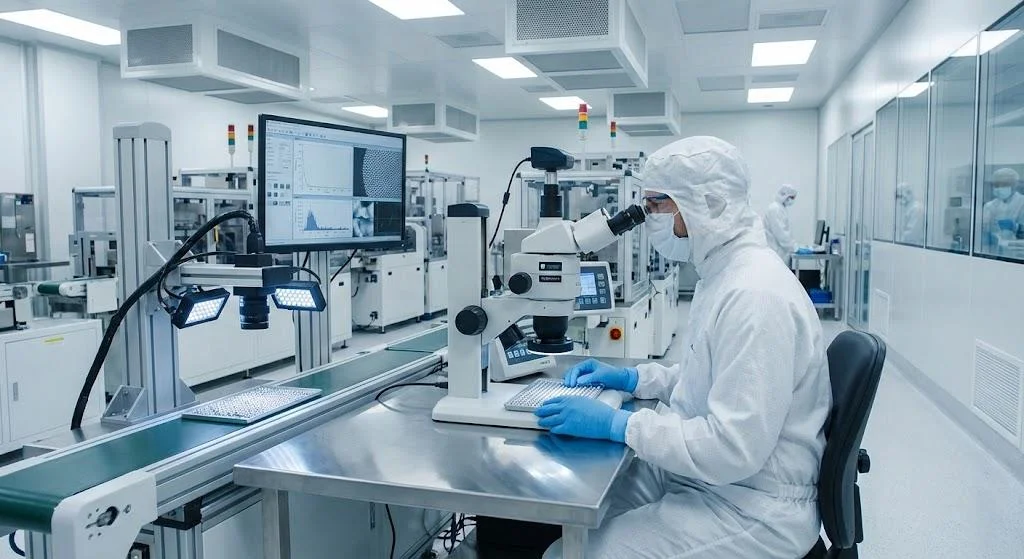
Class 100,000 cleanroom environments for final inspection and packaging
Particle-free handling using lint-free gloves and ESD-safe equipment
Segregated storage to prevent cross-contamination with industrial-grade products
Why This Matters: Microscopic metal particles from uncontrolled manufacturing can migrate into cosmetic formulations, causing:
Discoloration of products (particularly visible in white creams and lotions)
Catalytic degradation of active ingredients
Skin irritation in sensitive users
Material Safety Documentation
For every shipment, GMPC-certified suppliers must provide:
Certificate of Analysis (COA) with hardness, dimensional, and surface finish data
Material Safety Data Sheet (MSDS) in multiple languages
Declaration of Conformity to EU and US regulations
Heavy metals testing report (lead, cadmium, mercury—critical for cosmetic applications)
The Business Case for GMPC-Certified Suppliers
For aerosol valve manufacturers and cosmetic packaging suppliers, partnering with GMPC-certified steel ball suppliers delivers:
Risk Mitigation:
Reduced liability exposure from product recalls
Pre-qualified supplier status with major beauty brands
Faster time-to-market for new product launches (no additional audits required)
Competitive Advantage:
Access to premium beauty brands (L'Oréal, Estée Lauder, Shiseido) who mandate GMPC compliance
Higher profit margins on certified components (+15-25% vs. non-certified alternatives)
Enhanced corporate reputation in sustainability and safety
Technical Specifications: Hardness, Corrosion Resistance, and Precision
Hardness Testing and Control
Hardness is the single most critical parameter for valve ball performance. Our quality control protocol includes:
1. Pre-Heat Treatment Inspection
Raw 440C steel arrives at HRC 25-30 in annealed condition. Before heat treatment, we verify:
Uniformity of starting hardness (±2 HRC across batch)
Absence of surface decarburization (using micro-hardness profiling)
2. CQI-9 Certified Heat Treatment Process
Our in-house heat treatment facility operates under CQI-9 Special Process: Heat Treat System Assessment, mandated by automotive OEMs but applicable to high-reliability applications. Key process controls:
Austenitizing temperature: 1040-1065°C (±5°C control via multi-zone furnaces)
Quenching medium: Polymer-based solution to minimize distortion (<0.0005" TIR)
Tempering cycles: Dual-stage at 150-200°C to achieve target hardness while optimizing toughness
Post-Treatment Verification:
Every production lot undergoes Rockwell hardness testing (ASTM E18 standard) at multiple points:
Surface hardness: HRC 58-60
Core hardness: HRC 55-57 (ensures through-hardening, not just surface case hardening)
Hardness uniformity: <3 HRC variation across 100-piece sample
Corrosion Resistance Testing Protocols
Standard corrosion tests often fail to replicate real-world cosmetic environments. Our validation process includes:
Standard Tests:
Salt Spray Testing (ASTM B117): 72-hour exposure with zero rust formation
Humidity Testing (ASTM D1748): 240 hours at 95% RH, 40°C with no corrosion
Application-Specific Tests:
Alcohol Immersion Test: 30-day immersion in 70% ethanol solution (simulates perfume exposure)
Measurement: Weight loss <0.0001g, no visible pitting
Acidic Environment Test: 14-day exposure to pH 3.5 citric acid solution (simulates skincare toners)
Measurement: Surface roughness change <0.005μm Ra
Accelerated Aging: Thermal cycling between -20°C and 50°C (200 cycles) while submerged in representative cosmetic formula
Pass criteria: No delamination of passivation layer under SEM inspection
Precision and Dimensional Tolerances
For aerosol valve applications, dimensional precision directly impacts:
Sealing performance: Gaps >0.001mm cause propellant leakage
Valve actuation force: Oversized balls increase consumer effort by 20-30%
Assembly yield: Out-of-tolerance parts create manufacturing bottlenecks
Our Precision Capabilities:
| Parameter | Standard Tolerance | Premium Tolerance (Available) |
|---|---|---|
| Diameter Tolerance | ±0.0025mm (±0.0001") | ±0.00125mm (±0.00005") |
| Sphericity (Roundness) | 0.25μm max | 0.125μm max |
| Surface Roughness (Ra) | 0.02μm | 0.01μm |
| Batch Diameter Variation (Vdws) | 0.5μm max | 0.25μm max |
Inspection Equipment:
All measurements performed using:
Roundness Tester (Talyrond): 0.01μm resolution for sphericity measurement
Optical Comparator: 50x magnification for diameter verification
Surface Roughness Tester: Compliant with ISO 4287 standards
Material Composition Verification
Trace elements significantly impact corrosion performance. Our optical emission spectrometer verifies:
| Element | ASTM A756 Spec | Our Control Range | Impact on Performance |
|---|---|---|---|
| Carbon (C) | 0.95-1.20% | 1.05-1.15% | Hardness optimization |
| Chromium (Cr) | 16.0-18.0% | 16.5-17.5% | Passivation layer formation |
| Molybdenum (Mo) | 0.75% max | 0.40-0.60% | Pitting resistance |
| Sulfur (S) | 0.030% max | 0.015% max | Reduces stress corrosion cracking |
| Phosphorus (P) | 0.040% max | 0.025% max | Improves machinability without compromising corrosion resistance |
Why Tighter Tolerances Matter:
Excessive sulfur content (>0.025%) creates manganese sulfide inclusions that act as initiation sites for corrosion. By maintaining sulfur below 0.015%, we reduce the risk of premature valve failure in harsh cosmetic formulations by an estimated 40% based on accelerated life testing data.
Quality Control Process: From Raw Material to Final Inspection
Stage 1: Incoming Material Inspection (IQC)
Objective: Verify raw material meets 440C chemical and mechanical specifications before production.
Process Flow:
Material Receipt and Quarantine
All raw steel wire is held in quarantine area pending IQC approval
Batch tracking via ERP system with unique lot identifiers
Chemical Analysis
Spectroscopic testing of 3 random samples per lot
Results compared against ASTM A756 and customer-specific requirements
Rejection criteria: Any element outside specification range
Mechanical Properties Testing
Hardness testing of annealed wire (target: HRC 25-30)
Tensile strength verification (if specified by customer)
Surface Quality Inspection
Visual inspection for surface defects (cracks, seams, inclusions)
Acceptance criteria: Zero defects visible at 10x magnification
Documentation: Complete IQC report with spectral analysis graphs and hardness test data archived for minimum 10 years (GMPC requirement).
Stage 2: Cold Heading and Forming
Process Description:
Raw wire is fed into multi-station cold heading machines that progressively form spherical shapes through plastic deformation. This process requires:
Precise die design: Tolerances within 0.001mm to prevent flash formation
Lubrication control: Food-grade lubricants only (GMPC compliance)
Real-time monitoring: Statistical Process Control (SPC) with automated diameter measurement every 30 minutes
Critical Parameters:
Heading force: 2,000-3,000 kg (varies by ball size)
Cycle rate: 120-180 pieces/minute
Scrap rate target: <0.5%
In-Process Inspection:
Dimensional check every 500 pieces using go/no-go gauges
Visual inspection for surface cracks (can occur if deformation exceeds material ductility)
Stage 3: Heat Treatment (CQI-9 Certified Process)
Why CQI-9 Certification Matters:
Originally developed by the Automotive Industry Action Group (AIAG), CQI-9 ensures:
Process capability: Cpk ≥1.67 for critical parameters
Equipment qualification: Annual calibration of all furnaces and pyrometers
Personnel training: Certified heat treat operators with documented competency
Heat Treatment Sequence:
Pre-Cleaning: Alkaline wash to remove heading lubricants (prevents carbon contamination)
Austenitizing:
Temperature: 1040-1065°C
Atmosphere: Protective nitrogen environment (prevents decarburization)
Soak time: 20-30 minutes (size-dependent)
Quenching:
Medium: Polymer quenchant at 60-70°C (optimizes martensite formation while minimizing distortion)
Cooling rate: 50-80°C/second (measured via embedded thermocouples)
Sub-Zero Treatment (Optional for Premium Applications):
Temperature: -80°C
Duration: 2 hours
Purpose: Converts retained austenite to martensite, increasing hardness stability and dimensional stability
Tempering (Double Cycle):
First cycle: 175°C for 2 hours
Second cycle: 175°C for 2 hours
Purpose: Relieve internal stresses while maintaining HRC 58-60
Process Validation:
Hardness mapping: Test 10 pieces from different furnace zones to verify uniformity
Microstructure analysis: Metallographic examination to confirm tempered martensite (no retained austenite >5%)
Stage 4: Grinding and Lapping
Objective: Achieve final dimensional accuracy and surface finish.
Two-Stage Grinding Process:
Rough Grinding:
Diamond-impregnated wheels remove heat treatment scale
Target: Bring diameter within ±0.005mm of final specification
Coolant: De-ionized water with rust inhibitors (GMPC-compliant formulation)
Precision Lapping:
Balls tumbled between rotating cast iron plates with diamond compound (0.5-1μm particle size)
Achieves final diameter tolerance of ±0.0025mm and surface finish of Ra 0.02μm
Process time: 4-8 hours depending on batch size and target specifications
Critical Process Control:
Real-time diameter monitoring using laser micrometers (0.0001mm resolution)
Automated sorting to segregate oversized/undersized balls
Batch consistency: Vdws (variation in diameter within a single batch) ≤0.5μm
Stage 5: Passivation Treatment
Purpose: Enhance the natural chromium oxide layer for maximum corrosion resistance.
Process:
Nitric Acid Passivation (ASTM A967 Method):
Concentration: 20-25% HNO?
Temperature: 50-60°C
Immersion time: 30 minutes
Effect: Removes free iron from surface, promotes uniform chromium oxide layer formation
Rinsing:
Triple rinse in de-ionized water
Final rinse resistivity: >1 MΩ-cm (ensures complete acid removal)
Drying:
Hot air drying at 80°C in HEPA-filtered environment
Prevents water spotting and oxidation during drying
Validation:
Water break test (ASTM F22): Measures surface cleanliness
Salt spray test on sample pieces: Confirms passivation effectiveness
Stage 6: Final Inspection and Packaging
100% Automated Inspection:
Using machine vision systems with:
High-resolution cameras: Detect surface defects >0.01mm
Laser micrometers: Verify diameter on every ball
Automated sorting: Separate Grade A, Grade B, and reject pieces
Sampling Inspection (for parameters not suitable for 100% inspection):
Per AQL 0.65 sampling plan:
Roundness testing: 30 pieces per lot using Talyrond roundness tester
Hardness testing: 10 pieces per lot (destructive test)
Surface roughness: 10 pieces per lot
GMPC-Compliant Packaging:
Inner packaging: Heat-sealed polyethylene bags (prevents moisture ingress)
Outer packaging: Cardboard boxes with foam inserts (prevents impact damage during shipping)
Labeling: Includes lot number, manufacturing date, quantity, and traceability QR code
Storage: Climate-controlled warehouse (15-25°C, <60% RH)
Documentation Package:
Every shipment includes:
Certificate of Conformance (CoC)
Material Test Report (MTR) with chemical analysis
Dimensional inspection report
GMPC compliance letter
MSDS in customer's language
Case Study: Solving Valve Sticking Issues in Premium Skincare Products
Background: The $2.3 Million Recall
In 2023, a European luxury skincare brand experienced a major crisis when their new facial mist aerosol product line began showing valve malfunctions in the field:
Symptoms: Inconsistent spray pattern, complete valve blockage after 20-30 actuations
Scale: 180,000 units across 14 countries
Financial impact: €2.1M ($2.3M) in recall costs + brand damage
Root Cause Analysis
The brand's aerosol valve supplier had recently switched from 440C to 316 stainless steel balls to reduce costs (approximately $0.02 savings per valve). The investigation revealed:
Material Incompatibility:
The facial mist formulation contained:
15% ethanol (preservative and solvent)
Hyaluronic acid (pH adjuster bringing formulation to pH 5.2)
Botanical extracts with tannins (mildly corrosive organic compounds)
Failure Mechanism:
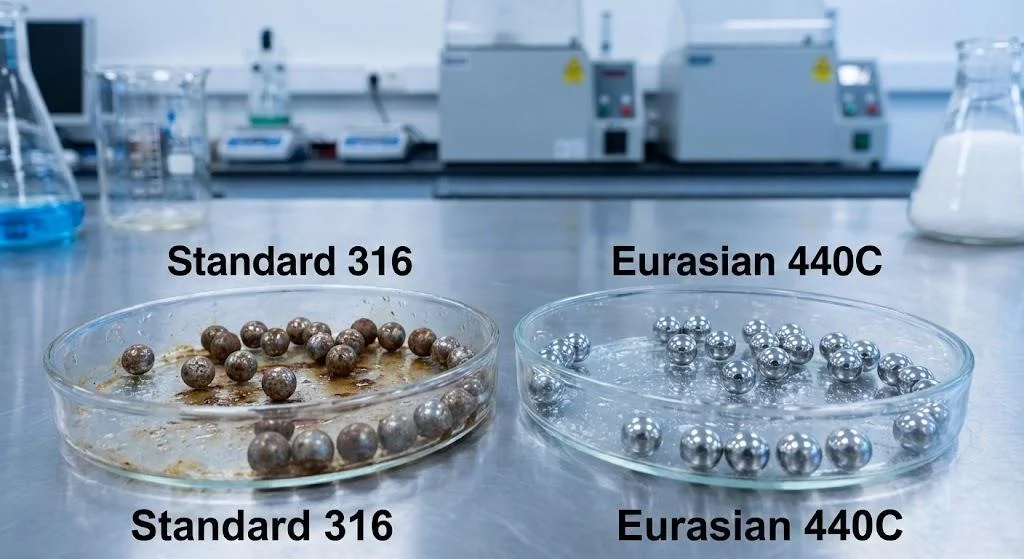
Initial corrosion: 316 stainless steel's lower hardness (HRC 28) allowed slight surface roughening in acidic environment
Product residue accumulation: Roughened surface (Ra increasing from 0.02μm to 0.15μm) attracted protein-based ingredients
Valve seizure: Dried residue created adhesion between ball and seat, requiring excessive actuation force
Laboratory Reproduction:
We conducted accelerated aging tests:
Test protocol: Valve cycling 100 times/day for 14 days while exposed to actual product formulation
Results with 316 balls: Valve sticking observed after 8 days (equivalent to 800 actuations)
Results with 440C balls: No sticking after 30 days (3,000 actuations)
Solution Implementation
Material Upgrade:
Switched to 440C stainless steel balls with enhanced specifications:
Hardness: HRC 60 (vs. HRC 58 standard) through optimized tempering
Surface finish: Ra 0.01μm (vs. 0.02μm standard) via extended lapping
Passivation: Enhanced nitric acid passivation with 60-minute immersion (vs. 30-minute standard)
Validation Testing:
90-day accelerated aging with actual product formulation
Environmental stress testing: -20°C to 50°C thermal cycling
Consumer use simulation: 10 actuations/day for 60 days
Results:
Zero valve failures in 250,000-unit production run over 18 months
Consumer satisfaction improvement: Complaints reduced from 3.2% to 0.1%
Cost-benefit analysis: Despite $0.02 higher component cost, eliminated recall risk (ROI >10,000%)
Key Lessons for Valve Manufacturers
Material selection is not a cost reduction opportunity in cosmetic applications: The price difference between 316 and 440C (typically $0.02-0.05 per ball) is negligible compared to recall costs.
Accelerated aging testing must use actual product formulations: Generic corrosion tests (salt spray, humidity) do not replicate complex chemical interactions in cosmetic products.
Supplier qualification should include GMPC certification verification: The recalled product's valve supplier lacked GMPC certification, missing critical cleanroom and traceability controls.
Surface finish matters as much as hardness: A 440C ball with poor surface finish (Ra >0.05μm) can still cause valve sticking due to product residue accumulation.
Selecting the Right Steel Ball Supplier: A Buyer's Checklist
Regulatory Compliance Documentation
Before qualifying any steel ball supplier , verify they can provide:
Essential Certifications:
? GMPC certification (US FDA or ISO 22716) with current audit report
? IATF 16949 (if supplying automotive-related packaging) with Bureau Veritas or equivalent third-party verification
? ISO 9001 (baseline quality management system)
? RoHS/REACH compliance (for EU market access)
Material Documentation:
? Mill certificates traceable to raw material supplier
? Full chemical analysis report (not just certificate of conformance)
? Heavy metals testing report (lead, cadmium, mercury <10 ppm each)
? Material Safety Data Sheet in local language
Warning Signs:
? Supplier cannot provide actual audit reports (only certificates)
? Material certificates show testing dates >6 months old
? Supplier resists site audits or facility tours
Manufacturing Capabilities Verification
Critical Questions to Ask:
Do you have in-house heat treatment capability, or is it outsourced?
Why it matters: Outsourced heat treatment creates traceability gaps and quality inconsistency
Our answer: In-house CQI-9 certified furnaces with real-time temperature monitoring
What is your process capability (Cpk) for critical dimensions?
Minimum acceptable: Cpk ≥1.33 (3.4 defects per thousand)
Preferred: Cpk ≥1.67 (0.6 defects per thousand)
Our performance: Cpk 2.0+ for diameter, hardness, and roundness
How do you prevent cross-contamination between industrial and cosmetic-grade products?
Red flag: Combined storage and packaging areas
Best practice: Dedicated cleanroom environment for cosmetic applications
What testing equipment do you have on-site?
Minimum: Hardness tester, optical comparator, surface roughness tester
Preferred: Roundness tester, spectrometer, SEM (for failure analysis)
Our lab: All preferred equipment plus vibration tester and salt spray chamber
Supply Chain Reliability Assessment
Lead Time Expectations:
Standard products (common sizes/grades): 3-4 weeks
Custom specifications: 5-6 weeks (includes first article inspection approval)
Repeat orders: 3-4 weeks
Expedited Production Capability:
We maintain strategic inventory to support urgent customer needs:
Raw material buffer: 3-month supply of 440C wire in diameters 1-50mm
Work-in-progress inventory: Partially processed balls at post-heat-treatment stage (can complete final grinding/lapping in 3-5 days)
Emergency surcharge: 40% for delivery within 1 week
Supply chain optimization tip: For predictable consumption patterns, consider establishing a vendor-managed inventory (VMI) program where we maintain 4-6 weeks of your forecast on consignment at our facility, ensuring 3-day delivery.
Q5: How do you ensure batch-to-batch consistency in hardness and dimensions?
A: Consistency is achieved through statistical process control at every manufacturing stage:
Hardness Control (Cpk >2.0):
Pre-production: Furnace temperature profiling and pyrometer calibration (weekly)
In-process: Real-time monitoring of austenitizing temperature (±5°C control)
Post-production: Hardness testing of 10 pieces from different furnace zones per batch
Corrective action: If any piece falls outside HRC 58-60 range, entire batch is re-tempered
Dimensional Control (Cpk >1.67):
Grinding process: Laser micrometer measures diameter every 30 seconds, auto-adjusts grinding wheel position
Final inspection: 100% automated sorting using machine vision (rejects oversized/undersized balls)
Statistical sampling: Roundness testing on 30 pieces per lot to verify sphericity <0.25μm
Process Capability Validation:
Every 6 months, we conduct process capability studies per AIAG guidelines:
Collect 125+ data points across 25 consecutive production runs
Calculate Cpk for critical parameters (diameter, hardness, sphericity)
Target: Cpk ≥1.67 (equivalent to 0.6 defects per thousand)
Current performance: Cpk 2.0+ on all critical dimensions
Traceability: Every production lot receives a unique identifier linking it to:
Raw material lot number and mill certificate
Heat treatment furnace run number and temperature chart
Inspection data and operator certification records
This level of control ensures that balls from Lot A and Lot Z (produced 6 months apart) will perform identically in your valve assembly.
Q6: Can 440C stainless steel balls be used in pharmaceutical aerosol applications?
A: Yes, with important qualifications:
440C is suitable for pharmaceutical aerosols when:
Drug formulation is non-reactive: Propellant-based systems (HFA-134a, HFA-227) with minimal water content
Corrosion testing is performed: Immersion testing in actual drug formulation for minimum 90 days
Material certification meets USP Class VI: Our 440C material is tested and certified to USP <88> Biological Reactivity Tests, In Vitro
440C may NOT be suitable for:
High-moisture inhalation drugs: Consider ceramic balls (silicon nitride or alumina) for aqueous suspensions
Highly acidic or alkaline formulations (pH <3 or >9): Requires specialized corrosion testing
Oxygen-sensitive drugs: Potential catalytic effects from metal ions (consult with formulation chemist)
Regulatory documentation we provide for pharmaceutical applications:
USP Class VI certification
Extractables and leachables study (E&L) data
Drug Master File (DMF) support documentation
Compliance letter for FDA 21 CFR Part 211 (pharmaceutical cGMP)
Best practice: For pharmaceutical applications, always conduct compatibility testing using your specific drug formulation. We can provide sample balls and testing protocols to accelerate your validation process.
Conclusion: Partner with a GMPC-Certified 440C Stainless Steel Ball Manufacturer
In the competitive cosmetic packaging industry, aerosol valve reliability is non-negotiable. A single valve failure can trigger multi-million dollar recalls, damage brand reputation, and create regulatory compliance nightmares. The choice of steel ball material and supplier directly impacts:
Product safety: Preventing corrosion-related contamination
Consumer satisfaction: Ensuring consistent spray performance throughout product life
Regulatory compliance: Meeting FDA, EU, and international cosmetic manufacturing standards
Supply chain resilience: Avoiding production disruptions due to component defects
Why Changzhou Eurasian Steel Ball Co., Ltd.:
As one of the few steel ball manufacturers globally holding dual GMPC certifications (US FDA and ISO 22716), we offer:
? Technical Excellence:
In-house CQI-9 certified heat treatment for optimal hardness and consistency
Advanced quality lab with roundness tester, spectrometer, and SEM capability
Cpk >2.0 process capability on all critical dimensions
? Regulatory Compliance:
GMPC (US) 2022 and ISO 22716:2007 certified manufacturing
IATF 16949:2016 for automotive-grade quality systems
Bureau Veritas audited facility with full traceability
? Application Expertise:
15+ years serving cosmetic packaging and aerosol valve manufacturers
Free application engineering support and failure analysis
Custom specifications and rapid prototyping capability
? Supply Chain Reliability:
3-month raw material inventory buffer
50 million pieces/month production capacity
Vendor-managed inventory (VMI) programs available
Next Steps:
For technical specifications, sample requests, or to discuss your specific aerosol valve application, contact our engineering team:
Request our 440C Stainless Steel Ball Technical Data Sheet with complete material specifications, dimensional tolerances, and quality certifications.


